• Fri frakt över 249 kr
  • •
  • Snabba leveranser
  • •
  • Billiga böcker
Kundservice

Du är på sajten för privatpersoner.

Företag, bibliotek eller offentlig verksamhet?

Du handlar på classic.bokus.com, där alla dina funktioner finns intakta.
Till classic.bokus.com
Bokus logotyp. Gå till startsidan.
  • Erbjudanden
  • Nyheter
  • Student
  • Topplistor
  • Barn & ungdom
  • Bokus Play
  • E-böcker
  • Pocketböcker
  • Spel & pussel

10% rabatt på allt med kod NYSTART10 →

Sidfot

Mina sidor

    Hjälp

    • Kundservice
    • Vanliga frågor och svar
    • Frakt och leverans
    • Retur vid ångerrätt
    • Reklamera vara
    • Betalning
    • Köpvillkor
    • Allmänna villkor
    • Information om webbplatsens tillgänglighet

    Om Bokus

    • Om oss
    • Pressrum
    • För studenter
    • För företag
    • För bibliotek och offentlig verksamhet
    • För leverantörer
    • Hållbarhet

    Populärt

    • Aktuella erbjudanden
    • Presentkort
    • Studentlitteratur
    • Nya böcker
    • Topplistor
    • Signerade böcker
    • Engelska böcker

    Inspiration

    • Boktips
    • BookTok
    • Populära bokserier
    • Barnbokskaraktärer
    • Populära författare
    Logotyp för Bokus
    Följ oss på Facebook (extern länk)Följ oss på Instagram (extern länk)Följ oss på YouTube (extern länk)Följ oss på TikTok (extern länk)
    bokus @ CookiesAnpassa cookiesIntegritetspolicyKöpvillkor
    Till Citymail hemsida (extern länk)Till Budbee hemsida (extern länk)Till Postnord hemsida (extern länk)Till Schenker hemsida (extern länk)Till Early Bird hemsida (extern länk)Till Walleys hemsida (extern länk)
    1. Samhälle och politik
    2. Sociologi och antropologi
    3. Sociologi

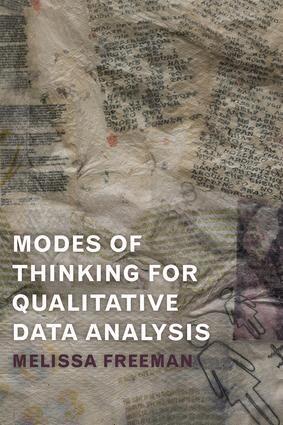
    Modes of Thinking for Qualitative Data Analysis

    AvMelissa Freeman

    Häftad, Engelska, 2016

    442 kr

    Tillfälligt slut

    Fler format och utgåvor

    Inbunden

    2 355 kr

    Häftad

    771 kr

    E-bok

    913 kr

    E-bok

    915 kr

    Inbunden

    Tillf. slut

    Beskrivning

    Modes of Thinking for Qualitative Data Analysis argues for engagement with the conceptual underpinnings of five prominent analytical strategies used by qualitative researchers: Categorical Thinking, Narrative Thinking, Dialectical Thinking, Poetical Thinking, and Diagrammatical Thinking. By presenting such disparate modes of research in the space of a single text, Freeman not only draws attention to the distinct methodological and theoretical contributions of each, she also establishes a platform for choosing among particular research strategies by virtue of their strengths and limitations. Experienced qualitative researchers, novices, and graduate students from many disciplines will gain new insight from the theory-practice relationship of analysis advanced in this text.

    Produktinformation

    • Utgivningsdatum:2016-09-20
    • Mått:152 x 229 x 20 mm
    • Vikt:230 g
    • Format:Häftad
    • Språk:Engelska
    • Antal sidor:136
    • Förlag:Left Coast Press Inc
    • ISBN:9781629581798

    Utforska kategorier

    • Sociologi inom Samhälle och politik

    Mer om författaren

    Melissa Freeman is Professor of Qualitative Research Methodologies in the College of Education at The University of Georgia.

    Recensioner i media

    "We’ve long needed this book, a book which would take students and scholars alike through the complex process of doing qualitative analysis. Melissa Freeman’s Modes of Thinking for Qualitative Data Analysis meets these needs. Its creative, comparative focus on forms of thinking, from categorical, to narrative, dialectical, poetical, diagrammatical, opens new windows on how to interpret empirical material." – Norman K. Denzin, University of Illinois, Urbana-Champaign"Melissa Freeman has developed a compelling typology for understanding qualitative work... Her work counters the standard classifications which connect methods with a particular methodology or tradition and leads to confusion. Instead, she argues persuasively, and with examples, that for a truly reflexive stance and a critical understanding of research, researchers must engage in "pentimento," or must see again, to understand essences and create innovative possibilities." - Lynn Butler-Kisber, McGill University

    Innehållsförteckning

    • ContentsList of Tables and FiguresPreface Introduction Why Focus on Analysis?Thinking, not Thought Brief Introduction to the Modes of ThinkingModes of Thinking for Qualitative Data Analysis The Modes of Thinking in Dynamic Relation Categorical Thinking Introduction to Categorical Thinking Characteristics of Categorical Thinking Categorical Thinking in Practice Deciding on Categorical Thinking for Analysis Narrative Thinking Introduction to Narrative Thinking Characteristics of Narrative Thinking Narrative Thinking in Practice Deciding on Narrative Thinking for Analysis Dialectical Thinking Introduction to Dialectical Thinking Characteristics of Dialectical Thinking Dialectical Thinking in Practice Deciding on Dialectical Thinking for Analysis Poetical Thinking Introduction to Poetical Thinking Characteristics of Poetical Thinking Poetical Thinking in Practice Deciding on Poetical Thinking for Analysis Diagrammatical Thinking Introduction to Diagrammatical Thinking Characteristics of Diagrammatical Thinking Diagrammatical Thinking in Practice Deciding on Diagrammatical Thinking for Analysis Teaching Qualitative Analysis On Diversity On TraditionOn Reflexive Dialogical Practice Final Thoughts List of Tables and FiguresTable 1.1: Modes of Thinking for Qualitative Data Analysis page xxTable 4.1: Two Approaches to Dialectical Thinking in Practice page xxFigure 1.1: Modes of Thinking in Dynamic Relation page xx Figure 2.1: Connecting Categories to Concepts page xx Figure 3.1: Dimensions of Plot page xx Figure 4.1: Dialectical Friction and Emergence page xxFigure 5.1: Poetics as Infinite Dialogue page xxFigure 6.1: A Phenomenon Becoming page xx