• Fri frakt över 249 kr
  • •
  • Snabba leveranser
  • •
  • Billiga böcker
Kundservice

Du är på sajten för privatpersoner.

Företag, bibliotek eller offentlig verksamhet?

Du handlar på classic.bokus.com, där alla dina funktioner finns intakta.
Till classic.bokus.com
Bokus logotyp. Gå till startsidan.
  • Erbjudanden
  • Nyheter
  • Student
  • Topplistor
  • Barn & ungdom
  • Bokus Play
  • E-böcker
  • Pocketböcker
  • Spel & pussel

10% rabatt på allt med kod: NYSTART10 →

Sidfot

Mina sidor

    Hjälp

    • Kundservice
    • Vanliga frågor och svar
    • Frakt och leverans
    • Retur vid ångerrätt
    • Reklamera vara
    • Betalning
    • Köpvillkor
    • Allmänna villkor
    • Information om webbplatsens tillgänglighet

    Om Bokus

    • Om oss
    • Pressrum
    • För studenter
    • För företag
    • För bibliotek och offentlig verksamhet
    • För leverantörer
    • Hållbarhet

    Populärt

    • Aktuella erbjudanden
    • Presentkort
    • Studentlitteratur
    • Nya böcker
    • Topplistor
    • Signerade böcker
    • Engelska böcker

    Inspiration

    • Boktips
    • BookTok
    • Populära bokserier
    • Barnbokskaraktärer
    • Populära författare
    Logotyp för Bokus
    Följ oss på Facebook (extern länk)Följ oss på Instagram (extern länk)Följ oss på YouTube (extern länk)Följ oss på TikTok (extern länk)
    bokus @ CookiesAnpassa cookiesIntegritetspolicyKöpvillkor
    Till Citymail hemsida (extern länk)Till Budbee hemsida (extern länk)Till Postnord hemsida (extern länk)Till Schenker hemsida (extern länk)Till Early Bird hemsida (extern länk)Till Walleys hemsida (extern länk)
    1. Samhälle och politik
    2. Sociologi och antropologi
    3. Antropologi

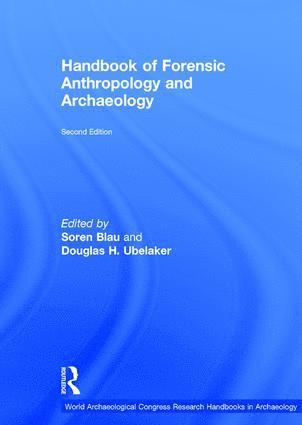
    Handbook of Forensic Anthropology and Archaeology

    AvSoren Blau,Douglas H. Ubelaker

    Inbunden, Engelska, 2016

    Del i serien WAC Research Handbooks in Archaeology

    4 198 kr

    Beställningsvara. Skickas inom 10-15 vardagar. Fri frakt över 249 kr.

    Beskrivning

    With contributions from 70 experienced practitioners from around the world, this second edition of the authoritative Handbook of Forensic Archaeology and Anthropology provides a solid foundation in both the practical and ethical components of forensic work. The book weaves together the discipline’s historical development; current field methods for analyzing crime, natural disasters, and human atrocities; an array of laboratory techniques; key case studies involving legal, professional, and ethical issues; and ideas about the future of forensic work--all from a global perspective. This fully revised second edition expands the geographic representation of the first edition by including chapters from practitioners in South Africa and Colombia, and adds exciting new chapters on the International Commission on Missing Persons and on forensic work being done to identify victims of the Battle of Fromelles during World War I. The Handbook of Forensic Anthropology and Archaeology provides an updated perspective of the disciplines of forensic archaeology and anthropology.

    Produktinformation

    • Utgivningsdatum:2016-07-11
    • Mått:174 x 246 x undefined mm
    • Vikt:1 530 g
    • Format:Inbunden
    • Språk:Engelska
    • Serie:WAC Research Handbooks in Archaeology
    • Antal sidor:738
    • Upplaga:2
    • Förlag:Left Coast Press Inc
    • ISBN:9781629583846

    Utforska kategorier

    • Antropologi inom Samhälle och politik
    • Arkeologi: metod och teknik inom Historia och arkeologi
    • Brottsutredning och kriminalteknik inom Samhälle och politik

    Mer om författaren

    Soren Blau is the Senior Forensic Anthropologist at the Victorian Institute of Forensic Medicine. She is an Adjunct Senior Lecturer in the Department of Forensic Medicine at Monash University, a Founding Fellow Faculty of Science at The Royal College of Pathologists of Australasia, and a recipient of a Churchill Fellowship. Blau undertakes forensic anthropology casework, including Disaster Victim Identification, and she has participated in the recovery and analysis of human remains from archaeological and forensic contexts in numerous countries, including the Democratic Republic of Congo, Guam, Indonesia, Israel, the Solomon Islands, East Timor, the United Arab Emirates, the United Kingdom, and Uzbekistan. Blau has worked as a consultant for the International Criminal Court and non-government organizations, and she has conducted training courses for forensic practitioners and related stakeholders. Douglas Ubelaker is a curator and senior scientist at the Smithsonian Institution’s National Museum of Natural History. Since 1978, he has served as a consultant in forensic anthropology, reporting on more than 900 cases and testifying in numerous legal proceedings. He is a lecturer with the departments of anatomy and anthropology at The George Washington University, as well as an adjunct professor in the Department of Anthropology at Michigan State University. Ubelaker has published extensively in the general field of human skeletal biology with an emphasis on forensic applications and has served on the editorial boards of numerous leading scientific publications. Since 1987, he has been a Fellow in the Physical Anthropology Section of the American Academy of Forensic Sciences, and he served as president of the Academy in 2011-2012. Ubelaker has received numerous honors from both American and international organizations.

    Recensioner i media

    "… [T]his volume is indeed comprehensive. The Editors should be congratulated on an excellent book, which should be on the bookshelf of any serious practitioner and library. The Editors state that the ‘methodologies summarized in this volume are state of the art but hardly the last word.’ However, this book should remain highly relevant for many years to come. Highly recommended!"" - James Robertson, Australian Journal of Forensic Sciences, review of the first edition"This superb volume brings together contributions from practicing professionals in Australia, Canada, France, Great Britain, Guatemala, Indonesia, Italy, Spain, and the United States. … For those individuals considering specializing in forensic anthropology, or applying their archaeological skills in the search, documentation, and recovery of human remains and evidence derived from non-archaeological contexts, this book inserts a large dose of reality into what it means to be an anthropologist first and a forensic anthropologist second." - Leslie E. Eisenberg, Journal of Forensic Sciences, review of the first edition

    Innehållsförteckning

    • Chapter 1: Forensic Anthropology and Archaeology: Moving ForwardSoren Blau and Douglas H. UbelakerPart I: History of the DisciplinesChapter 2: Forensic Anthropology and Archaeology in the United Kingdom: Are We Nearly There Yet?Gaile McKinnon and Karl Harrison Chapter 3: Forensic Anthropology and Archaeology: Perspectives from ItalyCristina Cattaneo, Daniele Gibeli, and Dominic SalsarolaChapter 4: Forensic Anthropology: Perspectives from FranceTania Delabarde and Eric BaccinoChapter 5: A History of Forensic Anthropology in SpainJosé PrietoChapter 6: The Application of Forensic Anthropology to the Investigation of Cases of Political Violence: Perspectives from South AmericaLuis FondebriderChapter 7: The Origin and Development of Forensic Anthropology and Archaeology in ColombiaAngélica Guzmán and César Sanabria MedinaChapter 8: Historical Development of Forensic Anthropology: Perspectives from the United StatesDouglas H. UbelakerChapter 9: Forensic Anthropology: Canadian Content and ContributionsMark Skinner and Kristina BowieChapter 10: The Development and Current State of Forensic Anthropology: An Australian PerspectiveDenise DonlonChapter 11: Historical Perspectives of Forensic Anthropology in IndonesiaEtty IndriatiChapter 12: Forensic Anthropology as Practiced in South AfricaMaryna Steyn, Ericka N. L’Abbé, and Jolandie MyburghPart II: Forensic ArchaeologyChapter 13: The Search and Detection of Human RemainsThomas D. Holland and Samuel V. ConnellChapter 14: Excavation and Recovery in Forensic Archaeological InvestigationsPaul N. Cheetham and Ian HansonPart III: Forensic AnthropologyChapter 15: Differentiating Human from Non-Human Skeletal RemainsDawn M. MulhernChapter 16: Dating of Anthropological Skeletal Remains of Forensic InterestShari Forbes and Kimberley NugentChapter 17: Analysis of Commingled Human RemainsJohn Byrd and Bradley J. AdamsChapter 18: The Assessment of Ancestry and the Concept of RaceNorman J. Sauer, Jane C. Wankmiller, and Joseph T. HefnerChapter 19: Anthropological Estimation of SexSamantha K. RowbothamChapter 20: Skeletal Age EstimationTracy L. RogersChapter 21: Histological Age EstimationChristian M. Crowder, Jarred T. Heinrich, and Victoria M. DominguezChapter 22: Stature EstimationP. WilleyChapter 23: Antemortem TraumaEugénia Cunha and Joāo PinheiroChapter 24: Perimortem TraumaLouise LoeChapter 25: Forensic TaphonomyStephen P. NawrockiChapter 26: Burned Human RemainsTim Thompson and Priscilla F. UlguimChapter 27: Craniofacial Identification: Techniques of Facial Approximation and Craniofacial SuperimpositionCarl N. Stephan and Peter ClaesChapter 28: Biomolecular ApplicationsLori BakerChapter 29: Forensic OdontologyJohn Gerald ClementPart IV: The Crime and Disaster Scene: Case Studies in Forensic Archaeology and AnthropologyChapter 30: Investigative and Legal Aspects of a U.S. Federal Death Penalty CaseDawnie Wolfe Steadman, William Basler, Michael J. Hochrein, Dennis F. Klein, and Julia C. GoodinChapter 31: Domestic Homicide Investigations in the United KingdomJohn HunterChapter 32: Forensic Anthropology in Disaster ResponsePaul S. Sledzik and Amy Z. MundorffChapter 33: Medico-legal Investigation of Atrocities Committed during the Solomon Islands “Ethnic Tensions”Melanie Archer and Malcolm J. DoddChapter 34: Disaster Anthropology: The 2004 Asian TsunamiSue BlackChapter 35: The Role of the Anthropologist in Disaster Victim Identification: Case studies from the 2002 and 2004 terrorist attacks in Bali, IndonesiaAlanah M. Buck and Christopher A. BriggsChapter 36: Dealing with Human Remains from Recent Conflict: Mass Grave Excavations and Human Identification in a Sensitive Political ContextMarija DjurićChapter 37: Forensic Investigations in Guatemala: The Continuing Search for Truth, Justice, and the Missing Two Decades after the Peace AccordsCaroline Barker, Ambika Flavel, and Claudia Rivera FernándezChapter 38: Continuing Challenges for Forensic Archaeology and Anthropology in IraqDerek Congram, Jon Sterenberg, and Oran FinneganChapter 39: Fromelles: Forensic Archaeology and Anthropology in IdentificationMargaret Cox, Louise Loe, and Peter JonesPart V: The Professional Forensic Archaeologist and the Forensic AnthropologistChapter 40: More Than Just Bare Bones: Ethical Considerations for Forensic AnthropologistsSoren BlauChapter 41: How to Do Forensic Anthropology under the Auspices of the United Nations and Other Large OrganizationsRichard Wright and Ian HansonChapter 42: Contribution of Quantitative Methods in Forensic Anthropology: A New EraAnn H. Ross and Erin H. KimmerleChapter 43: The Expert Witness and the Court of LawMaciej HennebergChapter 44: Legal Aspects of IdentificationDavid RansonChapter 45: The International Commission on Missing Persons (ICMP) and the Application of Forensic Archaeology and Anthropology to Identifying the MissingIan Hanson, Matthew Holliday, Kevin Sullivan, Kathryne Bomberger, and Thomas J. ParsonsChapter 46: Conclusion: International Perspectives on Issues in Forensic AnthropologySoren Blau and Douglas H. Ubelaker