• Fri frakt över 249 kr
  • •
  • Snabba leveranser
  • •
  • Billiga böcker
Kundservice

Du är på sajten för privatpersoner.

Företag, bibliotek eller offentlig verksamhet?

Du handlar på classic.bokus.com, där alla dina funktioner finns intakta.
Till classic.bokus.com
Bokus logotyp. Gå till startsidan.
  • Erbjudanden
  • Nyheter
  • Student
  • Topplistor
  • Barn & ungdom
  • Bokus Play
  • E-böcker
  • Pocketböcker
  • Spel & pussel

10% rabatt på allt med kod: NYSTART10 →

Sidfot

Mina sidor

    Hjälp

    • Kundservice
    • Vanliga frågor och svar
    • Frakt och leverans
    • Retur vid ångerrätt
    • Reklamera vara
    • Betalning
    • Köpvillkor
    • Allmänna villkor
    • Information om webbplatsens tillgänglighet

    Om Bokus

    • Om oss
    • Pressrum
    • För studenter
    • För företag
    • För bibliotek och offentlig verksamhet
    • För leverantörer
    • Hållbarhet

    Populärt

    • Aktuella erbjudanden
    • Presentkort
    • Studentlitteratur
    • Nya böcker
    • Topplistor
    • Signerade böcker
    • Engelska böcker

    Inspiration

    • Boktips
    • BookTok
    • Populära bokserier
    • Barnbokskaraktärer
    • Populära författare
    Logotyp för Bokus
    Följ oss på Facebook (extern länk)Följ oss på Instagram (extern länk)Följ oss på YouTube (extern länk)Följ oss på TikTok (extern länk)
    bokus @ CookiesAnpassa cookiesIntegritetspolicyKöpvillkor
    Till Citymail hemsida (extern länk)Till Budbee hemsida (extern länk)Till Postnord hemsida (extern länk)Till Schenker hemsida (extern länk)Till Early Bird hemsida (extern länk)Till Walleys hemsida (extern länk)
    1. Medicin
    2. Andra medicinska specialiteter
    3. Neurologi och klinisk neurofysiologi
    4. Autism och Aspergers syndrom

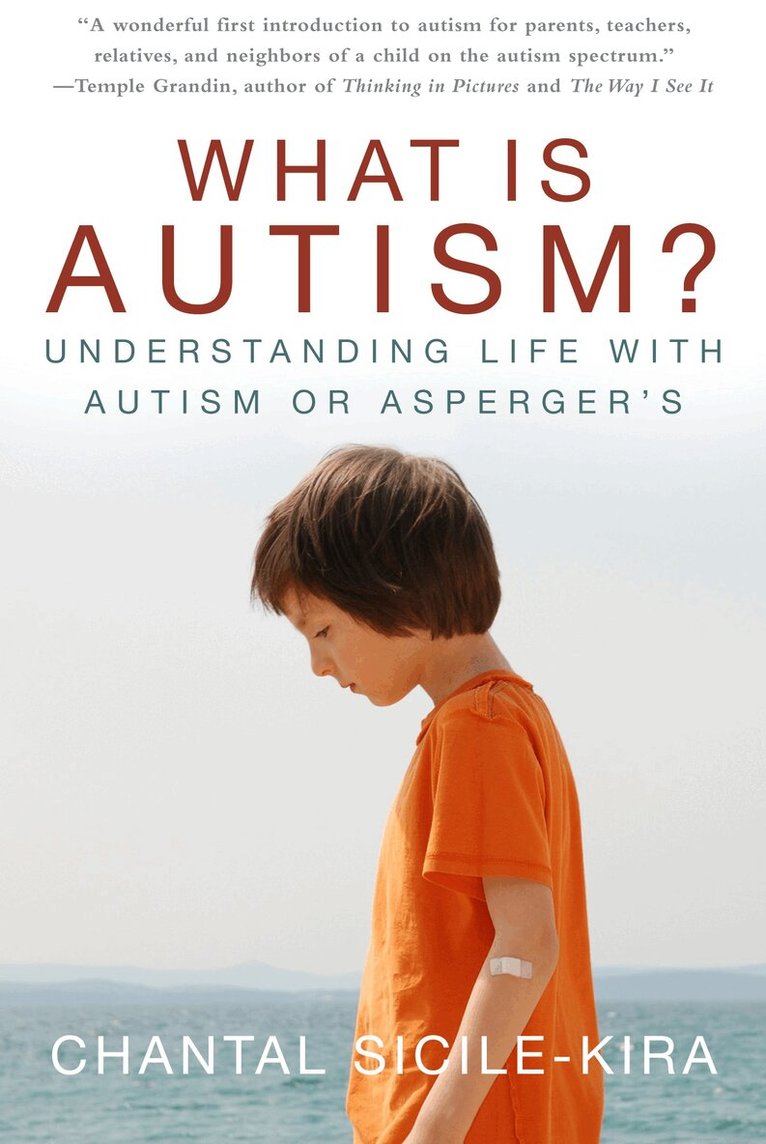
    What Is Autism?

    Understanding Life with Autism or Asperger's

    AvChantal Sicile-Kira

    Inbunden, Engelska, 2012

    233 kr

    Beställningsvara. Skickas inom 5-8 vardagar. Fri frakt över 249 kr.

    Fler format och utgåvor

    Häftad

    156 kr

    E-bok

    177 kr

    Beskrivning

    International autism advocate and bestselling author Chantal Sicile-Kira provides this simple, concise explanation of one of the most prevalent disorders in America.Each year, 1 in every 100 children in America are diagnosed with autism. Although autism has reached epidemic proportions, it is far from understood. In What Is Autism? Chantal Sicile-Kira provides a clear, instructive explanation of autism spectrum disorders and what life is like for those on the spectrum. If you know someone with autism and would benefit from a quick, straightforward explanation of the condition, this book is the perfect resource. What Is Autism? explores in a simple question-answer format topics such as:What are the causes of autism? Can vaccines cause autism?Can autism be prevented?How can I recognize the symptoms?Why do children and teens with autism act the way they do?What are the emotional effects of autism on the family?

    Produktinformation

    • Utgivningsdatum:2012-05-17
    • Mått:139 x 215 x 13 mm
    • Vikt:358 g
    • Format:Inbunden
    • Språk:Engelska
    • Antal sidor:174
    • Förlag:Turner Publishing Company
    • ISBN:9781630264826

    Utforska kategorier

    • Autism och Aspergers syndrom inom Medicin
    • Sociala grupper och identitet inom Samhälle och politik
    • Barnpsykologi och utvecklingspsykologi inom Psykologi och pedagogik

    Recensioner i media

    “A wonderful first introduction to autism for parents, teachers, relatives, and neighbors of a child on the autism spectrum.” —Temple Grandin, author of Thinking in Pictures“An incredible resource for family members, professionals and individuals on the spectrum attempting to better inform the public about various aspects of ASD.” —Dr. Cathy Pratt, Chair, Autism Society of America and Director, Indiana Resource Center for Autism“In her crisp and authentic voice, Chantal provides a work that broadens the understanding and offers many answers to the most perplexing problems. Well done!” —Edmund C. Arranga, Co-founder & Executive Director, AutismOne“[Chantal’s] work cuts to the heart of the matter. She approaches the subject by acknowledging its immensity and its baffling characteristics. Yet by sticking to a doctrine of clarity and pragmatism, she also enlightens.” —Douglas Kennedy, author of Leaving the World and The Job

    Innehållsförteckning

    • Introduction    xiiiWhat is autism, and why is it called a spectrumdisorder?    1Is there really more autism now?    3Do vaccines cause autism? If not, what does?    7What are the diagnostic criteria for autism spectrumdisorders?    11What is sensory processing disorder, and how is itrelated to autism?    15I think my child has an autism spectrum disorder.What can I do?    19I think I have Asperger’s syndrome. What shouldI do?    23My child has just been diagnosed with autism. Howdo I cope?    27What do I do after the diagnosis?    31Can autism be cured? Does everyone think itshould be?    35What are the treatments and therapies for autism?    37What can be done to help with sensory processingchallenges?    41How do I make sure my child gets a good education?    45How do I determine my child’s educational needs?    49Why is it hard to know how much they understand?How can we gain a better picture of the child?    53How can their special interests or obsessions helpthem to learn?    57Why do children, teens, and adults act the waythey do?    61Self-stimulatory behavior: What is it, and what isits purpose?    65What are the emotional and financial effects ofautism on the family?    69What are the effects of autism on the siblings?    75Why are holidays difficult for families with autism?    79I am the grandparent of a child with autism. Whatcan I do to help?    83A friend or relative I know has a child with autism.What can I do?     87I’m a neighbor or community member. How shouldI react to or approach someone with autism?    91Do those on the spectrum want friends? If so, whyis it so difficult for them to make friends?    93What are the safety concerns for someone on theautism spectrum?    97What communication difficulties do they have?    103Why are transitions from one place to another, orone activity to another, problematic?    109How can we teach the concept of private and publicbehavior?    113How can we teach them to be more independent,but also teach them interdependence?    115How can we teach them self-regulation?    119Why don’t they look me in the eye?    123Why are emotions hard for them to understand?    125How can we teach them self-esteem andself-advocacy?    127What are the thirteen things to know about raisingand educating a teenager on the spectrum?    131Why do preteens and teens have a hard time withthe body changes that puberty brings?    135Why does it seem like their autism is getting worseat puberty?    137Are adults on the spectrum interested in long-termrelationships, marriage, and sex?    141What is college like for young adults on thespectrum?    145Why is it so hard for adults with autism to findand keep a job?    149What hope is there for the future for people on theautism spectrum?    155