• Fri frakt över 249 kr
  • •
  • Snabba leveranser
  • •
  • Billiga böcker
Kundservice

Du är på sajten för privatpersoner.

Företag, bibliotek eller offentlig verksamhet?

Du handlar på classic.bokus.com, där alla dina funktioner finns intakta.
Till classic.bokus.com
Bokus logotyp. Gå till startsidan.
  • Erbjudanden
  • Nyheter
  • Student
  • Topplistor
  • Barn & ungdom
  • Bokus Play
  • E-böcker
  • Pocketböcker
  • Spel & pussel

10% rabatt på allt med kod: NYSTART10 →

Sidfot

Mina sidor

    Hjälp

    • Kundservice
    • Vanliga frågor och svar
    • Frakt och leverans
    • Retur vid ångerrätt
    • Reklamera vara
    • Betalning
    • Köpvillkor
    • Allmänna villkor
    • Information om webbplatsens tillgänglighet

    Om Bokus

    • Om oss
    • Pressrum
    • För studenter
    • För företag
    • För bibliotek och offentlig verksamhet
    • För leverantörer
    • Hållbarhet

    Populärt

    • Aktuella erbjudanden
    • Presentkort
    • Studentlitteratur
    • Nya böcker
    • Topplistor
    • Signerade böcker
    • Engelska böcker

    Inspiration

    • Boktips
    • BookTok
    • Populära bokserier
    • Barnbokskaraktärer
    • Populära författare
    Logotyp för Bokus
    Följ oss på Facebook (extern länk)Följ oss på Instagram (extern länk)Följ oss på YouTube (extern länk)Följ oss på TikTok (extern länk)
    bokus @ CookiesAnpassa cookiesIntegritetspolicyKöpvillkor
    Till Citymail hemsida (extern länk)Till Budbee hemsida (extern länk)Till Postnord hemsida (extern länk)Till Schenker hemsida (extern länk)Till Early Bird hemsida (extern länk)Till Walleys hemsida (extern länk)
    1. Medicin
    2. Andra medicinska specialiteter
    3. Behandling och behandlingsmetoder
    4. Tal- och språkstörningar

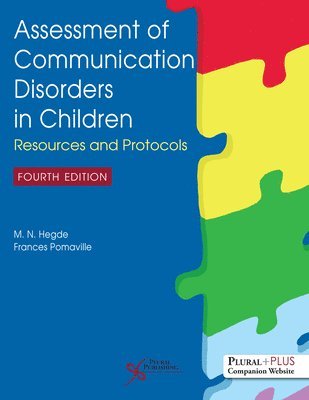
    Assessment of Communication Disorders in Children

    Resources and Protocols

    AvM.N. Hegde,Frances Pomaville

    Häftad, Engelska, 2021

    2 239 kr

    Tillfälligt slut

    Beskrivning

    Assessment of Communication Disorders in Children: Resources and Protocols, Fourth Edition offers a unique combination of scholarly information, invaluable resources, and time-saving protocols on assessment of the full range of communication disorders in children, including nonverbal or minimally verbal children.Most resource books offer limited research and scholarly information, thus making them unsuitable as textbooks for academic courses on assessment and diagnosis. Similarly, most traditional textbooks do not include practical, easy-to-use, and time-saving resources and protocols that the practicing clinicians can readily use during assessment sessions. By combining the strengths of traditional texts with newer assessment resources and protocols, this one-of-a-kind book offers a single, comprehensive source that is suitable as a textbook and useful as a practical clinical resource.This bestselling and trusted text:Includes an extensive discussion of issues in using standardized tests along with detailed information on psychometric principles and offers a detailed discussion of alternative assessment approaches that minimize the problems inherent to standardized testsDescribes a new, comprehensive, and integrated assessment approach that derives its strengths from the traditional as well as several alternative approachesAddresses the multicultural issues in assessing communication disorders in children and integrates culturally responsive assessment procedures into the assessment protocols Contains two chapters for each disorder: one on resources that offers scholarly and research background and one on resources that describe practical procedures and protocols that save the clinician's preparation time Includes access to a PluralPlus companion website which allows clinicians to view, modify, and print the assessment protocols for their personal useNew to the Fourth Edition:A new section on the assessment of voice in transgender and gender diverse adolescentsA new section on selective mutism in bilingual children, included in alternative and integrated assessment of ethnoculturally diverse childrenAll normative tables placed in relevant chapter appendices for quick access The content has been updated throughout to reflect the current state of researchUpdated diagnostic features of all childhood communication disordersAll protocols streamlined and edited for precision (in book and on website)Updated resources for commonly used assessment instruments and standardized tests, now available on the companion websiteAll defined and key terms are now bolded Simplified writing style and reduced redundancy for increased readability and comprehension

    Produktinformation

    • Utgivningsdatum:2021-04-01
    • Mått:216 x 279 x 26 mm
    • Vikt:1 082 g
    • Format:Häftad
    • Språk:Engelska
    • Antal sidor:550
    • Upplaga:4
    • Förlag:Plural Publishing Inc
    • ISBN:9781635502664

    Utforska kategorier

    • Tal- och språkstörningar inom Medicin

    Mer om författaren

    M. N. Hegde, PhD, is Professor Emeritus of Speech-Language Pathology at California State University, Freso. A specialist in fluency disorders, child language disorders, research methods, and treatment procedures in communication disorders, Dr. Hegde enjoys world renown as a researcher, presenter, contributor of original articles to leading national and international journals, and critically acclaimed author of more than two dozen highly regarded books in speech-language pathology. He has edited more than 25 books for different publishers. He is on the editorial board of several scientific journals and has been a guest editor of international journals. He is also a consulting editor of publishing houses.+++++++++++++++++++++++++++++++++++++++++++++++A speech-language pathologist for over 20 years, Frances Pomaville, PhD, is an Assistant Professor in the Communicative Disorders and Deaf Studies Department at California State University, Fresno. She teaches undergraduate and graduate level courses in the areas of diagnostic procedures, anatomy and physiology, fluency, voice, traumatic brain injury, and dysphagia. She also supervises graduate students in their clinical practicum. Prior to accepting a faculty position at California State University, Fresno, Dr. Pomaville was the Director of Clinical Services at San Joaquin Valley Rehabilitation Hospital. Prior to that she had extensive experience as a speech-language pathologist in private practice, acute care settings, and inpatient and outpatient rehabilitation settings. Dr. Pomaville has also worked with children in the public school setting as an itinerant speech-language pathologist, and she spent several years working with students in a special education program for deaf and hard of hearing children.

    Innehållsförteckning

    • PrefaceCreating Child-Specific Assessment Packages with Protocols on the Companion Website Part I. Foundations of Assessment Chapter 1. Assessment of Communication Disorders in Children Assessment, Evaluation, and Diagnosis Written Case History The Initial Clinical Interview Hearing Screening Orofacial Examination Diadochokinetic Tasks Speech-Language Sample Standardized Assessment Instruments Alternative and Integrated Assessment Procedures Assessment of Children With Complex Communication NeedsAssessment of Literacy Skills Stimulability Postassessment Counseling Assessment Report Chapter SummaryStudy QuestionsReferencesChapter 2. Common Assessment Protocols Notes to the ClinicianCommon Protocol 1: Child Case History Common Protocol 2: Developmental Milestones from 0 to 4 Years of Age Instructions for Conducting the Orofacial Examination: Observations and ImplicationsCommon Protocol 3: Orofacial Examination and Hearing Screening Common Protocol 4: Diadochokinetic Assessment Common Protocol 5: Speech-Language Sample Transcription Common Protocol 6: Language Sample Analysis Protocol: Syntactic, Morphological, and Pragmatic SkillsCommon Protocol 7: Assessment Report OutlineReferences Chapter 3. Standardized Assessment Standardized and Norm-Referenced Tests Test Construction Reliability Validity Questionnaires and Developmental Inventories Strengths of Standardized Tests General Limitations of Standardized Tests Specific Limitations of Standardized Tests in Assessing Ethnoculturally Diverse ChildrenPrudent Use of Standardized Tests Chapter SummaryStudy QuestionsReferencesChapter 4. Alternative and Integrated Assessment Assessment in Ethnoculturally Diverse Societies Can Speech-Language Assessment Be Culture-Free? Assessment of African American Children General Strategies for Assessing Bilingual ChildrenAssessment of Asian American Children Assessment of Hispanic American ChildrenAssessment of Native American ChildrenAlternative Assessment Approaches Behavioral Assessment Criterion-Referenced and Client-Specific Assessment Authentic Assessment Dynamic Assessment A Comprehensive and Integrated Assessment ApproachChapter SummaryStudy QuestionsReferences Part II. Assessment of Speech Sound Production Chapter 5. Assessment of Speech Sound Production: Resources Overview of Speech Sound Production Classification of Speech SoundsNormative Data on Speech Sound LearningPhonological Analysis of Speech Sounds Speech Sound DisordersLanguage Disorders and Speech Sound Disorders Dysarthria Associated with Cerebral Palsy Childhood Apraxia of SpeechHearing Loss and Speech Sound Disorders Overview of Assessment of Speech Sound Production Screening for Speech Sound Disorders Standardized Norm-Referenced Tests of Speech Sound ProductionCriterion-Referenced Assessment Speech and Language Samples Stimulability of Speech Sounds Analysis and Integration of Assessment Results Diagnostic Criteria and Differential Diagnosis Postassessment CounselingChapter SummaryStudy QuestionsReferences Chapter 6. Assessment of Speech Sound Production: Protocols Notes to the Clinician Speech Sound Assessment Protocol 1: Interview Speech Sound Assessment Protocol 2: Phonetic Inventory Analysis Speech Sound Assessment Protocol 3: Manner-Place-Voicing Analysis Speech Sound Assessment Protocol 4: Consonant Clusters Inventory Speech Sound Assessment Protocol 5: Phonological Patterns Speech Sound Assessment Protocol 6: Childhood Apraxia of Speech Speech Sound Assessment Protocol 7: Dysarthric Speech Selected Multicultural Assessment Protocols Speech Sound Assessment Protocol 8: African American English Speech Sounds Speech Sound Assessment Protocol 9: Asian American English Speech Sounds Speech Sound Assessment Protocol 10: Spanish-Influenced English Speech Sounds Part III. Assessment of Language Skills in Children Chapter 7. Assessment of Language Skills in Children: Resources Prevalence of Language Disorders in Children Overview of Language Disorders in ChildrenDescription of Language Disorders in Children Specific Language Impairment Variables Associated with Language Disorders Overview of Assessment of Language Disorders Screening for Language Disorders Language Sampling Integrating Alternative Assessment Techniques Assessment of Language Understanding Standardized Language Diagnostic Tests Analysis and Integration of Assessment Results Differential Diagnosis of Child Language Disorders Postassessment Counseling Chapter SummaryStudy QuestionsReferencesChapter 8. Assessment of Language Skills: Protocols Notes to the Clinician Language Assessment Protocol 1: Interview Language Assessment Protocol 2: Normal Language Language Assessment Protocol 3: Task-Specific Assessment of Basic Vocabulary Language Assessment Protocol 4: Task-Specific Assessment of Grammatical Morphemes Language Assessment Protocol 5: Task-Specific Assessment of Conversational SkillsLanguage Assessment Protocol 6: Task-Specific Assessment of Narrative and Discourse SkillsLanguage Assessment Protocol 7: Behavioral Assessment Selected Multicultural Assessment ProtocolsLanguage Assessment Protocol 8: African American English (AAE) Language Language Assessment Protocol 9: Asian American English Language Language Assessment Protocol 10: Spanish-Influenced English Language Part IV. Assessment of Fluency Chapter 9. Assessment of Fluency Disorders: Resources Speech Fluency Disorders of Fluency Stuttering Definition and Measurement of Stuttering Additional Features of Stuttering Cluttering Analysis and Integration of Assessment Results Differential Diagnosis of Fluency Disorders Postassessment Counseling Chapter SummaryStudy QuestionsReferencesChapter 10. Assessment of Fluency Disorders: Protocols Notes to the Clinician Fluency Assessment Protocol 1: Interview Fluency Assessment Protocol 2: Dysfluency Measurement Fluency Assessment Protocol 3: Associated Motor Behaviors Fluency Assessment Protocol 4: Avoidance Behaviors Fluency Assessment Protocol 5: Cluttering Part V. Assessment of Voice Chapter 11. Assessment of Voice: Resources Prevalence of Voice Disorders in Children Children's Voice Disorders Etiologic Factors Associated With Voice Disorders The Need for Medical Evaluation Assessment of Voice Production Instrumental Evaluation Laryngeal Imaging Clinical Assessment of Voice Stimulability of Voice Production Assessment of Voice in Ethnoculturally Diverse Children Assessment of Voice in Transgender and Gender Diverse AdolescentsAnalysis and Integration of Assessment Results Differential Diagnosis of Voice Disorders Postassessment Counseling Chapter SummaryStudy QuestionsReferencesChapter 12. Assessment of Voice: Protocols Notes to the Clinician Voice Assessment Protocol 1: Interview Voice Assessment Protocol 2: Vocal Abuse and Misuse Inventory Voice Assessment Protocol 3: Child Voice Evaluation Voice Assessment Protocol 4: Resonance and Velopharyngeal Function Voice Assessment Protocol 5: Voice Stimulability Part VI. Assessment of Children with Complex Communication Needs Chapter 13. Assessment of Children with Complex Communication Needs: ResourcesAn Overview of Children with Complex Communication Needs The Assessment Team Assessment of Children with Complex Communication Needs Case History and Interview Orofacial Examination and Hearing Screening Parent-Completed QuestionnairesStandardized and Criterion-Referenced Instruments Systematic Quantitative and Qualitative Observations Assessment of Receptive Language Assessment of Extant Verbalizations Assessment for Augmentative and Alternative Communication Analysis and Integration of Assessment Results Prognosis for Developing Verbal Communication Postassessment Counseling Chapter SummaryStudy QuestionsReferencesChapter 14. Assessment of Children with Complex Communication Needs: ProtocolsNotes to the Clinician Children with Complex Communication Needs Assessment Protocol 1: Interview Children with Complex Communication Needs Assessment Protocol 2: Verbalizations, Signs, and GesturesChildren with Complex Communication Needs Assessment Protocol 3: Qualitative and Quantitative Assessment of Nonverbal Expressive CommunicationChildren with Complex Communication Needs Assessment Protocol 4: Qualitative and Quantitative Assessment of Nonverbal Receptive CommunicationChildren with Complex Communication Needs Assessment Protocol 5: Interaction Between Communication Partners and the ChildChapter 15. Assessment for Augmentative and Alternative Communication SystemsAAC SystemsAAC System Assessment The Role of Speech-Language Pathologists Resources for the Clinician AAC Changing Perspectives Revised Participation Model Analysis and Integration of Assessment Results Postassessment Counseling Chapter SummaryStudy QuestionsReferencesPart VII. Literacy Chapter 16. A Primer on Literacy Assessment Language Disorders and Literacy Problems Emergent Literacy and Home EnvironmentEmergent Literacy Skill Acquisition Assessment of Emergent Literacy Skills Assessment of Reading and WritingIntegrating Language and Literacy Skill Assessment Chapter SummaryStudy QuestionsReferencesIndex