M.N. Hegde - Böcker
Visar alla böcker från författaren M.N. Hegde. Handla med fri frakt och snabb leverans.
8 produkter
8 produkter
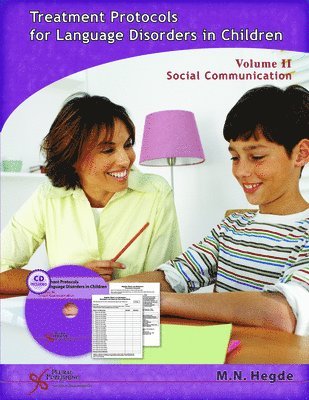
Treatment Protocols for Language Disorders in Children : Volume II Social Communication
Engelska, 2005
2 358 kr
Skickas inom 5-8 vardagar
1 967 kr
Skickas inom 5-8 vardagar
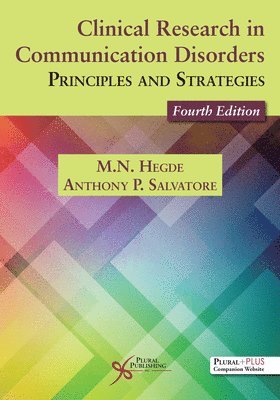
This thoroughly updated fourth edition of ''Clinical Research in Communication Disorders: Principles and Strategies'' remains an instrumental resource for courses on research methods and design in communication disorders.The book is separated into three key sections: science and the scientific methods, clinical research designs, and doing, reporting, and evaluating research. Together, these sections provide thorough coverage of both the single-subject and group design strategies along with issues of measurement; philosophy of science; ethics of research; and planning, conducting, and reporting research.Instructors and students in communication sciences and disorders will appreciate the text's comprehensive coverage of scientific methods, group and single-subject research designs, report writing, and ethics of research in a single source.'New to the Fourth Edition*New coauthor, Anthony P. Salvatore, PhD*A new chapter on statistical analysis of research data, including several statistical techniques for single-subject research data, meta-analysis of both group and single-subject studies*Updated criteria for visual analysis of single-subject research data*New sections on translational research, qualitative research, and mixed methods research*Descriptions of additional research designs not included in the previous edition (e.g., the regression discontinuity design)*Updated information on research ethics and review of fraudulent biomedical research*Web-based sources that monitor research fraud and recalled studies*Updated and expanded references throughoutKey Features*Chapter outlines open each chapter and provide a summary of the key topics*Chapter summaries recap key points in an easy-to-read bulleted format*End-of-chapter study guides allow readers to test their knowledge*Bolded key terms throughout*Access to a PluralPlus Companion Website with PowerPoint lecture slides for each chapter
1 967 kr
Skickas inom 5-8 vardagar
Assessment of Communication Disorders in Adults: Resources and Protocols, Third Edition offers a unique combination of scholarly information, invaluable resources, and time-saving protocols on assessment of communication disorders in adults.Most resource books offer limited research and scholarly information, thus making them unsuitable as textbooks for academic courses on assessment and diagnosis. Similarly, most traditional textbooks do not include practical, easy-to-use, and time-saving resources and protocols that the practicing clinicians can readily use during assessment sessions. By combining the strengths of traditional textbooks with newer assessment resources and protocols, this one-of-a-kind book offers a single, comprehensive source that is suitable as a textbook and useful as a practical clinical resource.This bestselling and trusted textCovers the full range of communication disorders in adults, from aphasia to voice disordersGives a comprehensive outline of basic assessment proceduresProvides a set of protocols that are necessary to assess any communication disorder in adultsAddresses the multicultural issues in assessing communication disorders in adults and offers an integrated assessment approach that includes the most desirable features of the traditional and several alternative approachesContains two chapters for each disorder: one on resources that offers scholarly and research background on the disorder and one on resources that describe practical procedures and protocols that save preparation time and effort for the clinicianIncludes access to a PluralPlus companion website containing the assessment protocols that can be viewed, customized, and printed by instructors, students, and cliniciansNew to the Third EditionExpanded emphasis and specific guidelines on making a correct differential diagnosis Latest research on the characteristics of disorders of communication in adults Review of recent trends on diagnostic assessment with critical recommendations for students and cliniciansUpdated epidemiological research on communication disordersRevised to offer more succinct information on assessment tools and diagnostic criteriaThe latest standardized and informal assessment instrumentsStudent-friendly, step-by-step instructions on how to conduct initial interviews and share final assessment results with patients in each protocol chapterUpdated web links for key assessment materials mentioned in the text
2 123 kr
Tillfälligt slut
Assessment of Communication Disorders in Children: Resources and Protocols, Fourth Edition offers a unique combination of scholarly information, invaluable resources, and time-saving protocols on assessment of the full range of communication disorders in children, including nonverbal or minimally verbal children.Most resource books offer limited research and scholarly information, thus making them unsuitable as textbooks for academic courses on assessment and diagnosis. Similarly, most traditional textbooks do not include practical, easy-to-use, and time-saving resources and protocols that the practicing clinicians can readily use during assessment sessions. By combining the strengths of traditional texts with newer assessment resources and protocols, this one-of-a-kind book offers a single, comprehensive source that is suitable as a textbook and useful as a practical clinical resource.This bestselling and trusted text:Includes an extensive discussion of issues in using standardized tests along with detailed information on psychometric principles and offers a detailed discussion of alternative assessment approaches that minimize the problems inherent to standardized testsDescribes a new, comprehensive, and integrated assessment approach that derives its strengths from the traditional as well as several alternative approachesAddresses the multicultural issues in assessing communication disorders in children and integrates culturally responsive assessment procedures into the assessment protocols Contains two chapters for each disorder: one on resources that offers scholarly and research background and one on resources that describe practical procedures and protocols that save the clinician's preparation time Includes access to a PluralPlus companion website which allows clinicians to view, modify, and print the assessment protocols for their personal useNew to the Fourth Edition:A new section on the assessment of voice in transgender and gender diverse adolescentsA new section on selective mutism in bilingual children, included in alternative and integrated assessment of ethnoculturally diverse childrenAll normative tables placed in relevant chapter appendices for quick access The content has been updated throughout to reflect the current state of researchUpdated diagnostic features of all childhood communication disordersAll protocols streamlined and edited for precision (in book and on website)Updated resources for commonly used assessment instruments and standardized tests, now available on the companion websiteAll defined and key terms are now bolded Simplified writing style and reduced redundancy for increased readability and comprehension
A Coursebook on Scientific and Professional Writing for Speech-Language Pathology
Häftad, Engelska, 2022
2 127 kr
Skickas inom 5-8 vardagar
A Coursebook on Scientific and Professional Writing for Speech-Language Pathology, Sixth Edition is a unique interactive resource to help students develop the strong writing skills necessary for a successful clinical or academic career in speech-language pathology. The book not only describes the principles of good writing, but also contains numerous opportunities to practice writing skills replete with exemplars. The Coursebook is ideal for dedicated courses on scientific and/or professional writing, and can also be used in courses on assessment, research methods, and clinical methods and practicum.The first section of the book is a refresher on the basic rules of grammar, punctuation, and composition. The second section is focused on scientific writing and explains the different types of academic publications, offers tips on how to write without bias, and describes the typical manuscript formatting required by scientific publications. It also includes examples of the "elements of scientific style," such as capitalization and abbreviations, how to reference sources cited within the text, and how to prepare the reference list. Also covered are how to submit a manuscript to scholarly journals and best practices for proofreading and making revisions. The last section is focused on professional/clinical writing and the various written communications speech-language pathologists (SLPs) prepare as part of their jobs. These include diagnostic reports, brief and comprehensive treatment plans, and progress reports. The book ends with a section on report writing for SLPs working in public schools, including assessment reports, IEPs, and SOAP notes. A unique and student-friendly feature of the book is its practical design. The first two sections provide incorrect exemplars the user can rewrite or write correctly. In the last section, left-hand pages show specific examples of general, scientific, or professional writing, and the corresponding right-hand pages allow students to practice writing. Updates to the Scientific Writing section include:Incorporation of APA 7th edition changes to reference citations and preparation of the reference list, along with updates on how to cite electronic sources. Information on how to submit content to academic journals and conferences, preparing electronic manuscripts, and making revisions in light of the copyeditor's comments have been updated to current publishing industry standards.Updates to the Professional Writing section include:Updates to reflect current clinical terminology and practice in speech-language pathology. A new trial-by-trial treatment progress recording sheet has been added to the progress report section. An Objective, Subjective, Assessment, Plan (SOAP) progress report written for medical settings has been added, along with a new section on report writing in public schools, which includes an assessment plan that helps determine whether a student meets the school district's criteria for enrollment in clinical speech-language services.
1 896 kr
Skickas inom 5-8 vardagar
An innovative textbook and course notebook in one resource!A Coursebook on Aphasia and Other Neurogenic Language Disorders, Fifth Edition is a textbook for courses in aphasia and other neurogenic communication disorders. It is organized in a unique and interactive “coursebook” format that divides pages into columns with written information next to columns with space for note taking. This allows instructors to make lecture notes and students to write class notes on the right half of each page of the text.The Coursebook offers a comprehensive description and critical review of basic and applied research on aphasia, right hemisphere disorder (RHD), traumatic brain injury (TBI), and dementia—the four major language and communication disorders associated with neurological pathologies. The relationship between the brain and language, major features of aphasia and other disorders, their assessment, and treatment have been described in streamlined and clinician-friendly language. Critical review of theories, assessment, and treatment research helps speech-language pathologists distinguish valid from the questionable in the professional and scientific literature. All assessment and treatment chapters give an outline of comprehensive and practical procedures, integrating current practices that clinicians might readily use.New to the Fifth EditionPart I has been restructured under the heading, “Brain and Language” to describe the neuroanatomical bases of language and language impairments associated with neuropathological variables. The chapter on neurodiagnostics has been updated to include a variety of surgical, radiological, and imaging procedures that help students understand the relationship between the brain structure and function and their involvement in language production and comprehension. Part II has been reorganized into three chapters on aphasia. Chapter 3 offers a comprehensive review of aphasia prevalence, definition, and classification. Newer perspectives on intraoperative cortical brain mapping and alternative classification of aphasia, based on recent research on the dual stream hypotheses related to brain and language, have been reviewed with critical evaluation to help clinicians. Chapters 4 and 5 on assessment and treatment of aphasia offer a more comprehensive review of established and newer procedures. The chapter on treatment is expanded to include telerehab, drug treatment, brain stimulation, and technologically-based interventions. All major language intervention techniques are reviewed with outlined recommendations for clinicians. Part III on RHD consists of two revised chapters reflecting current terminology, research, and clinical practice issues. Sections on neglect, deficit awareness, social communication, and abstract language intervention have been updated. Part IV offers the most recent research on TBI rehabilitation. Research on teaching compensatory strategies, group therapy, and community reentry has been updated with clinical recommendations.Part V’s two chapters on dementia include new information on changing incidence and prevalence patterns of dementia, infectious and rapidly progressive dementias, frontotemporal dementias, primary progressive aphasias, and HIV-associated neurocognitive disorders. In addition to the above content updates, customizable PowerPoint lecture slides for instructors and color versions of some of the figures are available on a PluralPlus companion website.
1 599 kr
Skickas inom 5-8 vardagar
With major content updates and enhanced supporting online materials, the seventh edition of Clinical Methods and Practicum in Speech-Language Pathology remains an essential resource for students in speech-language pathology who are about to begin their clinical practicum. The text is a comprehensive source of information that will help establish clear expectations for both student clinicians and clinical supervisors. It is hoped that students who read this book prior to starting their clinical practicum will be better prepared to meet the exciting and yet often challenging task of providing ethical and effective services to children and adults with communication disorders. Readers will gain an understanding of the structure of different clinical practicum sites; principles of ethical practices; conduct, behavior, and competencies expected of them; justifiable expectations of their clinical supervisors; and the many fundamental principles of assessment and intervention across most disorders of communication.The book is divided into two sections: clinical practicum and clinical methods in speech-language pathology. These sections provide coverage of the structural and functional aspects of clinical practicum in a variety of settings. The author emphasizes that clinical practicum is an exciting learning experience. The students will understand what is expected of them in each setting and what they can expect from their clinical supervisors. An overview of treatment methods that apply across disorders is also included.New to the Seventh EditionTwo new chapters:Chapter 5 on assessment, which includes a sample assessment report Chapter 6 on clinical reports, treatment plans, and data documentationThe clinical methods sections include new and expanded information on assessment, target behaviors, and treatment strategies for all disorders of communicationThe section on clinical practicum in public schools has been expanded to reflect the current guidelines and practicesInfused multicultural issues into all relevant chapters and consequently eliminated a separate chapter on the topicUpdated information on ASHA's new or current requirements and guidelines for clinical practicum and certification in speech-language pathologyExpanded and updated ASHA guidelines on telepracticeSummary of ASHA's latest position on the qualifications of clinical supervisorsInformation on the qualifications and scope of practice of speech-language pathology assistants in various settings Added chapter summary questions so students can assess their understanding of the material Significantly enhanced the suite of online resources, including more in-depth PowerPoint slides and a new test bank for instructors, plus sample reports, recording sheets, and templates for studentsKey FeaturesOutlines open each chapter and provide a summary of the key topicsA comprehensive glossary allows readers to easily find and define important terms or conceptsBulleted and boxed information for easy accessOnline supporting materials for students and instructors PluralPlus Online Ancillary MaterialsFor instructors: PowerPoint Slides, Test BankFor students and clinicians:Assessment Procedures and ReportsBaserate Procedures and Recording FormsProbe Data Recording Form Examples and TemplatesTreatment Procedure and Data Recording FormsTreatment PlansTreatment Progress ReportsGlossary of Medical AbbreviationsGlossary of Educational AbbreviationsReferral Letter
1 382 kr
Skickas inom 5-8 vardagar
Now in its fifth edition, Hegde's PocketGuide to Assessment in Speech-Language Pathology is a renowned resource, the first of its kind, and now a classic in communication sciences and disorders.This fifth edition retains and enhances its unique feature of three books in one: a dictionary of assessment procedures, a textbook on assessment of every disorder of communication, and a comprehensive clinical guide useful in everyday practice. With this guide, students and professional clinicians have, at their fingertips, the encyclopedic knowledge of the entire range of assessment concepts, methods, and practical and easy-to-follow procedures.The guide offers a quick as well as a detailed description of not only standard and standardized assessment procedures, but also task-oriented assessment outlines the clinician may follow in assessing every client with any kind of communication disorder. Many assessment outlines are self-sufficient in the manner of client-specific or criterion-referenced procedures that help evaluate assessment and treatment targets. The information may be efficiently reviewed before assessment sessions, course examinations, and the Praxis test in speech-language pathology.New to the Fifth EditionNew information on teleassessment procedures, limitations, and possibilities relative to disorders of communicationA new entry on Artificial Intelligence (AI) in assessment, its application, current limitations, and future possibilitiesExpanded description of Quality of Life (QoL) assessments for specific disorders as well as a separate entryNew information on ethnographic interview of clients and family membersStreamlined and enhanced information on social communication assessment Updated new entry on assessment of communication disorders in ethnoculturally diverse individuals Updated and reformatted entry on genetic and congenital disorders Key FeaturesCurrent knowledge on assessment philosophies, approaches, and techniquesAlphabetical entries and section tabs for ease of accessUnderlined terms that alert the reader for cross-referenced entries on related proceduresDetailed diagnostic and differential diagnostic guidelines on disorders that tend to be confusedAssessment guidelines and procedures for African American and bilingual individuals, including the Hispanic, Native American, and Asian American persons with communication disordersAlso AvailableHegde's PocketGuide to Treatment in Speech-Language Pathology, Fifth Edition