• Fri frakt över 249 kr
  • •
  • Snabba leveranser
  • •
  • Billiga böcker
Kundservice

Du är på sajten för privatpersoner.

Företag, bibliotek eller offentlig verksamhet?

Du handlar på classic.bokus.com, där alla dina funktioner finns intakta.
Till classic.bokus.com
Bokus logotyp. Gå till startsidan.
  • Erbjudanden
  • Nyheter
  • Student
  • Topplistor
  • Barn & ungdom
  • Bokus Play
  • E-böcker
  • Pocketböcker
  • Spel & pussel

10% rabatt på allt med kod: NYSTART10 →

Sidfot

Mina sidor

    Hjälp

    • Kundservice
    • Vanliga frågor och svar
    • Frakt och leverans
    • Retur vid ångerrätt
    • Reklamera vara
    • Betalning
    • Köpvillkor
    • Allmänna villkor
    • Information om webbplatsens tillgänglighet

    Om Bokus

    • Om oss
    • Pressrum
    • För studenter
    • För företag
    • För bibliotek och offentlig verksamhet
    • För leverantörer
    • Hållbarhet

    Populärt

    • Aktuella erbjudanden
    • Presentkort
    • Studentlitteratur
    • Nya böcker
    • Topplistor
    • Signerade böcker
    • Engelska böcker

    Inspiration

    • Boktips
    • BookTok
    • Populära bokserier
    • Barnbokskaraktärer
    • Populära författare
    Logotyp för Bokus
    Följ oss på Facebook (extern länk)Följ oss på Instagram (extern länk)Följ oss på YouTube (extern länk)Följ oss på TikTok (extern länk)
    bokus @ CookiesAnpassa cookiesIntegritetspolicyKöpvillkor
    Till Citymail hemsida (extern länk)Till Budbee hemsida (extern länk)Till Postnord hemsida (extern länk)Till Schenker hemsida (extern länk)Till Early Bird hemsida (extern länk)Till Walleys hemsida (extern länk)
    1. Medicin
    2. Omvårdnad och medicinska stödfunktioner
    3. Arbetsterapi

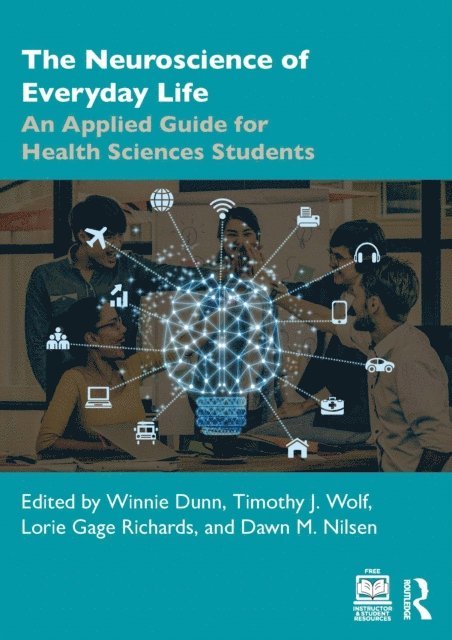
    Neuroscience of Everyday Life

    An Applied Guide for Health Sciences Students

    AvWinnie Dunn,Timothy J. Wolf

    Häftad, Engelska, 2025

    845 kr

    Beställningsvara. Skickas inom 10-15 vardagar. Fri frakt över 249 kr.

    Beskrivning

    By weaving vignettes and case studies throughout, this fascinating and original textbook provides an accessible primer not only on the key principles of neuroscience but, crucially, how they may manifest in the everyday lives of people with neurological conditions.Each chapter begins with the story of a person or family, including a description of what they want to do in their everyday life, before presenting the neuroscientific principles that underlie this person’s situation. Rather than a technical book about neuroanatomy, physiology, or pathology, the spotlight is on understanding the way that neurological differences impact a person’s life. Through focusing on a particular condition, each chapter highlights a different aspect of the nervous system, and what happens when things change. A wide range of topics are covered, from conditions such as Parkinson’s, dementia, MS, and autism, to conditions resulting from traumatic events such as spinal cord injuries, stroke, and chronic pain. The goal of the book is to trace a thread from neuroscience to how the nervous system affects active participation in daily activities. This approach gives students and professionals a thorough and informed grounding to support problem-solving in practice, improving evidence-based assessment, interventions, and outcomes.Following current evidence-based teaching practices, this text emphasizes engaged teaching/learning methods throughout each chapter to encourage students’ own active discovery. This ground-breaking text will be essential reading for any health science students as well as professionals in practice.

    Produktinformation

    • Utgivningsdatum:2025-01-22
    • Mått:174 x 246 x 21 mm
    • Vikt:670 g
    • Format:Häftad
    • Språk:Engelska
    • Antal sidor:344
    • Förlag:Taylor & Francis Inc
    • ISBN:9781638221265

    Utforska kategorier

    • Arbetsterapi inom Medicin
    • Neurologi och klinisk neurofysiologi inom Medicin

    Mer om författaren

    Winnie Dunn, Distinguished Professor, Occupational Therapy, University of Missouri, USA. Timothy J. Wolf, Associate Dean for Research, Chair Occupational Therapy University of Missouri, USA.Lorie Gage Richards, Associate Professor, Chair, Occupational Therapy, University of Utah, USA.Dawn M. Nilsen, Professor and Director, Programs in Occupational Therapy, Columbia University, USA.

    Innehållsförteckning

    • Introduction UNIT I Sensorimotor systems 1. Alex wants to put on make‑up and has Bell’s palsy: neuroscience facilitates our understanding of self‑care routines 2. Omar wants to cook meals for his children and has myasthenia gravis: neuroscience facilitates our understanding of self‑care routines 3. Danea wants to complete personal hygiene to go out with friends and has a spinal cord injury: neuroscience facilitates our understanding of personal hygiene 4. Thomas wants to stay connected using a computer and has amyotrophic lateral sclerosis: neuroscience facilitates our understanding of computer use 5. Erna wants to clean her home and has cerebral palsy: neuroscience facilitates our understanding of home maintenance 6. Stella wants to garden and has Friedreich’s ataxia: neuroscience facilitates our understanding of participation in hobbies 7. Torrance wants to be successful in their new job and is autistic: neuroscience facilitates our understanding of workplace modifications 8. Branden wants to run errands and is blind: neuroscience facilitates our understanding of running errands 9. Chloe wants to be successful entering college and has Ménière’s disease: neuroscience facilitates our understanding of attending college 10. Lydia wants to volunteer and has fibromyalgia: neuroscience facilitates our understanding of volunteering UNIT II Social emotional systems 11. Kareem wants to be in a club and has autism: neuroscience facilitates our understanding of making friends 12. Ian wants to manage his money and has schizophrenia: neuroscience facilitates our understanding of money management 13. Alyssa wants to go out with friends and has anxiety: neuroscience facilitates our understanding of going out with friends 14. Abraham wants to fish and has depression: neuroscience facilitates our understanding of learning a new activity 15. Sonya wants to care for her children and has bipolar disorder: neuroscience facilitates our understanding of caring for children 16. Preston wants to reconnect with his children and is in recovery from addiction: neuroscience facilitates our understanding of family dynamics UNIT III Cognitive systems 17. Peter wants to build a playhouse for his siblings and has ADHD: neuroscience facilitates our understanding of task completion 18. Marcus wants to interact with friends via social media and has developmental language disorder: neuroscience facilitates our understanding of social media use 19. Paul wants to participate in his routine at home and has Alzheimer’s disease: neuroscience facilitates our understanding of place and routines 20. Louise wants to organize her schedule and routines and has breast cancer: neuroscience facilitates our understanding of life organization UNIT IV Integrated systems 21. Xavier wants to complete his personal hygiene by himself and has had a stroke: neuroscience facilitates our understanding of daily routines 22. Natalie wants to drive her car and has a traumatic brain injury: neuroscience facilitates our understanding of driving a car 23. Antoine wants to play with his grandchildren and has Parkinson’s disease: neuroscience facilitates our understanding of playing with grandchildren Appendix: table template for analysis of participation features with nervous system functions