E-bok, Engelska, 2019
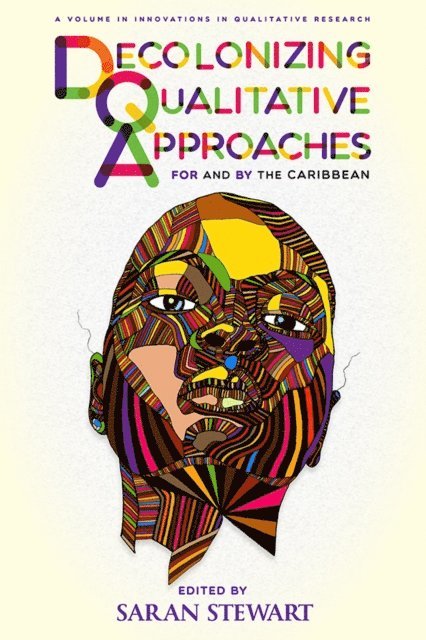
Decolonizing Qualitative Approaches for and by the Caribbean
396 kr
Läs direkt i Bokus Reader – eller ladda ned till din enhet
Beskrivning
As academics in postcolonial Caribbean countries, we have been trained to believe that research should be objective: a measurable benefit to the public good and quantifiable in nature so as to generalize findings to develop knowledge societies for economic growth. What happens, however when the very word ''research'' connotes a derogatory term or semblance of distrust? Smith (1999) speaks towards the distrustful nature of the term as a legacy of European imperialism and colonialism. Against this backdrop, how do Caribbean researchers leverage recognized and valued (indigenous) methods of knowing and understanding for and by the Caribbean populace? How do we learn from indigenous research methods such as Kaupapa Maori (Smith, 1999) and develop an understanding of research that is emancipatory in nature? Decolonizing qualitative methods are rooted in critical theory and grounded in social justice, resistance, change and emancipatory research for and by the Other (Said, 1978). Rodney’s (1969) legacy of ''groundings'' provides a Caribbean oriented ethnographic approach to collecting data about people and culture. It is an anti-imperialist method of data collection focused on the socioeconomic and political environment within the (post) colonial context. Similar to Rodney, other critical Caribbean scholars have moved the research discourse to center on the notions of resistance, struggle (Chevannes, 1995; Feraria, 2009) and decolonoizing methodologies. This proposed edited volume will provide a collective body of scholarship for innovative uses of decolonizing qualitative research.
In order to theorize and conduct decolonizing research, one can argue that the researcher as self and as the Other needs to be interrogated. Borrowing from an autoethnographic ontology, the researcher or investigator recognizes the self as the unit of measure, and there is a concerted effort to continuously see the self, seeing the self through and as the other (Alexander, 2005; Ellis, 2004). This level of interrogation may require frameworks such as Reasonable Humanism in which there is a clear understanding of the role of the researcher and researched from a physiological and psychosocial standpoint. Thereafter, the researcher is better prepared to enter into a discourse about decolonizing methodologies.
The origins of qualitative inquiry in the Caribbean can be traced to political and economic discourses – Marxism, postcolonialism, neocolonialism, capitalism, liberalism, postmodernism- which have challenged ways of knowing and the construction of knowledge. Evans (2009) traced the origins of qualitative inquiry to slave narratives, proprietor’s journals, missionaries’ reports and travelogues. Common to the Caribbean is an understanding of how colonial legacies of research have ridiculed oral traditions, language, and ways of knowing, often rendering them valueless and inconsequential. This proposed edited volume acknowledges the significance of decolonizing approaches to qualitative research in the Caribbean and the wider Caribbean diaspora. It includes an audience of scholars, teacher/ researchers and students primarily in and across the humanities, social sciences and educational studies. This proposed volume would provide much needed knowledge and best practice strategies to the community of researchers engaged in decolonizing methodologies. Additionally, this volume will allow readers to think of new imaginings of research design that deconstruct power and privilege to benefit knowledge, communities and participants. It will spark key objectives, directions and frameworks for deeper discussions and interrogations of normative, westernized and hegemonic approaches to qualitative research. Lastly, the volume will welcome empirical studies of application of decolonizing methodologies and theoretical studies that frame critical discourse.
Produktinformation
- Utgivningsdatum: 2019-07-25
- Språk: Engelska
- Filformat: EPUB
- Kopieringsskydd: LCP
- ISBN: 9781641137331
- Förlag: Emerald Publishing Limited
Utforska kategorier
Betyg & recensioner
0 recensioner
Inga recensioner tillgängliga.