• Fri frakt över 249 kr
  • •
  • Snabba leveranser
  • •
  • Billiga böcker
Kundservice

Du är på sajten för privatpersoner.

Företag, bibliotek eller offentlig verksamhet?

Du handlar på classic.bokus.com, där alla dina funktioner finns intakta.
Till classic.bokus.com
Bokus logotyp. Gå till startsidan.
  • Erbjudanden
  • Nyheter
  • Student
  • Topplistor
  • Barn & ungdom
  • Bokus Play
  • E-böcker
  • Pocketböcker
  • Spel & pussel

10% rabatt på allt med kod: NYSTART10 →

Sidfot

Mina sidor

    Hjälp

    • Kundservice
    • Vanliga frågor och svar
    • Frakt och leverans
    • Retur vid ångerrätt
    • Reklamera vara
    • Betalning
    • Köpvillkor
    • Allmänna villkor
    • Information om webbplatsens tillgänglighet

    Om Bokus

    • Om oss
    • Pressrum
    • För studenter
    • För företag
    • För bibliotek och offentlig verksamhet
    • För leverantörer
    • Hållbarhet

    Populärt

    • Aktuella erbjudanden
    • Presentkort
    • Studentlitteratur
    • Nya böcker
    • Topplistor
    • Signerade böcker
    • Engelska böcker

    Inspiration

    • Boktips
    • BookTok
    • Populära bokserier
    • Barnbokskaraktärer
    • Populära författare
    Logotyp för Bokus
    Följ oss på Facebook (extern länk)Följ oss på Instagram (extern länk)Följ oss på YouTube (extern länk)Följ oss på TikTok (extern länk)
    bokus @ CookiesAnpassa cookiesIntegritetspolicyKöpvillkor
    Till Citymail hemsida (extern länk)Till Budbee hemsida (extern länk)Till Postnord hemsida (extern länk)Till Schenker hemsida (extern länk)Till Early Bird hemsida (extern länk)Till Walleys hemsida (extern länk)
    1. Historia och arkeologi
    2. Historia
    3. Europas historia

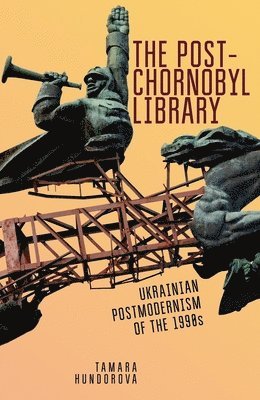
    Post-Chornobyl Library

    Ukrainian Postmodernism of the 1990s

    AvTamara Hundorova

    Häftad, Engelska, 2019

    Del i serien Ukrainian Studies

    561 kr

    Beställningsvara. Skickas inom 5-8 vardagar. Fri frakt över 249 kr.

    Fler format och utgåvor

    E-bok

    2 892 kr

    E-bok

    812 kr

    Beskrivning

    Honorable Mention - American Association for Ukrainian Studies (AAUS) 2018-2019 Book PrizeHaving exploded on the margins of Europe, Chornobyl marked the end of the Soviet Union and tied the era of postmodernism in Western Europe with nuclear consciousness. The Post-Chornobyl Library in Tamara Hundorova’s book becomes a metaphor of a new Ukrainian literature of the 1990s, which emerges out of the Chornobyl nuclear trauma of the 26th of April, 1986. Ukrainian postmodernism turns into a writing of trauma and reflects the collisions of the post-Soviet time as well as the processes of decolonization of the national culture. A carnivalization of the apocalypse is the main paradigm of the post-Chornobyl text, which appeals to “homelessness” and the repetition of “the end of histories.” Ironic language game, polymorphism of characters, taboo breaking, and filling in the gaps of national culture testify to the fact that the Ukrainians were liberating themselves from the totalitarian past and entering the society of the spectacle. Along this way, the post-Chornobyl character turns into an ironist, meets with the Other, experiences a split of his or her self, and witnesses a shift of geo-cultural landscapes.

    Produktinformation

    • Utgivningsdatum:2019-12-12
    • Mått:155 x 234 x 21 mm
    • Vikt:475 g
    • Format:Häftad
    • Språk:Engelska
    • Serie:Ukrainian Studies
    • Antal sidor:338
    • Förlag:Academic Studies Press
    • ISBN:9781644692387
    • Översättare:Sergiy Yakovenko

    Utforska kategorier

    • Europas historia inom Historia och arkeologi
    • Litteraturvetenskap inom Skönlitteratur

    Mer om författaren

    Tamara Hundorova is Chair of the Department of Literary Theory and Comparative Literature at the Institute of Literature, National Academy of Sciences of Ukraine and Associate of Harvard Ukrainian Research Institute. She is the author of Transit Culture: Symptoms of Postcolonial Trauma (2013), Kitsch and Literature: Travesties (2008), The Emerging Word: The Discourse of Early Ukrainian Modernism (1997, 2013), Femina melancholica: Sex and Culture in the Gender Utopia of Olha Kobylianska (2002). She taught at Toronto University, Harvard Summer School, Greifswald Ukrainicum, Ukrainian Free University. She was awarded a Fulbright Fellowship, a Petro Jacyk Distinguished Fellowship (Harvard University), a visiting professorship at the SURC (Hokkaido University) and a fellowship at Monash University (Australia).Dr. Sergiy Yakovenko teaches in the Department of English at MacEwan University. He is the author of Romantics, Aesthetes, Nietzscheans: Ukrainian and Polish Literary Criticism of the Early Modernist Period (2006) and Poetics and Anthropology: Essays on Ukrainian and Polish Prose on the 20th Century (2007), both books in Ukrainian.

    Recensioner i media

    “[A]n exciting addition to the growing field of anglophone studies of Ukrainian literature. Hundorova masterfully traces the etiologies and manifestations of postmodern literary and cultural structures in Ukraine, placing the explosion of the Chornobyl nuclear power plant as the genesis of the postmodern cultural and literary movement in Ukraine. … Ultimately, Hundorova's The Post-Chornobyl Library is an important contribution not only to the field of Ukrainian literary criticism but also to the expansive library of studies of postmodernism. This work will certainly prove useful to people in either field of study, and its new translation into English allows anglophone critics access to Hundorova's comprehensive, insightful, and theoretically sophisticated arguments on Ukrainian literature, postmodernism, and their interaction.”—Brett Donohoe, Harvard University, H-Ukraine

    Innehållsförteckning

    • Table of ContentsPreface1. Nuclear Discourse, or Literature after Chornobyl2. Nuclear Apocalypse and Postmodernism3. The Socialist Realist Chornobyl Discourse4. Nuclear (Non)-Representation5. Chornobyl and Virtuality6. Chornobyl and the Cultural Archive7. Chornobyl Postmodern Topography8. Chornobyl and the Crisis of Language9. Postmodernism: The Synchronization of History10. Ukrainian Postmodernism: The Historical Framework11. A Farewell to the Classic12. The “Ex-Centricity” of the Great Character13. Postmodernism and the “Cultural Organic”14. Postmodernism as Ironic Behavior15. Bu-Ba-Bu: A New Literary Formation16. The Carnivalesque Postmodern17. Yuri Andrukhovych’s Carnival: A History of Self-Destruction18. After the Carnival: Bu-Ba-Bu Postmortem19. Narrative Apocalypse: Taras Prokhasko’s Topographic Writing20. The Virtual Apocalypse: The Post-Verbal Writing of Yurko Izdryk21. The Grotesques of the Kyiv Underground: Dibrova—Zholdak—Poderviansky22. Feminist Postmodernism: Oksana Zabuzhko23. Postmodern Europe: Revision, Nostalgia, and Revenge24. The Chornobyl Apocalypse of Yevhen Pashkovsky25. The Postmodern Homelessness of Serhiy Zhadan26. Volodymyr Tsybulko’s Pop-Postmodernism27. The (De)KONstructed Postmodernism of Yuriy Tarnawsky28. PS. A Comment from the “End of Postmodernism”29. Types of Postmodernism