• Fri frakt över 249 kr
  • •
  • Snabba leveranser
  • •
  • Billiga böcker
Kundservice

Du är på sajten för privatpersoner.

Företag, bibliotek eller offentlig verksamhet?

Du handlar på classic.bokus.com, där alla dina funktioner finns intakta.
Till classic.bokus.com
Bokus logotyp. Gå till startsidan.
  • Erbjudanden
  • Nyheter
  • Student
  • Topplistor
  • Barn & ungdom
  • Bokus Play
  • E-böcker
  • Pocketböcker
  • Spel & pussel

10% rabatt på allt med kod: NYSTART10 →

Sidfot

Mina sidor

    Hjälp

    • Kundservice
    • Vanliga frågor och svar
    • Frakt och leverans
    • Retur vid ångerrätt
    • Reklamera vara
    • Betalning
    • Köpvillkor
    • Allmänna villkor
    • Information om webbplatsens tillgänglighet

    Om Bokus

    • Om oss
    • Pressrum
    • För studenter
    • För företag
    • För bibliotek och offentlig verksamhet
    • För leverantörer
    • Hållbarhet

    Populärt

    • Aktuella erbjudanden
    • Presentkort
    • Studentlitteratur
    • Nya böcker
    • Topplistor
    • Signerade böcker
    • Engelska böcker

    Inspiration

    • Boktips
    • BookTok
    • Populära bokserier
    • Barnbokskaraktärer
    • Populära författare
    Logotyp för Bokus
    Följ oss på Facebook (extern länk)Följ oss på Instagram (extern länk)Följ oss på YouTube (extern länk)Följ oss på TikTok (extern länk)
    bokus @ CookiesAnpassa cookiesIntegritetspolicyKöpvillkor
    Till Citymail hemsida (extern länk)Till Budbee hemsida (extern länk)Till Postnord hemsida (extern länk)Till Schenker hemsida (extern länk)Till Early Bird hemsida (extern länk)Till Walleys hemsida (extern länk)
    1. Skönlitteratur
    2. Litteraturvetenskap

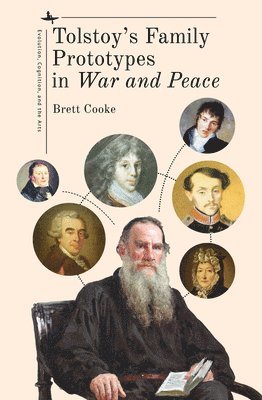
    Tolstoy’s Family Prototypes in "War and Peace"

    AvBrett Cooke

    Inbunden, Engelska, 2020

    Del i serien Evolution, Cognition, and the Arts

    1 261 kr

    Skickas . Fri frakt över 249 kr.

    Beskrivning

    What were the consequences of Tolstoy’s unusual reliance on members of his family as source material for War and Peace? Did affection for close relatives influence depictions of these real prototypes in his fictional characters? Tolstoy used these models to consider his origins, to ponder alternative family histories, and to critique himself. Comparison of the novel and its fascinating drafts with the writer’s family history reveals increasing preferential treatment of those with greater relatedness to him: kin altruism, i.e., nepotism. This pattern helps explain many of Tolstoy’s choices amongst plot variants he considered, as well as some of the curious devices he utilizes to get readers to share his biases, such as coincidences, notions of “fate,” and aversion to incest.

    Produktinformation

    • Utgivningsdatum:2020-12-10
    • Mått:155 x 234 x 22 mm
    • Vikt:623 g
    • Format:Inbunden
    • Språk:Engelska
    • Serie:Evolution, Cognition, and the Arts
    • Antal sidor:318
    • Förlag:Academic Studies Press
    • ISBN:9781644694084

    Utforska kategorier

    • Litteraturvetenskap inom Skönlitteratur
    • Litteraturvetenskap inom Skönlitteratur

    Mer om författaren

    Brett Cooke is Professor of Russian at Texas A&M University. He is the author of Pushkin and the Creative Process, and Human Nature in Utopia: Zamyatin's We and editor or co-editor of Sociobiology and the Arts, The Fantastic Other, Biopoetics: Evolutionary Explorations in the Arts, Critical Insights: War and Peace, and, recently, Evolution and Popular Narrative.

    Innehållsförteckning

    • Table of ContentsAcknowledgementsIntroduction: Aesthetic Kin Altruism1. Background and Overview2. Family Structures3. Kin Altruism4. Names and Family Traditions5. Writing the Novel with the Family6. The Problem with Prototypes7. Genetic Allies8. Unrelated Family Associates9. Distant Relatives10. Tolstoy’s Grandparents11. Tolstoy’s Parents12. The Parents’ Marriage13. What about Sonya?14. A Genetic Clash—and Inclusive Errors15. Incest AvoidanceA. Actual Brother-Sister/Parent-Child (50% Relatedness)B. Avuncular (25% Relatedness)C. Cousins (12.5% Relatedness)D. First Cousin Once Removed (6.25% Relatedness)E. Second Cousin (3.125% Relatedness)F. Affinity (0% Relatedness)G. The Westermarck Effect (0% Relatedness)16. Self-Altruism17. Kin Altruism ReconsideredBibliographyIndex