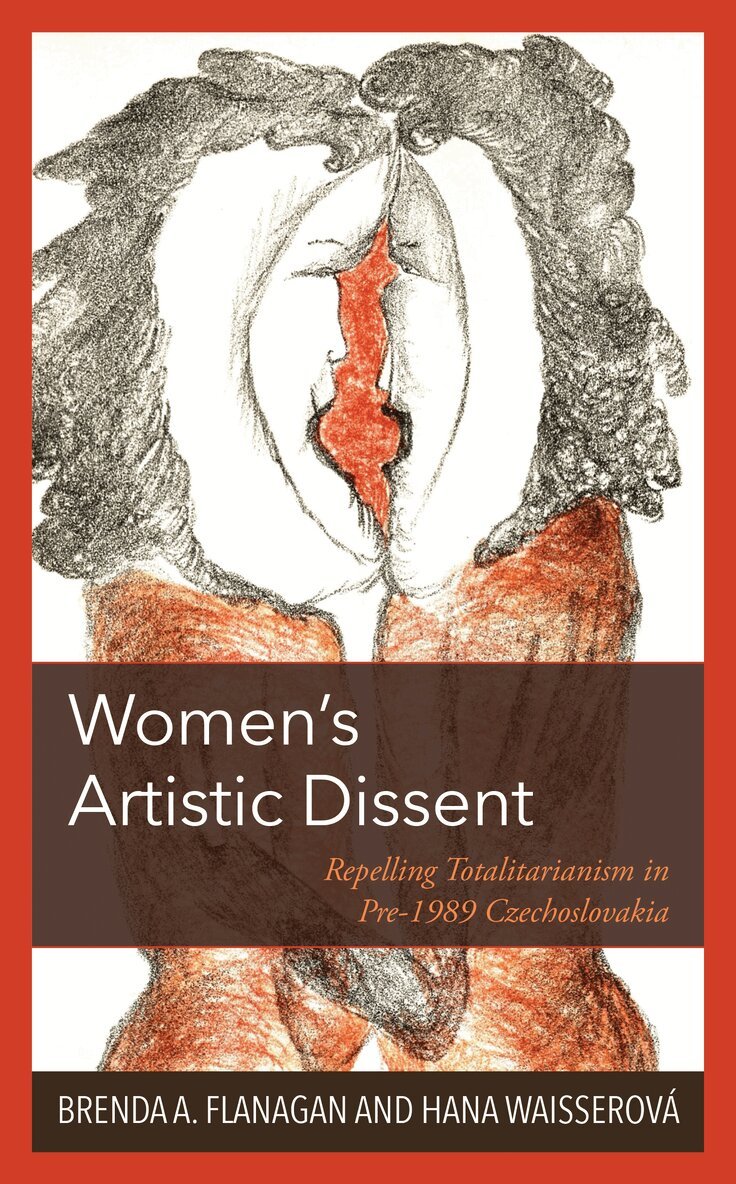
Inbunden, Engelska, 2023
Women’s Artistic Dissent
Repelling Totalitarianism in Pre-1989 Czechoslovakia
Av Brenda A. Flanagan, Hana Waisserová
Del i serien Lexington Books
1239 kr
Beställningsvara. Skickas inom 10-15 vardagar. Fri frakt över 249 kr.
Beskrivning
Produktinformation
- Utgivningsdatum: 2023-12-04
- Mått: 159 x 237 x 21 mm
- Vikt: 562 g
- Format: Inbunden
- Språk: Engelska
- Serie: Lexington Books
- Antal sidor: 278
- Förlag: Bloomsbury Publishing Plc
- ISBN: 9781666904727
Utforska kategorier
Mer om författaren
Brenda Flanagan is Edward M. Armfield Professor of English and core faculty in Africana Studies at Davidson College. at Davidson College.Hana Waisserová is associate professor of practice of Czech studies at the University of Nebraska-Lincoln.
Recensioner i media
Women’s Artistic Dissent: Repelling Totalitarianism in Pre-1989 Czechoslovakia, a tribute to Czech women dissidents, focuses on the writer Eda Kriseová and the Surrealist artist and writer Eva Švankmajerová, who carved, through their art and writing, spaces of freedom, resistance, and empathy, within oppressive Communist Czechoslovakia, but also within the male-dominated dissent. Flanagan and Waisserová are uniquely qualified to write this book: transnational educators and writers, they possess a keen understanding of the interplay between art, political repression, and gender. With respect and admiration for their subjects’ commitment to imagination, authenticity, and environmental sustainability, they let Kriseová and Švankmajerová speak for themselves, through fiction and interviews: as much as about them, they write with them. The book’s insightful portrayals of the two women fill a gap in our understanding of dissent and art in Czechoslovakia.
Betyg & recensioner
0 recensioner
Inga recensioner tillgängliga.