• Fri frakt över 249 kr
  • •
  • Snabba leveranser
  • •
  • Billiga böcker
Kundservice

Du är på sajten för privatpersoner.

Företag, bibliotek eller offentlig verksamhet?

Du handlar på classic.bokus.com, där alla dina funktioner finns intakta.
Till classic.bokus.com
Bokus logotyp. Gå till startsidan.
  • Erbjudanden
  • Nyheter
  • Student
  • Topplistor
  • Barn & ungdom
  • Bokus Play
  • E-böcker
  • Pocketböcker
  • Spel & pussel

10% rabatt på allt med kod: NYSTART10 →

Sidfot

Mina sidor

    Hjälp

    • Kundservice
    • Vanliga frågor och svar
    • Frakt och leverans
    • Retur vid ångerrätt
    • Reklamera vara
    • Betalning
    • Köpvillkor
    • Allmänna villkor
    • Information om webbplatsens tillgänglighet

    Om Bokus

    • Om oss
    • Pressrum
    • För studenter
    • För företag
    • För bibliotek och offentlig verksamhet
    • För leverantörer
    • Hållbarhet

    Populärt

    • Aktuella erbjudanden
    • Presentkort
    • Studentlitteratur
    • Nya böcker
    • Topplistor
    • Signerade böcker
    • Engelska böcker

    Inspiration

    • Boktips
    • BookTok
    • Populära bokserier
    • Barnbokskaraktärer
    • Populära författare
    Logotyp för Bokus
    Följ oss på Facebook (extern länk)Följ oss på Instagram (extern länk)Följ oss på YouTube (extern länk)Följ oss på TikTok (extern länk)
    bokus @ CookiesAnpassa cookiesIntegritetspolicyKöpvillkor
    Till Citymail hemsida (extern länk)Till Budbee hemsida (extern länk)Till Postnord hemsida (extern länk)Till Schenker hemsida (extern länk)Till Early Bird hemsida (extern länk)Till Walleys hemsida (extern länk)
    1. Språk och ordböcker
    2. Språkvetenskap och lingvistik

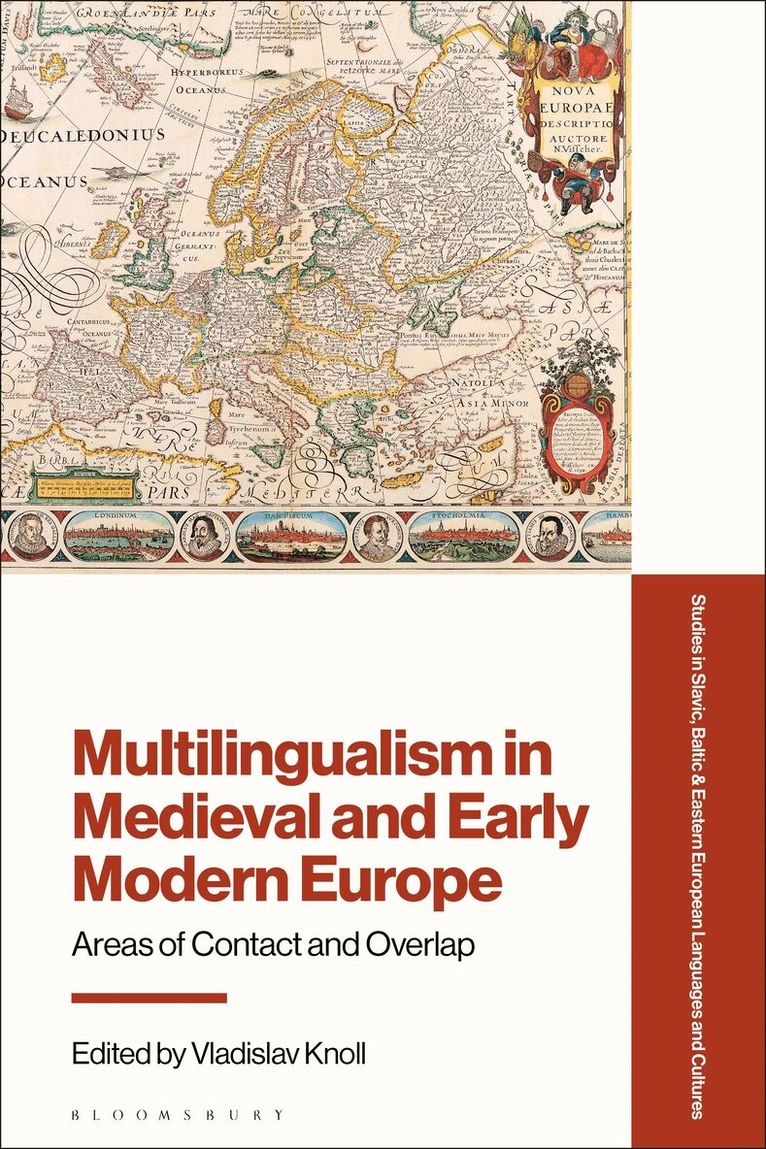
    Multilingualism in Medieval and Early Modern Europe

    Areas of Contact and Overlap

    AvVladislav Knoll

    Inbunden, Engelska, 2026

    Del i serien Studies in Slavic, Baltic, and Eastern European Languages and Cultures

    1 346 kr

    Slutsåld

    Beskrivning

    This interdisciplinary work explores historical multilingualism viewed from the early Middle Ages to the beginning of the seventeenth century. It presents research methodologies related to different cultural areas of Europe covered by several classical languages. This approach aims to dispel the common misconception that Western Europe, dominated by Latin culture, constituted the only part of medieval Europe.The volume consists of an extended introduction and twelve chapters reflecting different correlations of multilingualism and language contact in Western, Central, and Southeastern Europe during the period under study. The authors discuss various aspects of the relationship between classical languages and vernaculars, as well as the overlap of cultural areas. They adopt different points of view (multilingual texts, translations, language contacts, historical records of multilingualism), research methods, and applications of primary sources. Written by both seasoned scholars and young researchers, the chapters present novel concepts and point the way forward for the study of multilingualism, focused on the British Isles, Central Europe, and Southeastern Europe from various perspectives.The chapters discuss both itinerant (traveling) and static multilingualism, as well as the confrontation of different languages in different mutual relationships. For the pre-modern period, such relations are linked to the varied social (diastratic) and functional roles of two types of languages: classical and vernacular. The confrontation of more classical languages or languages belonging to different cultural areas often involves scriptal pluricentricity. The book deals with a wide range of classical languages: Arabic, Armenian, Church Slavonic, Greek, Hebrew, and Latin. The vernaculars discussed include (Old and Middle) Czech, (Old) English, (Early New High) German, (Middle) Hungarian, Old Norse, (Old and Middle) Polish, (Old) Romanian, (Vernacular Middle) Greek.

    Produktinformation

    • Utgivningsdatum:2026-11-26
    • Mått:152 x 229 x 25 mm
    • Vikt:454 g
    • Format:Inbunden
    • Språk:Engelska
    • Serie:Studies in Slavic, Baltic, and Eastern European Languages and Cultures
    • Antal sidor:376
    • Förlag:Bloomsbury Publishing PLC
    • ISBN:9781666965605

    Utforska kategorier

    • Språkvetenskap och lingvistik inom Språk och ordböcker
    • Medeltiden inom Historia och arkeologi

    Mer om författaren

    Vladislav Knoll is a Research Fellow at the Slavonic Institute of the Czech Academy of Sciences, Czech Republic

    Recensioner i media

    Multilingualism is a well-known feature of the modern world. This richly documented and subtly argued collection shows it has always been with us, valuably extending our knowledge and understanding of the phenomenon back into earlier times.

    Innehållsförteckning

    • 1. Multilingualism and Cultural Areas in Medieval EuropePart I: Overlaps of Cultural Areas 2. The “Peripatetic Multilingualism” in Early Medieval Europe: The Case of Slavic and Syriac 3. Are the Slavic Glosses of Avraham ben Azriel Upper Sorbian?4. Language Contact in Late-medieval Transylvania: A Sociolinguistic Approach to Church Inscriptions5. Cyrillic Printing in Transylvania and Wallachia: Between Church Slavonic and Romanian6. Siquidem ?e?d??ta? ???d??: Switching to Humanist Greek in Neo-Latin Poetry of Bohemian Origin (ca. 1500–1622)Part II: Classical Languages and Vernaculars7. External Possession in Medieval Greek Vernacular Sources8. The Book Exodus in the Old English Heptateuch Concerning the Translation of Female References9. Looking for the Perfect Equivalents of the Latin Rare Words: The Vernacular Glosses in the Didactic Work of Middle Ages CornutusPart III: Vernaculars in Contact10. Verb musiti/musiec “must” and its Functional Equivalents in Czech and Polish Translations of the New Testament, 1506–163211. From Lowe Men to Lowe of Herte: Additional Notes on the Gradual Semantic Development of Scandinavian lexical Borrowings in Old and Middle English: Anglo-Scandinavian Lexical Relations