E-bok, Engelska, 2022
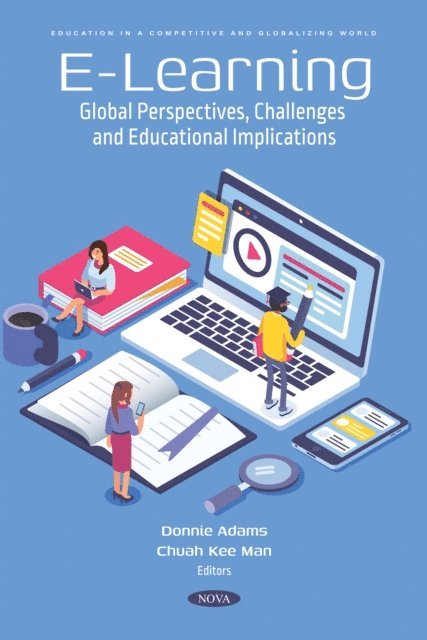
E-Learning: Global Perspectives, Challenges and Educational Implications
Av Donnie Adams
1505 kr
Läs direkt i Bokus Reader – eller ladda ned till din enhet (PDF kräver ofta zoom och scroll på små skärmar).
Beskrivning
As the world recovers from the unprecedented outbreak of the COVID-19 pandemic, the field of education continues to cushion the impacts of school closures and teaching disruption through various measures. E-learning, while not new, has taken a greater role in mitigating the effects of the pandemic. This book, E-Learning: Global Perspectives, Challenges and Educational Implications, is not only a collection of chapters shared by researchers and academics but also a manifestation of the dedication of those involved in the pursuit of providing equitable and quality education through the support of e-learning tools and platforms. The book begins with an outlook on the post-pandemic potentials and challenges of utilising e-learning for cross-border education. The chapter by Donnie Adams and Chuah Kee Man focuses on the necessary measures that can be taken to fully maximise the use of e-learning in promoting cross-border education in higher education institutions. It is indeed timely for higher education institutions to re-examine the concept of cross-border education through the lens of e-learning and virtual mobility especially when physical presence is costly or not feasible. Several innovative pedagogical approaches and ideas are also presented in enhancing learning experience via e-learning. In Chapter 2, Zainun Mustafa and colleagues offered their perspectives on using creative pedagogy through e-learning for the purpose of science education. They explain the distinctive components of creative pedagogy that can be incorporated through various e-learning tools in order to foster meaningful learning in science classrooms. In Chapter 3, Vinothini Vasodavan and colleagues focus on developing students' attitude domain via online collaborative learning tools. They propose a framework which was derived through the fuzzy Delphi method. Their model serves as a guide in selecting the most suitable collaborative learning tools to develop the attitude domain of the students. In the next chapter, Selvakumar Selvarajan and colleagues introduce the concept of interactive digital storytelling assignment in online teaching and learning that could help teachers foster higher order thinking skills among their students. In addition, studies that measure the impact of online learning in different settings are also included in this book. In Chapter 5, Mustaji and colleagues reported the outcomes from their study on online learning engagement among Indonesian university students during the COVID-19 pandemic. Using Rasch model analysis, their study highlighted the Indonesian students' level of engagement and readiness in coping with online learning. In Chapter 6, Muhammad Mujtaba Asad and colleagues shared their findings on a study conducted on university students in Pakistan, which examined the challenges that they faced dealing with online learning during the pandemic. Finally, in Chapter 7, Riccardo Corrado and Audrey Liwan described massive open online courses (MOOCs) implementation in the Association of Southeast Asian Nations (ASEAN) region, specifically on the barriers faced by the member states. They also offered their review of issues to be addressed in creating a homogeneous ecosystem for MOOCs in ASEAN.
Produktinformation
- Utgivningsdatum: 2022-03-15
- Språk: Engelska
- Antal sidor: 161
- Filformat: PDF
- Kopieringsskydd: LCP
- ISBN: 9781685076511
- Förlag: Nova Science Publishers, Inc.
Utforska kategorier
Betyg & recensioner
0 recensioner
Inga recensioner tillgängliga.