• Fri frakt över 249 kr
  • •
  • Snabba leveranser
  • •
  • Billiga böcker
Kundservice

Du är på sajten för privatpersoner.

Företag, bibliotek eller offentlig verksamhet?

Du handlar på classic.bokus.com, där alla dina funktioner finns intakta.
Till classic.bokus.com
Bokus logotyp. Gå till startsidan.
  • Erbjudanden
  • Nyheter
  • Student
  • Topplistor
  • Barn & ungdom
  • Bokus Play
  • E-böcker
  • Pocketböcker
  • Spel & pussel

10% rabatt på allt med kod: NYSTART10 →

Sidfot

Mina sidor

    Hjälp

    • Kundservice
    • Vanliga frågor och svar
    • Frakt och leverans
    • Retur vid ångerrätt
    • Reklamera vara
    • Betalning
    • Köpvillkor
    • Allmänna villkor
    • Information om webbplatsens tillgänglighet

    Om Bokus

    • Om oss
    • Pressrum
    • För studenter
    • För företag
    • För bibliotek och offentlig verksamhet
    • För leverantörer
    • Hållbarhet

    Populärt

    • Aktuella erbjudanden
    • Presentkort
    • Studentlitteratur
    • Nya böcker
    • Topplistor
    • Signerade böcker
    • Engelska böcker

    Inspiration

    • Boktips
    • BookTok
    • Populära bokserier
    • Barnbokskaraktärer
    • Populära författare
    Logotyp för Bokus
    Följ oss på Facebook (extern länk)Följ oss på Instagram (extern länk)Följ oss på YouTube (extern länk)Följ oss på TikTok (extern länk)
    bokus @ CookiesAnpassa cookiesIntegritetspolicyKöpvillkor
    Till Citymail hemsida (extern länk)Till Budbee hemsida (extern länk)Till Postnord hemsida (extern länk)Till Schenker hemsida (extern länk)Till Early Bird hemsida (extern länk)Till Walleys hemsida (extern länk)
    1. Psykologi och pedagogik
    2. Pedagogik
    3. Utbildningsstrategier och utbildningspolitik

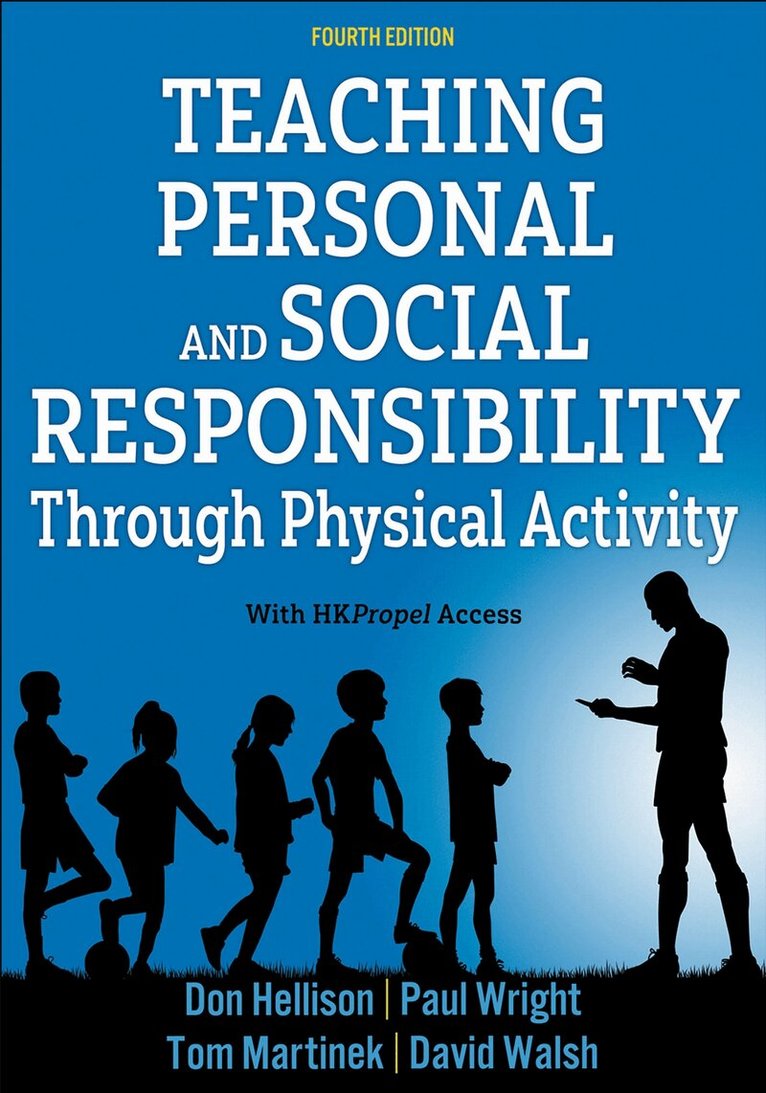
    Teaching Personal and Social Responsibility Through Physical Activity

    AvDon Hellison,Paul M. Wright

    Häftad, Engelska, 2025

    605 kr

    Beställningsvara. Skickas inom 5-8 vardagar. Fri frakt över 249 kr.

    Beskrivning

    Teaching Personal and Social Responsibility Through Physical Activity now enters its fourth edition, continuing the legacy of Don Hellison and his teaching personal and social responsibility (TPSR) model. This text is the only comprehensive resource covering the TPSR model through physical activity. With more than 50 years of use in gyms, playing fields, and classrooms, the TPSR model has withstood the test of time and continues to be used to teach transferable life skills to kids from all backgrounds to support positive social change.Building on the foundation of research from the first three editions, this updated text connects TPSR to the recent emphasis on mental health, social and emotional learning (SEL), and trauma-informed practices. It also provides direction to teach affective and social goals, giving an in-depth look into teaching character development and values to help students develop personal and social responsibility.Designed to enhance reader comprehension, Teaching Personal and Social Responsibility Through Physical Activity, Fourth Edition, is a practical resource with proven and easy-to-implement ideas to support student growth in school, after school, and in alternative settings. Special features include these: TPSR in Action: sidebars written by world-wide practitioners that highlight the creativity and innovation of TPSR through programs and projects across cultural and linguistic borders Is It Working?: examples of the cutting-edge research that supports TPSR Kid Quotes: quotes from kids in TPSR programs as well as quotes from teachers and coaches Takeaways: summary points in every chapter Robust appendixes: samples of TPSR lesson plans, a TPSR implementation checklist, a kinesiology career club workbook, a post-teaching reflection, and a TPSR feedback form Online resources: forms, unit and lesson plans, and learner assessments from the book that can be easily downloaded and used Balancing theory and practice, the TPSR model is recognized as a best practice in physical education and sport-based youth development. This text takes Hellison’s model and reflects on new information, cultural awareness, and current practice to ensure that kids benefit from the TPSR model for years to come.Note: A code for accessing HKPropel is included with this ebook.

    Produktinformation

    • Utgivningsdatum:2025-05-27
    • Mått:178 x 254 x undefined mm
    • Vikt:680 g
    • Format:Häftad
    • Språk:Engelska
    • Antal sidor:320
    • Upplaga:4
    • Förlag:Human Kinetics Publishers
    • Medarbetare:Gloria Balague
    • ISBN:9781718211957

    Utforska kategorier

    • Utbildningsstrategier och utbildningspolitik inom Psykologi och pedagogik
    • Undervisning i specifika ämnen inom Psykologi och pedagogik

    Mer om författaren

    Don Hellison, PhD, was a professor in the college of education at the University of Illinois at Chicago and was cofounder of the Teaching Personal and Social Responsibility Alliance. He worked extensively with high-risk youth, was a distinguished research fellow at Adelphi University, and was a visiting professor at numerous universities in the United States and in Canada. Much of Hellison’s work focused on the development, implementation, and evaluation of alternative physical activity program models that teach life skills and values, especially for underserved youth. He published numerous books, articles, and book chapters. Hellison received many awards, including the Gulick Medal (AAHPERD’s highest honor) and the International Olympic Committee’s President’s Prize. He received grant support for 25 projects, served on three editorial boards, and was editor of Quest for two years. He gave keynote addresses, made presentations at professional meetings, and conducted workshops for teachers and youth workers in most of the 50 U.S. states, several Canadian provinces, Israel, South Korea, Ireland, New Zealand, Australia, England, and Spain. He also served on numerous committees for several professional associations. Don Hellison passed away in 2018.Paul M. Wright, PhD, is a professor in the department of kinesiology and physical education at Northern Illinois University (NIU). He has specialized in the teaching personal and social responsibility (TPSR) instructional model since 1996, when he began working with Don Hellison. His scholarship is very applied and relates directly to fields such as positive youth development, social and emotional learning, and sport for development. Wright also has interests in policy and program evaluation in relation to youth sport and physical activity. He has published over 100 articles and book chapters, consulted for organizations such as UNESCO, and received funding from agencies such as the Robert Wood Johnson Foundation and the U.S. Department of State. Reflecting the influence of his scholarship, he has been inducted as a fellow in the National Academy of Kinesiology and served as the chair of SHAPE America’s Research Council. Wright leads the Physical Activity and Life Skills (PALS) Group at NIU, which serves as an engine for engaged scholarship on these topics.Tom Martinek, EdD, is a professor in the department of kinesiology at the University of North Carolina at Greensboro (UNCG). During his 47-year tenure at UNCG, Martinek has focused his research efforts on the social and psychological dynamics of teaching and coaching. Martinek's work has been published in journals such as Research Quarterly for Exercise and Sport, Journal of Teaching in Physical Education, Journal of Sport and Exercise Psychology, Quest, The Urban Review, Physical Education and Sport Pedagogy, International Journal of Sport Science, and Community Youth Development Journal. He has also authored or coauthored five books. He has spent the past 31 years directing and teaching in youth development programs that have served over 600 underserved youth. He also provides preservice and in-service staff development programs for national and international practitioners who work with at-risk and underserved children and youth. His work with kids is informed by his past research on teacher expectancy effects, learned helplessness, and resiliency of children and youth.David Walsh, PhD, is a professor in and the chair of the department of kinesiology at San Francisco State University. He specializes in physical activity–based youth development programs for youth in underserved urban communities. Walsh has almost 30 years of experience with the development of, implementation of, and research on the teaching personal and social responsibility (TPSR) model. He has published numerous book chapters and articles in journals such as Research Quarterly for Exercise and Sport; Quest; Journal of Physical Education, Recreation, and Dance; and Physical Education and Sport Pedagogy. He has given keynote speeches, lectures, and workshops in many of the U.S. states and internationally in Australia, England, New Zealand, Portugal, and Spain. His research includes successful university–community collaborations, innovative programs for helping youth envision positive possible futures, strategies for effective service learning, impact of physical activity–based youth development programs, and support of LGBTQIA+ youth in sport-based and physical activity–based programs. Walsh’s broader scholarship is related to teaching the TPSR model to preservice and in-service teachers.

    Innehållsförteckning

    • Part I. IdeasChapter 1. A Brief History of TPSRHow It All Got StartedEvolution of the Model ItselfApples Don’t Fall Far From The TreeNot in the Margins AnymoreFinal ThoughtsChapter 2. What’s Worth Doing?What’s Worth Doing for PE and PA Professionals?Other Important QuestionsSocial Inequities and TrendsOur CommitmentsFinal ThoughtsChapter 3. A Framework for Teaching Personal and Social ResponsibilityCore ValuesAssumptionsLevels of ResponsibilityProgram Leader ResponsibilitiesGradual Empowerment (Shifting Responsibility to the Kids)Self-ReflectionIntegrationTransferRelationship With KidsDaily Program FormatFinal ThoughtsChapter 4. Being Relational With KidsFour Relational Qualities of TPSR ProgrammingHaving the Courage to ConfrontRelational Qualities and Relational TimeProgram Leader Qualities and SkillsKids and Their WorldFinal ThoughtsPart II. StrategiesChapter 5. Levels of ResponsibilityProgression of LevelsCumulative LevelsFive LevelsLevel ModificationsLevels and EmpowermentFinal ThoughtsChapter 6. Daily Program FormatRelational TimeAwareness TalkPhysical Activity PlanGroup MeetingReflection TimeFinal ThoughtsChapter 7. Embedding Responsibility in the Physical Activity ContentPhysical Activity ContentStrategy ProgressionLevel I StrategiesLevel II StrategiesLevel III StrategiesLevel IV StrategiesLevel V StrategiesFinal ThoughtsChapter 8. Strategies for Specific Problems and SituationsSelf-ReflectionReflection-in-ActionExpanding Your Bag of TricksLevel I: Individual Discipline ProblemsLevel I: Conflict Resolution StrategiesLevel II: Teaching by InvitationLevel III: Struggles With EmpowermentLevel IV: Helping and Leadership ProblemsLevel V: Specific Problems Outside the GymFinal ThoughtsPart III. ImplementationChapter 9. Coaching Clubs and Other TPSR Program StructuresCoaching ClubsCross-Age Teaching and LeadershipTPSR in Organized SportResponsibility-Based Fitness CentersTPSR on the Playground and at RecessTPSR in the ClassroomSchoolwide Adoptions of TPSRFinal ThoughtsChapter 10. TPSR in PE Teacher and Coach EducationTeacher Education Approaches for Learning TPSRPrinciples of PracticeTraining Teachers and Coaches on TPSR Through Developmental StagesFinal ThoughtsChapter 11. Assessment and Evaluation StrategiesStudent AssessmentTeacher EvaluationProgram EvaluationFinal ThoughtsChapter 12. Getting StartedContextSelf-AssessmentFirst StepsAdvanced StepsSome Examples of Getting StartedTeaching as a Subversive ActivityFinal ThoughtsEpilogueAppendix A: Sample TPSR Lesson PlansAppendix B: TPSR Implementation ChecklistAppendix C: Kinesiology Career Club WorkbookAppendix D: Tool for Assessing Responsibility-Based Education (TARE) Post-Teaching Reflection FormAppendix D: TPSR Feedback Form