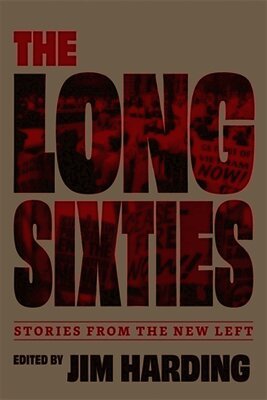
Jim Harding is past director of the School of Human Justice at the University of Regina. He served as inner-city representative on Regina City Council and as mayor of the Village of Fort San. He is the founding board chair of the Qu’Appelle Valley Centre for the Arts and a founding director of the Qu’Appelle Valley Environmental Association.Harding was involved in the formation of the Student Union for Peace Action, the early NDP and the Combined University Campaign for Nuclear Disarmament. He has authored several books, including After Iraq (2004) and Canada’s Deadly Secret (2007), and he edited Social Policy and Social Justice (1995), and has written widely in newspapers, journals, and magazines.Historian Bryan Palmer calls Jim Harding “one of Western Canada’s leading New Leftists.” For Jim, writing and activism have always been interwoven: “Beliefs based in ideology always let me down. Without more fully, concretely understanding what is happening I would have been greatly limited in both strategic and tactical foresight. Without learning the importance of critical reflection, early on, I would never have been able to stay in movement activism for the long game.”Bob Bossin is a folksinger, songwriter, author and shit disturber. With Marie-Lynn Hammond, he founded the seminal renowned Canadian folk group, Stringband. Bossin’s books, articles and videos have won a shelfful of honours. For many years Bob fought in the successful campaign to save Clayoquot Sound. His video, “Only one bear in a hundred bites but they don’t come in order,” contributed to the (alas unsuccessful) fight to stop the Trans Mountain pipeline. Currently he is writing about the genocide in Gaza.Joan Newman Kuyek is a writer, researcher and community organizer living in Ottawa. In 1965-70, she worked with the Kingston Community Project (KCP), which was instrumental in getting changes to the Landlord and Tenant Act and establishing the first Legal Clinic in Ontario. She has been an organizer all her life, living in Sudbury from 1970 to 1999 and then in Ottawa as community-focused mining activist. In Sudbury, she helped organize Women Helping Women, Wives Supporting the Strike and Better Beginnings Better Futures Project. She was also a founding National Coordinator of MiningWatch Canada. She is the author of many articles and four books that share her learnings form these experiences.Dimitrios Roussopoulos’s political and peace activism has spanned decades. He founded in 1959 the Combined Universities Campaign for Nuclear Disarmament and organized the first post-war student demonstration in Ottawa. He has also been involved in radical publishing, founding Our Generation in 1961 and Black Rose Books in 1969. Since the 1970s, Dimitri has been active in radical municipal community organizing, including the Montreal Citizens Movement, Milton Parc, largest non-profit cooperative housing project in North America, with his life partner Lucia Kowaluk, the Centre d'écologie urbaine de Montréal (Montreal Center for Urban Ecology) and as head of the Taskforce on Municipal Democracy which drafted the first right-to-the-city charter in North America. Currently, he is president of Communauté Saint-Urbain.Lib Spry has been theatre-maker for over sixty years as a director, writer, producer, educator, and translator, specializing in political, non-traditional, clown and physical theatre. She is a recognized teacher of Theatre of the Oppressed. She has founded three theatre companies: Theatre Agile (2011 to present), Passionate Balance (1989-1996) and, with Shirley Barrie, the award-winning Straight Stitching Productions (1986-1993). She has published in Canadian Theatre Review, Theatre Research in Canada/Recherches théâtrales au Canada, alt.theatre, and has a chapter in the book Playing Boal. She is presently working on a solo show It’s in Our Bones, and ¡Unsettling!, a life-size board-game for settlers to look at their relationships to Indigenous realities. Cathy Walker was born in 1949 and her activism was influenced by her father, a member of the Machinists Union. While at Simon Fraser University she became involved in the Young New Democrats. After SFU, Cathy worked with the Canadian Association of Industrial, Mechanical and Allied Workers, as vice-president and president of Local 1. In 1992 she worked full-time in health and safety with the Canadian Auto Workers. Since retirement, Cathy has worked on China-related labour projects for the Canadian Labour Congress, the BC Federation of Labour and the Vancouver & District Labour Council as well on working conditions in South Africa and China.Peter Warrian began a life of activism in the early 1960s with the Student Chapter of the Catholic Worker movement in Toronto. He later became active in the US civil rights movement while studying at a seminary in Baltimore. In 1965, Peter joined the student protest movement at the University of Waterloo, including the draft dodger programme and the Student Union for Peace Action. In 1968-69 he was national President of the Canadian Union of Students during the peak of the campus protests against the war. After university, he was Research Director of the United Steelworkers, active in union negotiations, economic policy advocacy and environmental improvement. He was a member of the Economic Policy Committee of the Canadian Labour Congress and Chair of the Resolutions Committee of the Federal NDP and, later, Chief Economist of the Bob Rae NDP government of Ontario. More recently, Peter has worked with Catholic Social Justice and union activists on a Vatican sponsored project, The Future of Work After Ladauto Si.Jim Harding is past director of the School of Human Justice at the University of Regina. He served as inner-city representative on Regina City Council and as mayor of the Village of Fort San. He is the founding board chair of the Qu’Appelle Valley Centre for the Arts and a founding director of the Qu’Appelle Valley Environmental Association.Harding was involved in the formation of the Student Union for Peace Action, the early NDP and the Combined University Campaign for Nuclear Disarmament. He has authored several books, including After Iraq (2004) and Canada’s Deadly Secret (2007), and he edited Social Policy and Social Justice (1995), and has written widely in newspapers, journals, and magazines.Historian Bryan Palmer calls Jim Harding “one of Western Canada’s leading New Leftists.” For Jim, writing and activism have always been interwoven: “Beliefs based in ideology always let me down. Without more fully, concretely understanding what is happening I would have been greatly limited in both strategic and tactical foresight. Without learning the importance of critical reflection, early on, I would never have been able to stay in movement activism for the long game.”