• Fri frakt över 249 kr
  • •
  • Snabba leveranser
  • •
  • Billiga böcker
Kundservice

Du är på sajten för privatpersoner.

Företag, bibliotek eller offentlig verksamhet?

Du handlar på classic.bokus.com, där alla dina funktioner finns intakta.
Till classic.bokus.com
Bokus logotyp. Gå till startsidan.
  • Erbjudanden
  • Nyheter
  • Student
  • Topplistor
  • Barn & ungdom
  • Bokus Play
  • E-böcker
  • Pocketböcker
  • Spel & pussel

10% rabatt på allt med kod NYSTART10 →

Sidfot

Mina sidor

    Hjälp

    • Kundservice
    • Vanliga frågor och svar
    • Frakt och leverans
    • Retur vid ångerrätt
    • Reklamera vara
    • Betalning
    • Köpvillkor
    • Allmänna villkor
    • Information om webbplatsens tillgänglighet

    Om Bokus

    • Om oss
    • Pressrum
    • För studenter
    • För företag
    • För bibliotek och offentlig verksamhet
    • För leverantörer
    • Hållbarhet

    Populärt

    • Aktuella erbjudanden
    • Presentkort
    • Studentlitteratur
    • Nya böcker
    • Topplistor
    • Signerade böcker
    • Engelska böcker

    Inspiration

    • Boktips
    • BookTok
    • Populära bokserier
    • Barnbokskaraktärer
    • Populära författare
    Logotyp för Bokus
    Följ oss på Facebook (extern länk)Följ oss på Instagram (extern länk)Följ oss på YouTube (extern länk)Följ oss på TikTok (extern länk)
    bokus @ CookiesAnpassa cookiesIntegritetspolicyKöpvillkor
    Till Citymail hemsida (extern länk)Till Budbee hemsida (extern länk)Till Postnord hemsida (extern länk)Till Schenker hemsida (extern länk)Till Early Bird hemsida (extern länk)Till Walleys hemsida (extern länk)
    1. Naturvetenskap och teknik
    2. Geovetenskap
    3. Geovetenskap

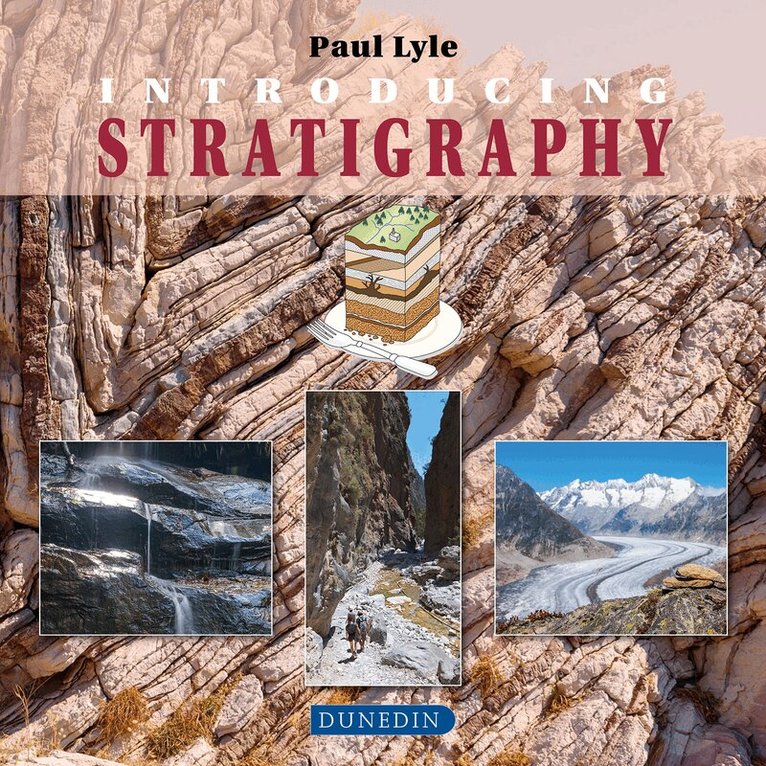
    Introducing Stratigraphy

    AvPaul Lyle

    Häftad, Engelska, 2019

    Del i serien Introducing Earth and Environmental Sciences

    405 kr

    Beställningsvara. Skickas inom 5-8 vardagar. Fri frakt över 249 kr.

    Beskrivning

    Stratigraphy is the branch of geology which studies rock layers (strata) and layering (stratification).Stratigraphy deals primarily with sedimentary rocks but also embraces layered igneous rocks where layers result from successive lava flows.A common goal of stratigraphic studies is the interpretation of sequences of rock strata, thus understanding the time relationships involved, and correlating units of the sequence with rock strata elsewhere. Nicholas Steno described four principles of stratigraphy in the seventeenth century, including the law of superposition which states that states that, in undeformed stratigraphic sequences, the oldest strata will be at the bottom of the sequence. These ideas still underpin modern stratigraphy which is governed by The International Commission on Stratigraphy. Its primary objective is to precisely define global units (systems, series, and stages) of the International Chronostratigraphic Chart that, in turn, are the basis for the units (periods, epochs, and age) of the International Geologic Time Scale.Stratigraphy has application in many scientific fields, including archaeology, palaeontology and in the search for natural resources. This succinct and accessible introduction to stratigraphy will prove helpful to students and amateur geologists alike.

    Produktinformation

    • Utgivningsdatum:2019-05-23
    • Mått:217 x 217 x 9 mm
    • Vikt:432 g
    • Format:Häftad
    • Språk:Engelska
    • Serie:Introducing Earth and Environmental Sciences
    • Antal sidor:144
    • Förlag:Liverpool University Press
    • ISBN:9781780460222

    Utforska kategorier

    • Geovetenskap inom Naturvetenskap och teknik

    Mer om författaren

    Paul Lyle has retired from his post as a lecturer in geology at the University of Ulster at Jordanstown and devotes his time to writing on geological issues. His previous book for Dunedin, The Abyss of Time, won the ASE Science Book of the Year Award 2016.

    Recensioner i media

    'In this book Paul Lyle is able to draw on his considerable experience of field geology. aided by lots of good photographs. diagrams and maps, to make this an enthralling read! Dunedin have employed a fairly large format for this book and the resultant pages are well designed and allow for large illustrations, meaning that it isn't too text heavy.Paul obligingly starts with a definition of stratigraphy and sets it into a historical setting that helps the reader to understand the importance of the principles of time and strata. Due deference is paid to James Hutton and his appreciation of deep time. especially at the 'holy grail' of Siccar Point.Only by going down this historical road can the various potential pitfalls of the construction of the geological timescale be appreciated. This is one of those cases where an example serves well to illustrate the problems and Paul chooses the Cambrian-Silurian controversy that was eventually solved by Charles Lapworth when he gave us the Ordovician.The pioneers came in two camps, the catastrophists and those who believed in the principle of uniformitarianism. Paul shows how these opposing views can be reconciled. The subject of absolute dating is dealt with in a way that enables everyone to understand what can be a difficult subject for those without much scientific background.For me. the best part of this book is a long chapter that examines the stratigraphic column from beginning to end on a world wide scale. So far as I know that has never been done in a popular book before and it's long overdue!This is followed short chapters that introduce us to stratigraphic units and the *golden spike' and the applications of stratigraphy. This is surely a reminder that stratigraphy isn't just about historical geology, it's a live part of our science. especially in the search for hydrocarbons and in climate studies.This book fills a very large hole in popular Earth science publishing that has existed for many years. Go out and buy it!' Down to Earth

    Innehållsförteckning

    • Acknowledgements. Introduction. What is stratigraphy? Definitions and branches: lithostratigraphy, biostratigraphy, chronostratigraphy, magnetostratigraphy, chemostratigraphy; Applications: why is it important? Historical developments: cross-cutting depositional relationships, the sedimentary sequence & Walther's law, gradualism versus actualism, units in geochronology and stratigraphy, building the stratigraphic chart. The Role of the International Commission on Stratigraphy. Global sratotype sections and points (GSSPs); the Anthropocene. Quantification of dates and rates: radiometric age dating methods, the geological time scale, the age of the earth, earth cycles, magnetostratigraphy, chemostratigraphy, event stratigraphy - examples of catastrophic events. Seismic stratigraphy: advent of seismic data, use of reflector terminations, use of seismic stratigraphy in basin analysis, sequence stratigraphy and systems tracts, sea level charts. Biostratigraphy: microfossils in biostratigraphy, macrofossils in biostratigraphy, biostratrigraphy in industry. Glossary. Further reading/ Websites