• Fri frakt över 249 kr
  • •
  • Snabba leveranser
  • •
  • Billiga böcker
Kundservice

Du är på sajten för privatpersoner.

Företag, bibliotek eller offentlig verksamhet?

Du handlar på classic.bokus.com, där alla dina funktioner finns intakta.
Till classic.bokus.com
Bokus logotyp. Gå till startsidan.
  • Erbjudanden
  • Nyheter
  • Student
  • Topplistor
  • Barn & ungdom
  • Bokus Play
  • E-böcker
  • Pocketböcker
  • Spel & pussel

10% rabatt på allt med kod: NYSTART10 →

Sidfot

Mina sidor

    Hjälp

    • Kundservice
    • Vanliga frågor och svar
    • Frakt och leverans
    • Retur vid ångerrätt
    • Reklamera vara
    • Betalning
    • Köpvillkor
    • Allmänna villkor
    • Information om webbplatsens tillgänglighet

    Om Bokus

    • Om oss
    • Pressrum
    • För studenter
    • För företag
    • För bibliotek och offentlig verksamhet
    • För leverantörer
    • Hållbarhet

    Populärt

    • Aktuella erbjudanden
    • Presentkort
    • Studentlitteratur
    • Nya böcker
    • Topplistor
    • Signerade böcker
    • Engelska böcker

    Inspiration

    • Boktips
    • BookTok
    • Populära bokserier
    • Barnbokskaraktärer
    • Populära författare
    Logotyp för Bokus
    Följ oss på Facebook (extern länk)Följ oss på Instagram (extern länk)Följ oss på YouTube (extern länk)Följ oss på TikTok (extern länk)
    bokus @ CookiesAnpassa cookiesIntegritetspolicyKöpvillkor
    Till Citymail hemsida (extern länk)Till Budbee hemsida (extern länk)Till Postnord hemsida (extern länk)Till Schenker hemsida (extern länk)Till Early Bird hemsida (extern länk)Till Walleys hemsida (extern länk)
    1. Samhälle och politik
    2. Samhälle och kultur
    3. Sociala grupper och identitet

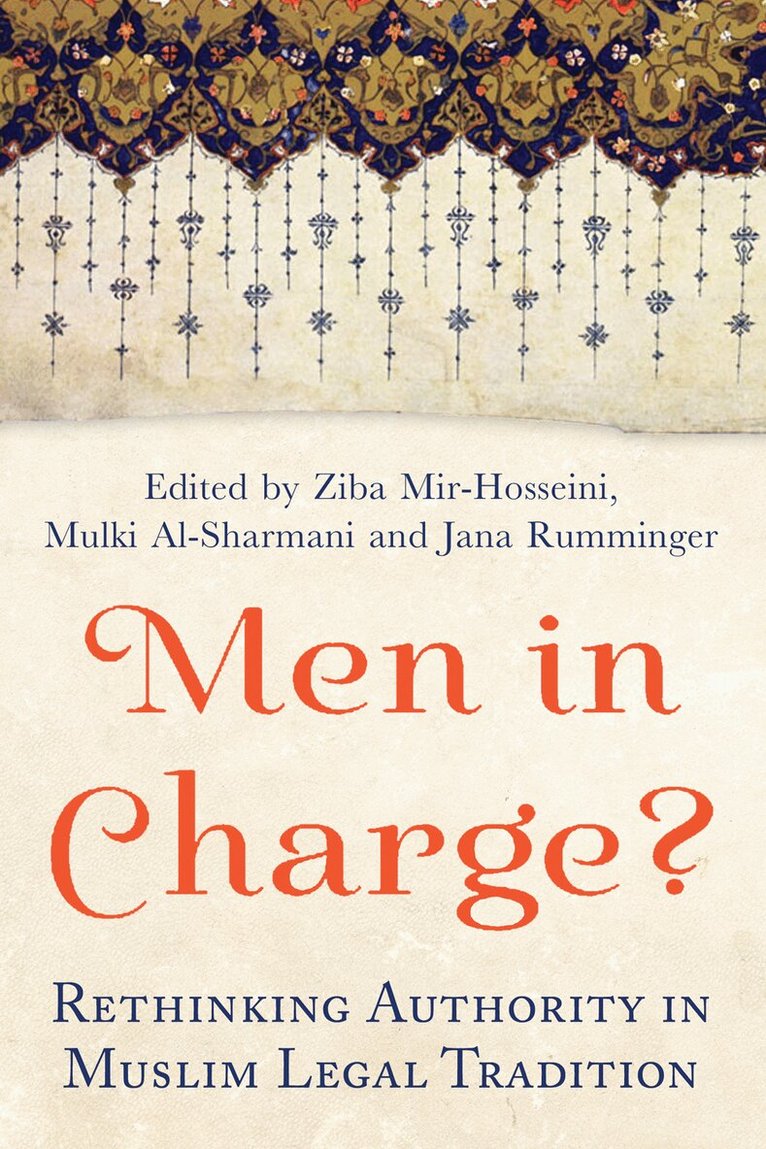
    Men in Charge?

    Rethinking Authority in Muslim Legal Tradition

    AvZiba Mir-Hosseini,Mulki Al-Sharmani

    Häftad, Engelska, 2014

    255 kr

    Beställningsvara. Skickas inom 3-6 vardagar. Fri frakt över 249 kr.

    Beskrivning

    Both Muslims and non-Muslims see women in most Muslim countries as suffering from social, economic, and political discrimination, treated by law and society as second-class citizens subject to male authority. This discrimination is attributed to Islam and Islamic law, and since the late 19th century there has been a mass of literature tackling this issue.Recently, exciting new feminist research has been challenging gender discrimination and male authority from within Islamic legal tradition: this book presents some important results from that research. The contributors all engage critically with two central juristic concepts; rooted in the Qur’an, they lie at the basis of this discrimination. One refers to a husband’s authority over his wife, his financial responsibility toward her, and his superior status and rights. The other is male family members’ right and duty of guardianship over female members (e.g., fathers over daughters when entering into marriage contracts) and the privileging of fathers over mothers in guardianship rights over their children.The contributors, brought together by the Musawah global movement for equality and justice in the Muslim family, include Omaima Abou-Bakr, Asma Lamrabet, Ayesha Chaudhry, Sa‘diyya Shaikh, Lynn Welchman, Marwa Sharefeldin, Lena Larsen and Amina Wadud.

    Produktinformation

    • Utgivningsdatum:2014-12-10
    • Mått:156 x 234 x 22 mm
    • Vikt:402 g
    • Format:Häftad
    • Språk:Engelska
    • Antal sidor:304
    • Förlag:Oneworld Publications
    • ISBN:9781780747163

    Utforska kategorier

    • Sociala grupper och identitet inom Samhälle och politik

    Mer om författaren

    Ziba Mir-Hosseini is a legal anthropologist. A professorial research associate at the Centre for Islamic and Middle Eastern Law, SOAS, University of London, she is founding member of Musawah: Global Movement for Equality in Muslim Family Laws, and the convenor of its knowledge-building initiative to rethink the notion of male authority in Muslim family laws.Mulki Al-Sharmani is Academy of Finland research fellow and lecturer, Faculty of Theology, University of Helsinki, and research coordinator of the Musawah knowledge-building initiative to rethink the notion of male authority in Muslim family laws.Jana Rumminger is currently based in Southeast Asia and works with Musawah, the global movement for equality and justice in the Muslim family. Her focus is on issues related to reform of Muslim family laws and implementation of the UN Convention on the Elimination of All Forms of Discrimination against Women (CEDAW).

    Recensioner i media

    'Men in Charge? is bound to be a key scholarly text for anyone researching or studying law or Islam in general. It is a necessary book, one which is carefully designed to combat misconceptions and prejudice, and one which, most importantly, has a practical focus: all of the book’s contributors are writing for change. In reminding us that there is a difference between the Qur’an and the subsequent misogynist interpretations at the hands of certain actors (“Shari’ah court judges, community leaders, imams, women in leadership positions who perpetuate patriarchal structures of power, etc”), these authors pave the way for a brighter and fairer future for Muslim women.'

    Innehållsförteckning

    • Foreword | Zainah AnwarAcknowledgementsNote on Translation and Transliteration Introduction | Ziba Mir-Hosseini, Mulki Al-Sharmani and Jana Rumminger Muslim Legal Tradition and the Challenge of Gender Equality | Ziba Mir-Hosseini The Interpretive Legacy of Qiwamah as an Exegetical Construct | Omaima Abou-Bakr An Egalitarian Reading of the Concepts of Khilafah, Wilayah and Qiwamah | Asma LamrabetProducing Gender-Egalitarian Islamic Law: A Case Study of Guardianship (Wilayah) in Prophetic Practice | Ayesha S. ChaudhryIslamic Law, Sufism and Gender: Rethinking the Terms of the Debate | Sa’diyya ShaikhQiwamah and Wilayah as Legal Postulates in Muslim Family Laws | Lynn WelchmanIslamic Law Meets Human Rights: Reformulating Qiwamah and Wilayah for Personal Status Law Reform Advocacy in Egypt | Marwa Sharafeldin‘Men are the Protectors and Maintainers of Women…’: Three Fatwas on Spousal Roles and Rights | Lena LarsenUnderstanding Qiwamah and Wilayah through Life Stories | Mulki Al-Sharmani and Jana RummingerThe Ethics of Tawhid over the Ethics of Qiwamah | Amina Wadud About the ContributorsIndex