• Fri frakt över 249 kr
  • •
  • Snabba leveranser
  • •
  • Billiga böcker
Kundservice

Du är på sajten för privatpersoner.

Företag, bibliotek eller offentlig verksamhet?

Du handlar på classic.bokus.com, där alla dina funktioner finns intakta.
Till classic.bokus.com
Bokus logotyp. Gå till startsidan.
  • Erbjudanden
  • Nyheter
  • Student
  • Topplistor
  • Barn & ungdom
  • Bokus Play
  • E-böcker
  • Pocketböcker
  • Spel & pussel

10% rabatt på allt med kod: NYSTART10 →

Sidfot

Mina sidor

    Hjälp

    • Kundservice
    • Vanliga frågor och svar
    • Frakt och leverans
    • Retur vid ångerrätt
    • Reklamera vara
    • Betalning
    • Köpvillkor
    • Allmänna villkor
    • Information om webbplatsens tillgänglighet

    Om Bokus

    • Om oss
    • Pressrum
    • För studenter
    • För företag
    • För bibliotek och offentlig verksamhet
    • För leverantörer
    • Hållbarhet

    Populärt

    • Aktuella erbjudanden
    • Presentkort
    • Studentlitteratur
    • Nya böcker
    • Topplistor
    • Signerade böcker
    • Engelska böcker

    Inspiration

    • Boktips
    • BookTok
    • Populära bokserier
    • Barnbokskaraktärer
    • Populära författare
    Logotyp för Bokus
    Följ oss på Facebook (extern länk)Följ oss på Instagram (extern länk)Följ oss på YouTube (extern länk)Följ oss på TikTok (extern länk)
    bokus @ CookiesAnpassa cookiesIntegritetspolicyKöpvillkor
    Till Citymail hemsida (extern länk)Till Budbee hemsida (extern länk)Till Postnord hemsida (extern länk)Till Schenker hemsida (extern länk)Till Early Bird hemsida (extern länk)Till Walleys hemsida (extern länk)
    1. Ekonomi och Ledarskap
    2. Nationalekonomi
    3. Ekonomisk historia

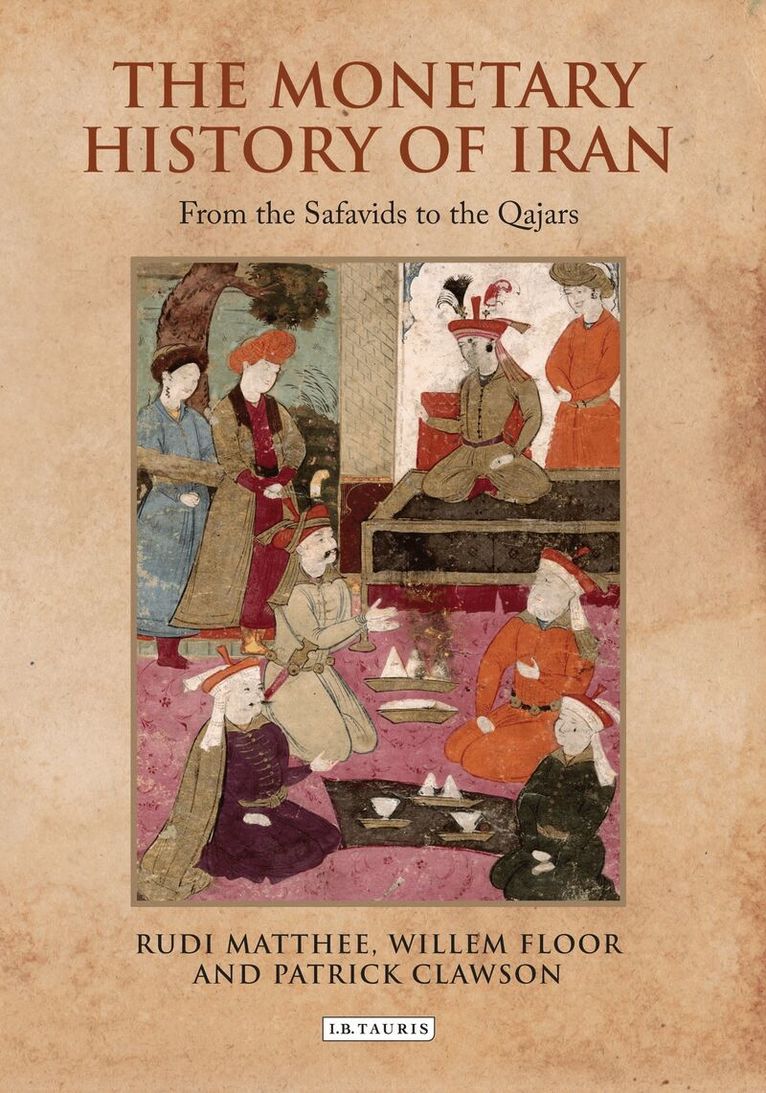
    Monetary History of Iran

    From the Safavids to the Qajars

    AvRudi Matthee,Willem Floor

    Inbunden, Engelska, 2013

    Del i serien Iran and the Persianate World

    1 079 kr

    Beställningsvara. Skickas inom 10-15 vardagar. Fri frakt över 249 kr.

    Fler format och utgåvor

    E-bok

    1 166 kr

    E-bok

    1 166 kr

    Beskrivning

    The monetary history of a country provides important insights into its economic development, as well as its political and social history. This book is the first detailed study of Iran's monetary history from the advent of the Safavid dynasty in 1501 to the end of Qajar rule in 1925. Using an array of previously unpublished sources in ten languages, the authors consider the specific monetary conditions in Iran's modern history, covering the use of ready money and its circulation, the changing conditions of the country's mints and the role of the state in managing money. Throughout the book, the authors also consider the larger regional and global economic context within which the Iranian economy operated. As the first study of Iran's monetary history, this book will be essential reading for researchers of Iranian and economic history.

    Produktinformation

    • Utgivningsdatum:2013-04-25
    • Mått:164 x 236 x 26 mm
    • Vikt:640 g
    • Format:Inbunden
    • Språk:Engelska
    • Serie:Iran and the Persianate World
    • Antal sidor:320
    • Förlag:Bloomsbury Publishing PLC
    • ISBN:9781780760797

    Utforska kategorier

    • Ekonomisk historia inom Ekonomi och Ledarskap
    • Makroekonomi inom Ekonomi och Ledarskap
    • Mellanösterns historia inom Historia och arkeologi

    Mer om författaren

    Rudi Matthee is Professor of History at University of Delaware. He is the author of Persia in Crisis: Safavid Decline and the Fall of Isfahan (I.B.Tauris) and The Pursuit of Pleasure: Drugs and Stimulants in Iranian History, 1500-1900. Willem Floor is an independent scholar specialising in the history of Iran in the Safavid and modern ages. His publications include A Social History of Sexual Relations in Iran; Iran and the World in the Safavid Age (with Edmund Herzig, eds, I.B.Tauris); Labor and Industry in Iran, 1850-1941 and The Persian Gulf: A Political and Economic History of Five Port Cities 1500-1730. Patrick Clawson is Deputy Director of Research at the Washington Institute for Near East Policy and senior editor of Middle East Quarterly.

    Recensioner i media

    "This excellent, thorough hostory of money in Iransince the beginning of the Safavid dynasty, by leading experts in the field, is actually much more than that- it provides an essential foundation for an understanding of Iran's economic and political history in modern times.' Michael Axworthy, Director of the Centre for Persian and Iranian Studies, Exeter University 'This book fills a very major gap in Iran's economic history that has important ramifications for social and political history. Its descriptive, chronological narrative is well based on, and supported by, Persian and Western sources.' Gene R. Garthwaite, Jane and Raphael Bernstein Professor in Asian Studies, Emeritus and Professor of History, Emeritus, Dartmouth College.

    Innehållsförteckning

    • IntroductionChapter One: The Monetary System during the Safavid Period: Money, Metals and MintingIntroductionII. Limits on the Use of Money and the Scarcity of Current CoinScarcity of Current CoinMinting Coinsi Mintsii Technical Processiii Goldiv copperv Silver vi Local Currency Systems VI. ArbitrageChapter Two: The Trade in Bullion in Safavid TimesI. IntroductionII. Government Policy until 1669III. Restrictive Measures in the Period 1669-1684IV. Developments after 1684Chapter Three: The Politics of MintingIntroductionWeight ReductionsMonetary Matters under Shah SulaymanThe Monetary Crisis of 1684-85Developments after 1685Chapter Four: The Monetary System under the Afsharids and Zands, 1732-1794.The Age of CopperIntroductionGhilzay Afghan Period (1722-1729)Last Safavids (1722-1736)Afsharid period (1736-1750)Afsharid Successors (1747-1750)Zand Period (1759-1794)Chapter Five. The Monetary System under the Qajars, 1779-1925I. Minting CoinsA. Traditional Mintsi. Running the mintsii. The production processB. Reducing the Metal Content of CoinsC. A Modern National MintII. Fragmented Currency Systemi. Overview: Measuring Value in a Three-Metal Systemii. Local Currencies Other than the National Standardiii. Copper Coinsiv. Silver Coinsv. Gold Coinsvi. Limited Use of Money in TradeIII. Supply of Bullion and Speciei. Local Production of Bullionii. Importing BullionIV. Silver’s Loss of Valuei. Adjusting Ratios among Coinsii. Switching to a Gold Standard?V. Paper Currencyi. IBP’s Practicesii. Limits to Acceptance of Paper CurrencyVI. Money at the End of the Qajar DynastyAfterwordBibliographyIndex