• Fri frakt över 249 kr
  • •
  • Snabba leveranser
  • •
  • Billiga böcker
Kundservice

Du är på sajten för privatpersoner.

Företag, bibliotek eller offentlig verksamhet?

Du handlar på classic.bokus.com, där alla dina funktioner finns intakta.
Till classic.bokus.com
Bokus logotyp. Gå till startsidan.
  • Erbjudanden
  • Student
  • Topplistor
  • Barn & ungdom
  • Bokus Play
  • Bokus Play
  • E-böcker
  • Ljudböcker
  • Pocketböcker
  • Spel & pussel

10% rabatt på allt med kod NYSTART10 →

Sidfot

Mina sidor

    Hjälp

    • Kundservice
    • Vanliga frågor och svar
    • Frakt och leverans
    • Retur vid ångerrätt
    • Reklamera vara
    • Betalning
    • Köpvillkor
    • Allmänna villkor
    • Information om webbplatsens tillgänglighet

    Om Bokus

    • Om oss
    • Pressrum
    • För studenter
    • För företag
    • För bibliotek och offentlig verksamhet
    • För leverantörer
    • Hållbarhet

    Populärt

    • Aktuella erbjudanden
    • Presentkort
    • Studentlitteratur
    • Nya böcker
    • Topplistor
    • Signerade böcker
    • Engelska böcker

    Inspiration

    • Boktips
    • BookTok
    • Populära bokserier
    • Barnbokskaraktärer
    • Populära författare
    Logotyp för Bokus
    Följ oss på Facebook (extern länk)Följ oss på Instagram (extern länk)Följ oss på YouTube (extern länk)Följ oss på TikTok (extern länk)
    bokus @ CookiesAnpassa cookiesIntegritetspolicyKöpvillkor
    Till Citymail hemsida (extern länk)Till Budbee hemsida (extern länk)Till Postnord hemsida (extern länk)Till Schenker hemsida (extern länk)Till Early Bird hemsida (extern länk)Till Walleys hemsida (extern länk)
    1. Historia och arkeologi
    2. Historia
    3. Militärhistoria
    4. Andra världskriget

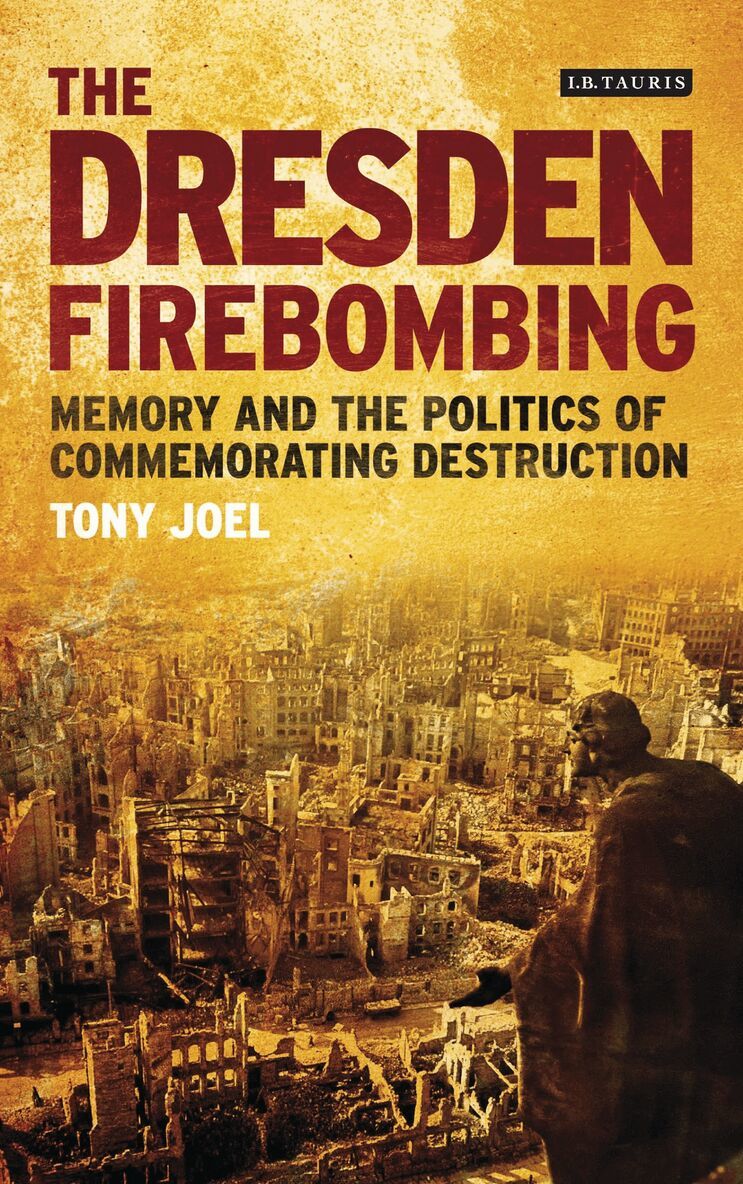
    Dresden Firebombing

    Memory and the Politics of Commemorating Destruction

    AvTony Joel

    Inbunden, Engelska, 2014

    Del i serien Bloomsbury 3PL

    2 006 kr

    Beställningsvara. Skickas inom 10-15 vardagar. Fri frakt över 249 kr.

    Fler format och utgåvor

    E-bok

    529 kr

    Häftad

    492 kr

    Beskrivning

    The firebombing of Dresden marks the terrible apex of the European bombing war. In just over two days in February 1945, over 1,300 heavy bombers from the RAF and the USAAF dropped nearly 4,000 tonnes of explosives on Dresden's civilian centre.Since the end of World War II, both the death toll and the motivation for the attack have become fierce historical battlegrounds, as German feelings of victimhood complete with those of guilt and loss. The Dresden bombing was used by East Germany as a propaganda tool, and has been re-appropriated by the neo-Nazi far right. Meanwhile the rebuilding of the Frauenkirche- the city's sumptuous eighteenth-century church destroyed in the raid-became central to German identity, while in London, a statue of the Commander-in-Chief of RAF Bomber Command, Sir Arthur Harris, has attracted protests. In this book, Tony Joel focuses on the historical battle to re-appropriate Dresden, and on how World War II continues to shape British and German identity today.

    Produktinformation

    • Utgivningsdatum:2014-01-20
    • Mått:144 x 220 x 40 mm
    • Vikt:620 g
    • Format:Inbunden
    • Språk:Engelska
    • Serie:Bloomsbury 3PL
    • Antal sidor:384
    • Förlag:Bloomsbury Publishing PLC
    • ISBN:9781780763583

    Utforska kategorier

    • Andra världskriget inom Historia och arkeologi
    • Europas historia inom Historia och arkeologi
    • Modern militärhistoria inom Historia och arkeologi

    Mer om författaren

    Tony Joel is Associate Professor in History in the School of Humanities and Social Sciences at Deakin University, Australia. A former German Academic Exchange Service (DAAD) scholarship holder, and a founding member of Deakin’s Contemporary Histories Research Group, Tony’s main research interests include the politics of war memory and commemoration and sports history.

    Recensioner i media

    Tony Joel's in-depth study does much to explain why the fire-bombing of Dresden has come to hold such iconic status. An original interpretation of changing and conflicting memory cultures, this work is also highly readable.!AZ Professor Mary Fulbrook, FBA, Professor of German History and Vice-Dean (Interdisciplinarity), University College London !(R)The literature on the politics of memory in Germany is immense, but only recent research has dedicated itself to the processes after the fall of the wall and German unification in 1990. Tony Joel!AZs study is one of the first to combine a broader view of German identity and memory through the prism of the Dresden Bombing. The author can be congratulated for this achievement. This is a highly informative, well written and perceptive work.!AZ Jost D' lffer, Professor of Modern History, University of Koln

    Innehållsförteckning

    • INTRODUCTIONThe Destruction of Dresden and the Shifting Dynamics of German Victimisation DiscourseDresden as paradigm of German victimisation and sacrificeWriting about the Dresden bombing and its aftermathConceptual framework and key termsA mythical tabooVictimisation discourse in divided GermanyBombing and victimisation discourse in reunified GermanyApplication of conceptsCHAPTER 1The Western Allies’ Strategic Bombing Offensive and Dresden’s Transformation from European Kulturstadt to Germany’s OpferstadtBuild-upWatershedEscalationWhy is Dresden special? Or, why Dresden is specialWartime reactionsIssues of interpretation: shaping and reflecting controversyConclusionCHAPTER 2The Fashioning of Dresden’s Destruction into a Political Asset: 1946 to the Early 1980sThe Nuremberg interregnumThe 1950sThe 1960sThe 1970s and early 1980sCHAPTER 3Dresden’s Last Milestone Gedenktag before the Fall of the Wall: 13 February 1985West German mass-mediation of Dresden as OpferstadtThe party’s Gro?kundgebungThe reopening of the SemperoperThe Frauenkirche ruinsConclusionCHAPTER 4Dresden Memory Politics in the Schwebezeit: 1989-90Kohl, the ruins, and “die Einheit der Nation”Church over ruins?Dresden’s stateless Gedenktag: 13 February 1990ConclusionCHAPTER 5A British Dimension to Dresden Commemorative Politics: 1992-2000Homage to a hangman, or misunderstood memorialisation?Dresden: the awkward but obligatory interludeBritain responds to the Ruf: the Dresden TrustThe 1995 Gedenktag and a signal of intentThe 2000 Gedenktag and making good on a promiseConclusionCHAPTER 6Dresden as a Memory Battleground: 13 February 2005The Queen and Dresden: revisiting a theme, but not the cityDepicting Dresden as the “Bomben-Holocaust”Renewed focus on longstanding controversiesReconciliation remains a central plankMaking a statement in absentiaMixed messages and the struggle over commemorationConclusionCONCLUSIONMemory Work-in-Progress: Remembering the Past, Reflecting on the Present and FutureNOTESBIBLIOGRAPHY