• Fri frakt över 249 kr
  • •
  • Snabba leveranser
  • •
  • Billiga böcker
Kundservice

Du är på sajten för privatpersoner.

Företag, bibliotek eller offentlig verksamhet?

Du handlar på classic.bokus.com, där alla dina funktioner finns intakta.
Till classic.bokus.com
Bokus logotyp. Gå till startsidan.
  • Erbjudanden
  • Nyheter
  • Student
  • Topplistor
  • Barn & ungdom
  • Bokus Play
  • E-böcker
  • Pocketböcker
  • Spel & pussel

10% rabatt på allt med kod: NYSTART10 →

Sidfot

Mina sidor

    Hjälp

    • Kundservice
    • Vanliga frågor och svar
    • Frakt och leverans
    • Retur vid ångerrätt
    • Reklamera vara
    • Betalning
    • Köpvillkor
    • Allmänna villkor
    • Information om webbplatsens tillgänglighet

    Om Bokus

    • Om oss
    • Pressrum
    • För studenter
    • För företag
    • För bibliotek och offentlig verksamhet
    • För leverantörer
    • Hållbarhet

    Populärt

    • Aktuella erbjudanden
    • Presentkort
    • Studentlitteratur
    • Nya böcker
    • Topplistor
    • Signerade böcker
    • Engelska böcker

    Inspiration

    • Boktips
    • BookTok
    • Populära bokserier
    • Barnbokskaraktärer
    • Populära författare
    Logotyp för Bokus
    Följ oss på Facebook (extern länk)Följ oss på Instagram (extern länk)Följ oss på YouTube (extern länk)Följ oss på TikTok (extern länk)
    bokus @ CookiesAnpassa cookiesIntegritetspolicyKöpvillkor
    Till Citymail hemsida (extern länk)Till Budbee hemsida (extern länk)Till Postnord hemsida (extern länk)Till Schenker hemsida (extern länk)Till Early Bird hemsida (extern länk)Till Walleys hemsida (extern länk)
    1. Samhälle och politik
    2. Samhälle och kultur
    3. Kultur och medier
    4. Kulturvetenskap

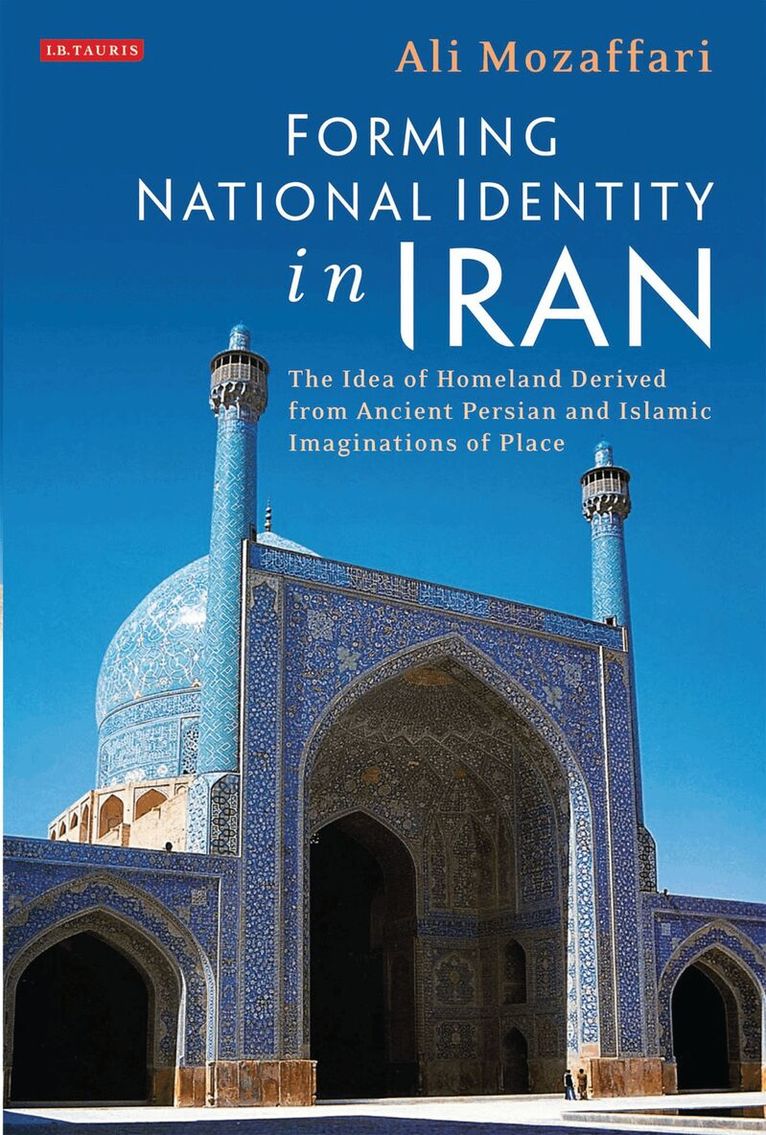
    Forming National Identity in Iran

    The Idea of Homeland Derived from Ancient Persian and Islamic Imaginations of Place

    AvAli Mozaffari

    Inbunden, Engelska, 2014

    Del i serien Bloomsbury 3PL

    1 950 kr

    Beställningsvara. Skickas inom 10-15 vardagar. Fri frakt över 249 kr.

    Fler format och utgåvor

    E-bok

    2 113 kr

    E-bok

    2 176 kr

    Beskrivning

    Modern Iran is a country with two significant but competing discourses of national identity, one stemming from ancient pre-Islamic customs and mythology, the other from Islamic Shi'i practices and beliefs. At one time co-existing and often mutually reinforcing, in more modern times they have been appropriated by intellectuals and the state who have drawn upon their narratives and traditions to support and authenticate their ideologies. The result has been an often-confused notion of identity in Iran. In this essential work, Ali Mozaffari explores the complex processes involved in the formation of Iranian national identity. He lays particular stress upon the importance of place, for it is through the concept of place that collective national identity and ideas of homeland are expressed and disseminated. The author reveals the ways in which homeland is conceived both through designated permanent sites and ritual performance, illustrating his arguments through an analysis of the ancient Achaemenid capital of Persepolis and the Shi'i rituals of Moharram.In a final part of the book, he extends his analysis to the Ancient Iran Museum and the Islamic Period Museum, housed in the National Museum of Iran, showing how the major transformations of twentieth-century Iran, which have so far been perceived in terms of political discourses and historical events, are in fact concerned with conceiving place. Forming National Identity in Iran offers powerful insights into the forces shaping national identity in Iran, which makes it a valuable contribution to the cultural and political importance of place.

    Produktinformation

    • Utgivningsdatum:2014-06-20
    • Mått:156 x 234 x 28 mm
    • Vikt:615 g
    • Format:Inbunden
    • Språk:Engelska
    • Serie:Bloomsbury 3PL
    • Antal sidor:288
    • Förlag:Bloomsbury Publishing PLC
    • ISBN:9781780764436

    Utforska kategorier

    • Kulturvetenskap inom Samhälle och politik

    Mer om författaren

    Ali Mozaffari is Research Associate at the Centre for Muslim States and Societies, University of Western Australia. He studied architecture at Tehran University and has more than fifteen years experience in architecture and urban design in Iran and Australia. His research interests include the anthropology of place, urban aesthetics, the Islamic city, and museums and heritage.

    Recensioner i media

    This book is an ambitious and impressive cross-disciplinary study of contemporary national identity in Iran and a significant contribution to knowledge about place-making as a political project. Mozaffari presents an excellent example of the rich insights derived from a synthesis of architecture, anthropology and heritage studies. His analysis of the National Museum introduces a fascinating exploration of the cultural, historical and political roots of how today's certainties about religious tradition and authenticity have been constructed under the Islamic Republic of Iran and articulates the ideological and religious tensions in the very idea of a contemporary Islamic state.' Michael Humphrey, University of Sydney 'This is a novel and engaging book on its subject, the first trans-disciplinary analysis of constructions and representations of collective identity and homeland in twentiethcentury Iran. Its central and most insightful point is that official national identity has been constructed and disseminated through a process of place-making. Mozaffari's unique study can be usefully applied to the other countries of the region as well.' Homa Katouzian, University of Oxford 'Mozaffari's book deals with a uniquely interesting topic. The issue of construction of homeland and identity in modern Iran has not received much scholarly coverage. This volume conceptualises and elucidates the issue in ways that fill an important gap. It should be of interest to a wide range of readers.' Amin Saikal, Australian National University

    Innehållsförteckning

    • List of IllustrationsAcknowledgementsIntroductionPart I : Two Broad Patterns of PlacePart II: What Is Persian? Redemptive Dreams of Homeland and IdentityNotes Bibliography Index