• Fri frakt över 249 kr
  • •
  • Snabba leveranser
  • •
  • Billiga böcker
Kundservice

Du är på sajten för privatpersoner.

Företag, bibliotek eller offentlig verksamhet?

Du handlar på classic.bokus.com, där alla dina funktioner finns intakta.
Till classic.bokus.com
Bokus logotyp. Gå till startsidan.
  • Erbjudanden
  • Student
  • Topplistor
  • Barn & ungdom
  • Bokus Play
  • E-böcker
  • Ljudböcker
  • Pocketböcker
  • Spel & pussel

10% rabatt på allt med kod NYSTART10 →

Sidfot

Mina sidor

    Hjälp

    • Kundservice
    • Vanliga frågor och svar
    • Frakt och leverans
    • Retur vid ångerrätt
    • Reklamera vara
    • Betalning
    • Köpvillkor
    • Allmänna villkor
    • Information om webbplatsens tillgänglighet

    Om Bokus

    • Om oss
    • Pressrum
    • För studenter
    • För företag
    • För bibliotek och offentlig verksamhet
    • För leverantörer
    • Hållbarhet

    Populärt

    • Aktuella erbjudanden
    • Presentkort
    • Studentlitteratur
    • Nya böcker
    • Topplistor
    • Signerade böcker
    • Engelska böcker

    Inspiration

    • Boktips
    • BookTok
    • Populära bokserier
    • Barnbokskaraktärer
    • Populära författare
    Logotyp för Bokus
    Följ oss på Facebook (extern länk)Följ oss på Instagram (extern länk)Följ oss på YouTube (extern länk)Följ oss på TikTok (extern länk)
    bokus @ CookiesAnpassa cookiesIntegritetspolicyKöpvillkor
    Till Citymail hemsida (extern länk)Till Budbee hemsida (extern länk)Till Postnord hemsida (extern länk)Till Schenker hemsida (extern länk)Till Early Bird hemsida (extern länk)Till Walleys hemsida (extern länk)
    1. Historia och arkeologi
    2. Historia
    3. Historia: särskilda händelser och ämnen
    4. Socialhistoria och kulturhistoria

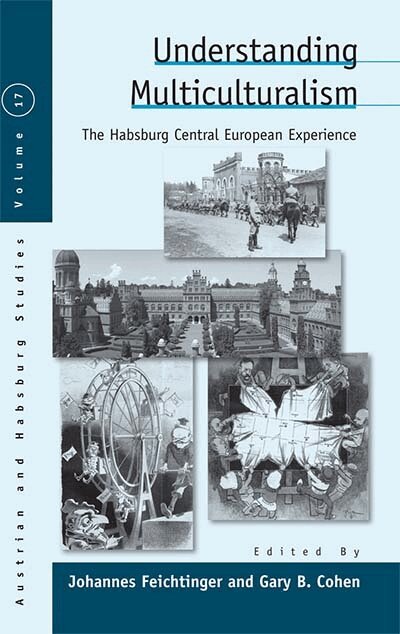
    Understanding Multiculturalism

    The Habsburg Central European Experience

    AvJohannes Feichtinger,Gary B. Cohen

    Inbunden, Engelska, 2014

    Del i serien Austrian and Habsburg Studies

    1 916 kr

    Beställningsvara. Skickas inom 5-8 vardagar. Fri frakt över 249 kr.

    Beskrivning

    Multiculturalism has long been linked to calls for tolerance of cultural diversity, but today many observers are subjecting the concept to close scrutiny. After the political upheavals of 1968, the commitment to multiculturalism was perceived as a liberal manifesto, but in the post-9/11 era, it is under attack for its relativizing, particularist, and essentializing implications. The essays in this collection offer a nuanced analysis of the multifaceted cultural experience of Central Europe under the late Habsburg monarchy and beyond. The authors examine how culturally coded social spaces can be described and understood historically without adopting categories formerly employed to justify the definition and separation of groups into nations, ethnicities, or homogeneous cultures. As we consider the issues of multiculturalism today, this volume offers new approaches to understanding multiculturalism in Central Europe freed of the effects of politically exploited concepts of social spaces.

    Produktinformation

    • Utgivningsdatum:2014-03-01
    • Mått:152 x 229 x 19 mm
    • Vikt:517 g
    • Format:Inbunden
    • Språk:Engelska
    • Serie:Austrian and Habsburg Studies
    • Antal sidor:256
    • Förlag:Berghahn Books
    • ISBN:9781782382645

    Utforska kategorier

    • Socialhistoria och kulturhistoria inom Historia och arkeologi
    • Europas historia inom Historia och arkeologi

    Mer om författaren

    Johannes Feichtinger is a Senior Researcher at the Institute of Culture Studies and Theatre History of the Austrian Academy of Sciences, and teaches history at the University of Vienna. His publications include Wissenschaft zwischen den Kulturen. Österreichische Hochschullehrer in der Emigration 1933–1945 (2001) and Wissenschaft als reflexives Projekt. Von Bolzano über Freud zu Kelsen: Österreichische Wissenschaftsgeschichte 1848–1938 (2010).

    Recensioner i media

    “The edited collection of articles is theoretically sophisticated and illuminating, transgressing traditional disciplinary boundaries with incisive, well-developed arguments that challenge stale notions of multiculturalism, hybridity, and nationalist mobilization… A fascinating contribution to the growing body of literature on diversity, spatiality, and nationalizing practices, Understanding Multiculturalism will be a welcomed addition to the shelves of modern historians of any field or focus.” • Hungarian Cultural Studies“Enhanced with the inclusion of a twenty-four page Bibliography, a four page listing of the contributors and their credentials, and a nine page Index, Understanding Multiculturalism: The Habsburg Central European Experience is an extraordinary and highly recommended addition to college and university library collections. For the personal reading lists of students and non-specialist general readers with an interest in the subject it should be noted that [it] is also available in a paperback.” • Midwest Book Review“Conceptually complicated and with wide-ranging empirical investigations, this volume is most likely to appeal to readers with some prior exposure to Central European history and theoretical approaches to nationalism. They will find in it plentiful food for thought.” • The American Historical Review“The volume is highly recommended for anyone researching multiculturalism, and one can only agree with Csáky’s assertion that Habsburg Central Europe was a “laboratory” of experiences that can be usefully discussed in a broader context.” • Austrian History Yearbook

    Innehållsförteckning

    • List of Tables and FiguresPrefaceIntroduction: Understanding Multiculturalism and the Habsburg Central European ExperienceJohannes Feichtinger and Gary B. CohenSECTION I: IDENTITY FORMATION IN MULTICULTURAL SOCIETIESChapter 1. Heterogeneities and Homogeneities. On Similarities and DiversitiesAnil BhattiChapter 2. Mestizaje and Hybrid Culture: Towards a Transnational Cultural Memory of Europe and the Development of Cultural Theories in Latin AmericaMichael RössnerChapter 3. The Limits of Nationalist Activism in Imperial Austria: Creating Frontiers in Daily LifePieter M. JudsonSECTION II: THE DYNAMICS OF MULTICULTURAL SOCIETIES, POLITICS, AND THE STATEChapter 4. Multiculturalism, Polish Style: Glimpses from the Interwar PeriodPatrice M. DabrowskiChapter 5. Multiculturalism Against the State: Lessons from IstriaPamela BallingerChapter 6. Migration in Austria, An Overview: 1920s to 2000sMichael JohnSECTION III: IDENTITIES EXPRESSED, NEGOTIATED, AND CHALLENGED IN MULTICULTURAL SETTINGSChapter 7. The Slice of Desire: Intercultural Practices Versus National Loyalties in the Peripheral Multiethnic Society of Central Europe at the Beginning of the Twentieth CenturyOto LutharChapter 8. On “Neighbors” and “Strangers”: The Literary Motif of “Central Europe” as Lieu de MémoireAndrei Corbea HoisieChapter 9. Culture as a Space of CommunicationMoritz CsákyNotes on ContributorsBibliographyIndex