• Fri frakt över 249 kr
  • •
  • Snabba leveranser
  • •
  • Billiga böcker
Kundservice

Du är på sajten för privatpersoner.

Företag, bibliotek eller offentlig verksamhet?

Du handlar på classic.bokus.com, där alla dina funktioner finns intakta.
Till classic.bokus.com
Bokus logotyp. Gå till startsidan.
  • Erbjudanden
  • Nyheter
  • Student
  • Topplistor
  • Barn & ungdom
  • Bokus Play
  • E-böcker
  • Pocketböcker
  • Spel & pussel

10% rabatt på allt med kod NYSTART10 →

Sidfot

Mina sidor

    Hjälp

    • Kundservice
    • Vanliga frågor och svar
    • Frakt och leverans
    • Retur vid ångerrätt
    • Reklamera vara
    • Betalning
    • Köpvillkor
    • Allmänna villkor
    • Information om webbplatsens tillgänglighet

    Om Bokus

    • Om oss
    • Pressrum
    • För studenter
    • För företag
    • För bibliotek och offentlig verksamhet
    • För leverantörer
    • Hållbarhet

    Populärt

    • Aktuella erbjudanden
    • Presentkort
    • Studentlitteratur
    • Nya böcker
    • Topplistor
    • Signerade böcker
    • Engelska böcker

    Inspiration

    • Boktips
    • BookTok
    • Populära bokserier
    • Barnbokskaraktärer
    • Populära författare
    Logotyp för Bokus
    Följ oss på Facebook (extern länk)Följ oss på Instagram (extern länk)Följ oss på YouTube (extern länk)Följ oss på TikTok (extern länk)
    bokus @ CookiesAnpassa cookiesIntegritetspolicyKöpvillkor
    Till Citymail hemsida (extern länk)Till Budbee hemsida (extern länk)Till Postnord hemsida (extern länk)Till Schenker hemsida (extern länk)Till Early Bird hemsida (extern länk)Till Walleys hemsida (extern länk)
    1. Historia och arkeologi
    2. Historia
    3. Europas historia

    Encounters with Modernity

    The Catholic Church in West Germany, 1945-1975

    AvBenjamin Ziemann

    Inbunden, Engelska, 2014

    Del i serien Studies in German History

    1 861 kr

    Beställningsvara. Skickas inom 5-8 vardagar. Fri frakt över 249 kr.

    Fler format och utgåvor

    E-bok

    315 kr

    Beskrivning

    During the three decades from 1945 to 1975, the Catholic Church in West Germany employed a broad range of methods from empirical social research. Statistics, opinion polling, and organizational sociology, as well as psychoanalysis and other approaches from the “psy sciences,” were debated and introduced in pastoral care. In adopting these methods for their own work, bishops, parish clergy, and pastoral sociologists tried to open the church up to modernity in a rapidly changing society. In the process, they contributed to the reform agenda of the Second Vatican Council (1962-1965). Through its analysis of the intersections between organized religion and applied social sciences, this award-winning book offers fascinating insights into the trajectory of the Catholic Church in postwar Germany.

    Produktinformation

    • Utgivningsdatum:2014-06-01
    • Mått:152 x 229 x 23 mm
    • Vikt:617 g
    • Format:Inbunden
    • Språk:Engelska
    • Serie:Studies in German History
    • Antal sidor:334
    • Förlag:Berghahn Books
    • ISBN:9781782383444

    Utforska kategorier

    • Europas historia inom Historia och arkeologi
    • Religion: allmänt inom Filosofi och religion
    • Kristendom inom Filosofi och religion

    Mer om författaren

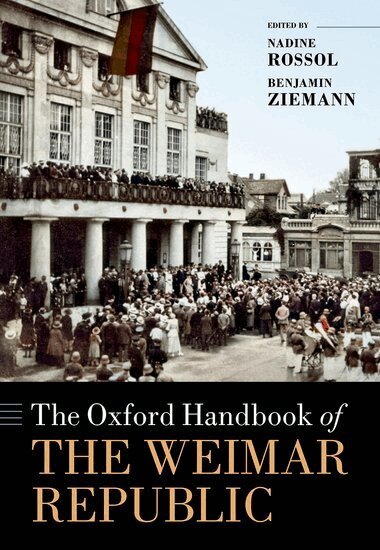
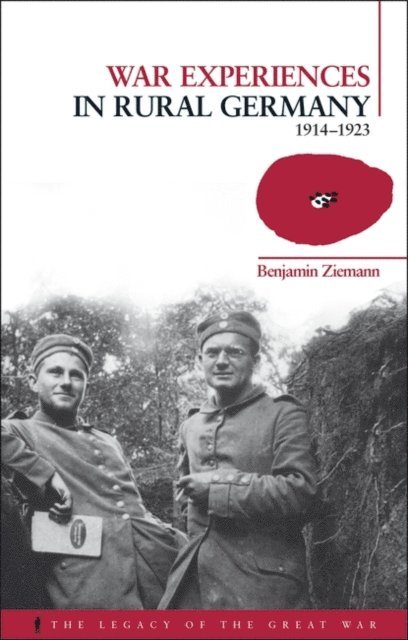
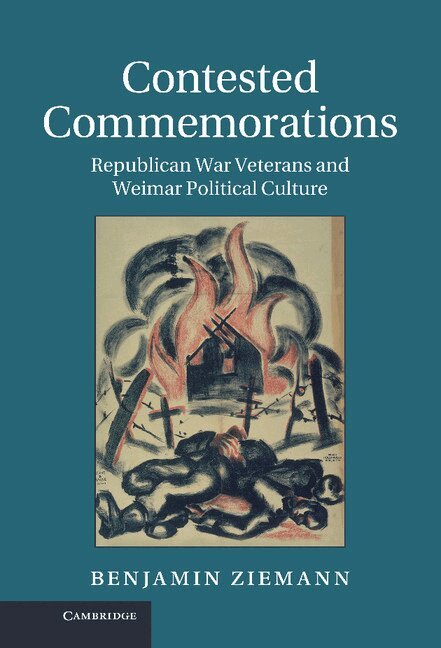
    Benjamin Ziemann is Professor of Modern German History at the University of Sheffield. He is the author and editor of numerous books, including Contested Commemorations. Republican War Veterans and Weimar Political Culture (Cambridge, 2013), War Experiences in Rural Germany, 1914-1923 (Oxford, 2007), and, as co-editor, Reading Primary Sources (London, 2008). He has held Visiting Fellowships at the University of York, Humboldt University Berlin and at the Norwegian Nobel Institute in Oslo.

    Recensioner i media

    “This excellent English translation of Benjamin Ziemann’s Habilitationsschrift, first published in 2007, makes more accessible Ziemann’ss examination of West German Catholic reactions to secularization. Focused on the Church’s adoption of sociological methods of self-analysis in an era of ‘scientization of the social,’ Ziemann’s exploration of metaphor, theology, and the social sciences offers an unusually rich interdisciplinary approach from which all scholars can benefit. In a strongly argued study that stands out for its precision of terms, distillation of complex background, and fulsome documentation, Ziemann paints a nuanced picture of a responsive, if divided, Church confronting unprecedented secularity.” · German Studies Review“Without a doubt, this work will remain (…) one of the pillars of the field.” · Central European History“…one of the most important studies in contemporary history published in recent years.” · Neue Politische Literatur“An impressive and original study… The book is an important contribution to the most recent history of Christian religion in Germany. Given the breadth of the field under scrutiny it is impressive to see how the author has delineated the object of his investigation and reconstructed its inner dynamics with precision.” · Archiv für Sozialgeschichte“This is a fascinating study of the interrelatedness of processes of secularization and the increased adoption of social science methods and theories by the Catholic Church (…). Ziemann has written a case study of an important institution, the Catholic Church, and its attempts to modernize its institution and outlook within a rapidly modernizing society in the postwar Federal Republic. It will be read with great interest by anyone interested in such processes of modernization.” · German History“…an impressively scholarly, wide-ranging and important new book.. a major contribution to the social history of the Federal Republic.” · English Historical Review

    Innehållsförteckning

    • PrefaceList of AbbreviationsIntroductionChapter 1. Counting Piety: Church Statistics and its UsesChapter 2. In Search of Social Reality: SociographyChapter 3. Representation and Contestation after the Council: Opinion PollingChapter 4. Planning the Future of the Church: Organizations ResearchChapter 5. Psychology and Group Dynamics as “Humane” Scientific ApproachesConclusion: The Scientization of the Church as an Encounter with a Dangerous ModernityBibliographyIndex