• Fri frakt över 249 kr
  • •
  • Snabba leveranser
  • •
  • Billiga böcker
Kundservice

Du är på sajten för privatpersoner.

Företag, bibliotek eller offentlig verksamhet?

Du handlar på classic.bokus.com, där alla dina funktioner finns intakta.
Till classic.bokus.com
Bokus logotyp. Gå till startsidan.
  • Erbjudanden
  • Nyheter
  • Student
  • Topplistor
  • Barn & ungdom
  • Bokus Play
  • E-böcker
  • Pocketböcker
  • Spel & pussel

10% rabatt på allt med kod NYSTART10 →

Sidfot

Mina sidor

    Hjälp

    • Kundservice
    • Vanliga frågor och svar
    • Frakt och leverans
    • Retur vid ångerrätt
    • Reklamera vara
    • Betalning
    • Köpvillkor
    • Allmänna villkor
    • Information om webbplatsens tillgänglighet

    Om Bokus

    • Om oss
    • Pressrum
    • För studenter
    • För företag
    • För bibliotek och offentlig verksamhet
    • För leverantörer
    • Hållbarhet

    Populärt

    • Aktuella erbjudanden
    • Presentkort
    • Studentlitteratur
    • Nya böcker
    • Topplistor
    • Signerade böcker
    • Engelska böcker

    Inspiration

    • Boktips
    • BookTok
    • Populära bokserier
    • Barnbokskaraktärer
    • Populära författare
    Logotyp för Bokus
    Följ oss på Facebook (extern länk)Följ oss på Instagram (extern länk)Följ oss på YouTube (extern länk)Följ oss på TikTok (extern länk)
    bokus @ CookiesAnpassa cookiesIntegritetspolicyKöpvillkor
    Till Citymail hemsida (extern länk)Till Budbee hemsida (extern länk)Till Postnord hemsida (extern länk)Till Schenker hemsida (extern länk)Till Early Bird hemsida (extern länk)Till Walleys hemsida (extern länk)
    1. Historia och arkeologi
    2. Historia
    3. Europas historia

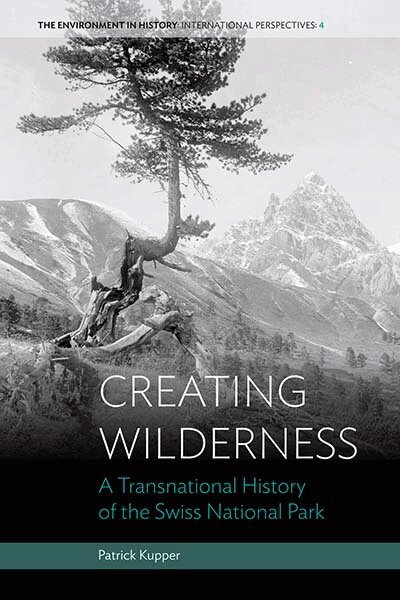
    Creating Wilderness

    A Transnational History of the Swiss National Park

    AvPatrick Kupper

    Inbunden, Engelska, 2014

    Del i serien Environment in History: International Perspectives

    1 916 kr

    Beställningsvara. Skickas inom 5-8 vardagar. Fri frakt över 249 kr.

    Fler format och utgåvor

    E-bok

    325 kr

    Beskrivning

    The history of the Swiss National Park, from its creation in the years before the Great War to the present, is told for the first time in this book. Unlike Yellowstone Park, which embodied close cooperation between state-supported conservation and public recreation, the Swiss park put in place an extraordinarily strong conservation program derived from a close alliance between the state and scientific research. This deliberate reinterpretation of the American idea of the national park was innovative and radical, but its consequences were not limited to Switzerland. The Swiss park became the prime example of a “scientific national park,” thereby influencing the course of national parks worldwide.

    Produktinformation

    • Utgivningsdatum:2014-07-01
    • Mått:152 x 229 x 20 mm
    • Vikt:544 g
    • Format:Inbunden
    • Språk:Engelska
    • Serie:Environment in History: International Perspectives
    • Antal sidor:276
    • Förlag:Berghahn Books
    • ISBN:9781782383734

    Utforska kategorier

    • Europas historia inom Historia och arkeologi
    • Miljövetenskap och miljöpolitik inom Naturvetenskap och teknik

    Mer om författaren

    Patrick Kupper is Professor of Economic and Social History at the University of Innsbruck. He is the co-editor of Civilizing Nature: National Parks in Global Historical Perspective (Berghahn, 2012).

    Recensioner i media

    “Well tied into the literature of national park studies worldwide, this exquisite book… chronicles the unique Swiss experience in creating and managing a national park in which wilderness was nonexistent… Highly recommended.” · Choice“Kupper effectively links the specific case of Switzerland with globalization and Westernization, international conservation paradigms, the social construction of wilderness, and an evolving understanding of ecosystem dynamics and the science of conservation.” · Mountain Research and Development“Readers interested in early twentieth-century Swiss conservation (especially its international connections), the bureaucracy of setting up a new national park (particularly one based on a new, science-focused national park idea), and theoretical ideas about the constructed nature of national parks and wilderness will find reward in this work.” · The Public Historian“Creating Wilderness is a detailed and thought-provoking historical analysis of the origins and development of the Swiss National Park.” · Mountain Research and Development“National parks have long been a favoured  subject for environmental histories, as microcosms where the interaction of nature, science, politics and leisure can be observed. By linking the Swiss National Park with developments elsewhere in the world, Kupper has delivered an important contribution to this literature…Kupper has provided a comprehensive  account of the development of the Swiss National Park as well as a fascinating reinterpretation of the national park as a transnational phenomenon  in the twentieth century.” · German History“This is environmental history of the first order, ranging widely across geographical scales and historical periods to trace the changing discourses and manifestations of the national park model. Kupper convincingly proves that the Swiss national parks, while inspired by the global movement sparked by the creation of the American national parks in the late 19th century, quickly established themselves as a countermodel to the American national parks, and how the Swiss model reflected specifically European concerns.” · Andrew Denning, Western Washington University“Patrick Kupper’s book is an important contribution to the history of national parks… [by putting] the creation of a Swiss national park into an explicitly transnational context.  He understands the Swiss national park not as a mere copy of an American model but in a more nuanced way that blends different international examples with the Swiss historical context… Kupper’s work is squarely in the tradition of Benedict Anderson’s Imagined Communities… Indeed, he nicely debunks the idea that the US invented the national park idea.  One might say that Kupper does for national parks what Anderson did for nationalism itself.” · Andrew Isenberg, Temple University

    Innehållsförteckning

    • FiguresAcknowledgmentsList of AbbreviationsIntroductionChapter 1. Global Parks: National Parks, Globalization, and Western ModernismThe Myth of YellowstoneNature as National SymbolThe Value of “Unspoiled” NatureThe Global Conservation MovementNational Parks and Natural MonumentsThe Globalization of the National ParkChapter 2. National Natures: The Swiss National Park and the Conservationist “Internationale”“A Beautiful Vision of the Future”Laying the FoundationsThe National Dimension“Reserve” or “National Park”National and Global ConservationDynamics and ContingenciesChapter 3. Local Landscapes: Political Spaces, Institutional Arrangements, and Subjective AttitudesGlobal, LocalLocal Culture and EconomyFears and ExpectationsArea Selection and Initial LeasesRounding Out and ExpandingDealing with ConflictsInstitutionalization and SubjectivationChapter 4. Total Protection: Philosophy and Practice of “Freely Developing Nature”“Total Protection” and Intervening in Natural ProcessesHumans and AnimalsThe Role of Park WardensManaging NatureIntroducing AnimalsSeeking a New EquilibriumChapter 5. Ecological “Field Laboratory”: The Park as a Scientific ExperimentA New Field within EcologyOrganizing and Financing Research“A Scientific National Park”: International ReceptionChanging Research Methods and PracticesAsynchronous Rhythms: Long-Term Observation and University ResearchGrowing Importance of the National Park as a Field Laboratory?Chapter 6. Wilderness Limits: Natural Dynamics and Social EquilibriumA Faustian Bargain with Water PowerGambling with the National ParkCalling All Nature LoversAnd the Tourists Came“Recreational Instruction”Managing WildlifeOf Hunters and DeerShooting in the National ParkConclusionBibliographyIndex