• Fri frakt över 249 kr
  • •
  • Snabba leveranser
  • •
  • Billiga böcker
Kundservice

Du är på sajten för privatpersoner.

Företag, bibliotek eller offentlig verksamhet?

Du handlar på classic.bokus.com, där alla dina funktioner finns intakta.
Till classic.bokus.com
Bokus logotyp. Gå till startsidan.
  • Erbjudanden
  • Nyheter
  • Student
  • Topplistor
  • Barn & ungdom
  • Bokus Play
  • E-böcker
  • Pocketböcker
  • Spel & pussel

10% rabatt på allt med kod: NYSTART10 →

Sidfot

Mina sidor

    Hjälp

    • Kundservice
    • Vanliga frågor och svar
    • Frakt och leverans
    • Retur vid ångerrätt
    • Reklamera vara
    • Betalning
    • Köpvillkor
    • Allmänna villkor
    • Information om webbplatsens tillgänglighet

    Om Bokus

    • Om oss
    • Pressrum
    • För studenter
    • För företag
    • För bibliotek och offentlig verksamhet
    • För leverantörer
    • Hållbarhet

    Populärt

    • Aktuella erbjudanden
    • Presentkort
    • Studentlitteratur
    • Nya böcker
    • Topplistor
    • Signerade böcker
    • Engelska böcker

    Inspiration

    • Boktips
    • BookTok
    • Populära bokserier
    • Barnbokskaraktärer
    • Populära författare
    Logotyp för Bokus
    Följ oss på Facebook (extern länk)Följ oss på Instagram (extern länk)Följ oss på YouTube (extern länk)Följ oss på TikTok (extern länk)
    bokus @ CookiesAnpassa cookiesIntegritetspolicyKöpvillkor
    Till Citymail hemsida (extern länk)Till Budbee hemsida (extern länk)Till Postnord hemsida (extern länk)Till Schenker hemsida (extern länk)Till Early Bird hemsida (extern länk)Till Walleys hemsida (extern länk)
    1. Historia och arkeologi
    2. Historia
    3. Allmän historia och världshistoria

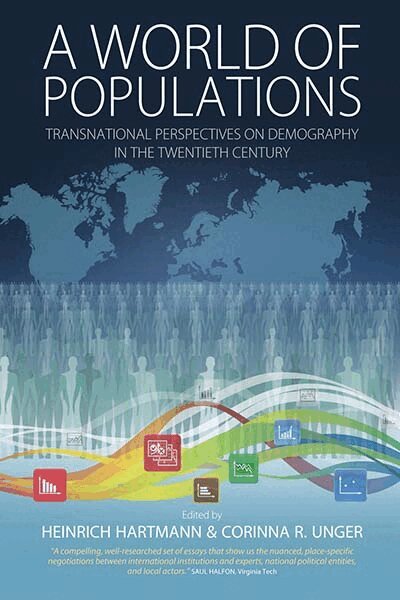
    World of Populations

    Transnational Perspectives on Demography in the Twentieth Century

    AvHeinrich Hartmann,Corinna R. Unger

    Inbunden, Engelska, 2014

    1 916 kr

    Beställningsvara. Skickas inom 5-8 vardagar. Fri frakt över 249 kr.

    Beskrivning

    Demographic study and the idea of a “population” was developed and modified over the course of the twentieth century, mirroring the political, social, and cultural situations and aspirations of different societies. This growing field adapted itself to specific policy concerns and was therefore never apolitical, despite the protestations of practitioners that demography was “natural.” Demographics were transformed into public policies that shaped family planning, population growth, medical practice, and environmental conservation. While covering a variety of regions and time periods, the essays in this book share an interest in the transnational dynamics of emerging demographic discourses and practices. Together, they present a global picture of the history of demographic knowledge.

    Produktinformation

    • Utgivningsdatum:2014-09-01
    • Mått:152 x 229 x 21 mm
    • Vikt:517 g
    • Format:Inbunden
    • Språk:Engelska
    • Antal sidor:264
    • Förlag:Berghahn Books
    • ISBN:9781782384274

    Utforska kategorier

    • Allmän historia och världshistoria inom Historia och arkeologi
    • Sociologi inom Samhälle och politik

    Mer om författaren

    Heinrich Hartmann is Assistant Professor of History at the University of Basel, Switzerland. His book, Der Volkskörper bei der Musterung. Militärstatistik und Demographie in Europa vor dem Ersten Weltkrieg (Wallstein 2011) received the Henry E. Sigerist Award in 2012. His research focuses on the history of nineteenth and twentieth century demography in Europe and on the history of Turkish modernization in a transnational perspective.

    Recensioner i media

    “…an important step in writing global or transnational histories of demographic ideas and discourses… The volume offers insights into global and local interactions, covers major aspects of global family planning programmes and "overpopulation" debates, as well as contains case studies on the United States, Poland, Chile, South Korea, Turkey, Kenya, and Melanesia.” · H-Soz-Kult“I learned something new on almost every page of A World of Populations, despite having worked very closely in this field. The case studies herein are surprising and fascinating, offering new geographies and perspectives. This book has made me intrigued and curious about demography and world population all over again.” · Alison Bashford, University of Cambridge, author of Global Population“Overall, this is a compelling, well-researched set of essays..[that] show us the nuanced, place-specific negotiations between international institutions and experts, national political entities, and local actors… Both the overall picture and the specific stories provided in this text are important contributions to the emerging literature on the history and social studies of demography and population policy.” · Saul Halfon, Virginia Tech

    Innehållsförteckning

    • List of FiguresNotes on ContributorsIntroduction: Counting, Constructing, and Controlling Populations: The History of Demography, Population Studies, and Family Planning in the Twentieth CenturyCorinna R. Unger and Heinrich HartmannPart I: Producing Demographic Subjects: Transnational DiscoursesChapter 1. The View From Below and the View From Above: What U.S. Census-taking Reveals about Social Representations in the Era of Jim Crow and Immigration RestrictionPaul SchorChapter 2. “Reproduction” as a New Demographic Issue in Interwar PolandMorgane LabbéChapter 3. Family Planning: A Rational Choice? The Influence of Systems Approaches, Behavioralism, and Rational Choice Thinking on Mid-Twentieth Century Family Planning ProgramsCorinna R. UngerChapter 4. “Overpopulation” and the Politics of Family Planning in Chile and Peru: Negotiating National Interests and Global Paradigms in a Cold War WorldJadwiga E. Pieper MooneyChapter 5. Revisiting the Early 1970s Commoner-Ehrlich Debate about Population and Environment: Dueling Critiques of Production and Consumption in a Global AgeThomas RobertsonPart II: Demographic Knowledge in Practice: Transfers and TransformationsChapter 6. “Counting People”: The Emerging Field of Demography and the Mobilization of the Social Sciences in the Formation of Policy, South Korea since 1948John Paul DiMoiaChapter 7. Laparoscopy as a Technology of Population Control: A Use-Centered History of Surgical SterilizationJesse Olszynko-GrynChapter 8. A Twofold Discovery of Population: Assessing the Turkish Population by its “Knowledge, Attitudes and Practices”, 1962-1980Heinrich HartmannChapter 9. Seeing Population as a Problem: Influences of the Construction of Population Knowledge on Kenyan Politics (1940s to 1980s)Maria DörnemannChapter 10. Filtering Demography and Biomedical Technologies: Melanesian Nurses and Global Population ConcernsAlexandra WidmerIndex