• Fri frakt över 249 kr
  • •
  • Snabba leveranser
  • •
  • Billiga böcker
Kundservice

Du är på sajten för privatpersoner.

Företag, bibliotek eller offentlig verksamhet?

Du handlar på classic.bokus.com, där alla dina funktioner finns intakta.
Till classic.bokus.com
Bokus logotyp. Gå till startsidan.
  • Erbjudanden
  • Nyheter
  • Student
  • Topplistor
  • Barn & ungdom
  • Bokus Play
  • E-böcker
  • Pocketböcker
  • Spel & pussel

10% rabatt på allt med kod NYSTART10 →

Sidfot

Mina sidor

    Hjälp

    • Kundservice
    • Vanliga frågor och svar
    • Frakt och leverans
    • Retur vid ångerrätt
    • Reklamera vara
    • Betalning
    • Köpvillkor
    • Allmänna villkor
    • Information om webbplatsens tillgänglighet

    Om Bokus

    • Om oss
    • Pressrum
    • För studenter
    • För företag
    • För bibliotek och offentlig verksamhet
    • För leverantörer
    • Hållbarhet

    Populärt

    • Aktuella erbjudanden
    • Presentkort
    • Studentlitteratur
    • Nya böcker
    • Topplistor
    • Signerade böcker
    • Engelska böcker

    Inspiration

    • Boktips
    • BookTok
    • Populära bokserier
    • Barnbokskaraktärer
    • Populära författare
    Logotyp för Bokus
    Följ oss på Facebook (extern länk)Följ oss på Instagram (extern länk)Följ oss på YouTube (extern länk)Följ oss på TikTok (extern länk)
    bokus @ CookiesAnpassa cookiesIntegritetspolicyKöpvillkor
    Till Citymail hemsida (extern länk)Till Budbee hemsida (extern länk)Till Postnord hemsida (extern länk)Till Schenker hemsida (extern länk)Till Early Bird hemsida (extern länk)Till Walleys hemsida (extern länk)
    1. Historia och arkeologi
    2. Historia
    3. Europas historia

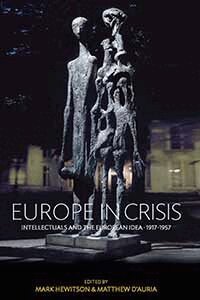
    Europe in Crisis

    Intellectuals and the European Idea, 1917-1957

    AvMark Hewitson,Matthew D’Auria

    Häftad, Engelska, 2015

    526 kr

    Beställningsvara. Skickas inom 5-8 vardagar. Fri frakt över 249 kr.

    Beskrivning

    The period between 1917 and 1957, starting with the birth of the USSR and the American intervention in the First World War and ending with the Treaty of Rome, is of the utmost importance for contextualizing and understanding the intellectual origins of the European Community. During this time of 'crisis,' many contemporaries, especially intellectuals, felt they faced a momentous decision which could bring about a radically different future. The understanding of what Europe was and what it should be was questioned in a profound way, forcing Europeans to react. The idea of a specifically European unity finally became, at least for some, a feasible project, not only to avoid another war but to avoid the destruction of the idea of European unity. This volume reassesses the relationship between ideas of Europe and the European project and reconsiders the impact of long and short-term political transformations on assumptions about the continent’s scope, nature, role and significance.

    Produktinformation

    • Utgivningsdatum:2015-06-01
    • Mått:152 x 229 x 20 mm
    • Vikt:485 g
    • Format:Häftad
    • Språk:Engelska
    • Antal sidor:360
    • Förlag:Berghahn Books
    • ISBN:9781782389248

    Utforska kategorier

    • Europas historia inom Historia och arkeologi

    Mer om författaren

    Mark Hewitson is Professor of German History and Politics and Director of European Social and Political Studies at University College London.

    Recensioner i media

    “Overall…this collection offers a broad spectrum of intellectual historical research on Europe. It therefore does not only appeal to historians who are working on the history of images of Europe specially in the first half of the 20th century but also to all those who are interested in approaches and methods of Anglo-American intellectual historians.”  ·  H-Soz-u-Kult“…this unusually structured volume guides the reader to a number of promising and under-explored avenues in the field of European integration studies.”  ·  English Historical Review“One of the strengths of the volume is the conscious effort to pay close attention to the different debates and shifting discourses about Europe on their own terms over just a few decades…The absence of a one-size-fits-all analytical straightjacket allows the individual contributors to assess how these different ideas of Europe changed over time in myriad ways. By combining investigations of individuals with group portraits, the volume also makes certain features of the Europeanists stand out more clearly…[It] serves as a useful reminder that Europe during these 40 years, was a continent suspended between ancient roots and new beginnings.”  ·  European Review of History: Revue europeenne d'histoire“The contributions are of a high standard. In almost all cases there was much that is new and interesting. There is more than enough substance, interest and range for this to be an effective contribution.”  ·  Peter Stirk, Durham University“An excellent introduction to the history of the concept of ‘Europe’ that preceded the founding of the European Community in 1957. Spanning a wide range of authors and topics, it is essential reading for anyone interested in the intellectual history of European integration.”  ·  Egbert Klautke, University College London

    Innehållsförteckning

    • List of Maps and FiguresAcknowledgementsIntroduction: Europe during the Forty Years’ CrisisPART :I PROLOGUEChapter 1. The United States of Europe: The European Question in the 1920sMark HewitsonChapter 2. Europe and the Fate of the World: Crisis and Integration in the Late 1940s and 1950sMark HewitsonChapter 3. Inventing Europe and Reinventing the Nation-State in a New World OrderMark HewitsonPART II: REIMAGINING THE PASTChapter 4. Richard Nikolaus Coudenhove-Kalergi, Founder of the Pan-European Union, and the Birth of a ‘New’ EuropeAnita Prettenthaler-ZiegerhoferChapter 5. Noble Continent? German-Speaking Nobles as Theorists of European Identity in the Interwar PeriodDina GusejnovaChapter 6. Imperium Europaeum: Rudolf Pannwitz and the German Idea of EuropeJan VermeirenChapter 7. New Middle Ages or New Modernity? Carl Schmitt’s Interwar Perspective on Political Unity in EuropeIonut UnteaChapter 8. Rosenzweig, Schmitt and the Concept of EuropeVittorio CotestaChapter 9. From Centre to Province: Changing Images of Europe in the Writings of Jerzy StempowskiŁukasz MikołajewskiPART III: MAKING SENSE OF THE PRESENTChapter 10. Visualizing Europe from 1900 to the 1950s: Identity on the MoveMichael WintleChapter 11. Europe and the Artistic Patrimony of the Interwar Period: The International Institute of Intellectual Cooperation at the League of NationsAnnamaria DucciChapter 12. Huizinga, Intellectual Cooperation and the Spirit of Europe, 1933–1945Anne-Isabelle RichardChapter 13. The Idea of European Unity in Heinrich Mann’s Political Essays of the 1920s and Early 1930sErnest SchonfieldChapter 14. Lucien Febvre and the Idea of EuropeVittorio DiniPART IV: LOOKING TO THE FUTUREChapter 15. Junius and the ‘President Professor’: Luigi Einaudi’s European FederalismMatthew D’AuriaChapter 16. Federate or Perish: The Continuity and Persistence of the Federal Idea in Europe, 1917–1957Michael BurgessConclusion: Europe between a Crisis of Culture and Political RegenerationNotes on ContributorsSelect BibliographyIndex