• Fri frakt över 249 kr
  • •
  • Snabba leveranser
  • •
  • Billiga böcker
Kundservice

Du är på sajten för privatpersoner.

Företag, bibliotek eller offentlig verksamhet?

Du handlar på classic.bokus.com, där alla dina funktioner finns intakta.
Till classic.bokus.com
Bokus logotyp. Gå till startsidan.
  • Erbjudanden
  • Nyheter
  • Student
  • Topplistor
  • Barn & ungdom
  • Bokus Play
  • E-böcker
  • Pocketböcker
  • Spel & pussel

10% rabatt på allt med kod: NYSTART10 →

Sidfot

Mina sidor

    Hjälp

    • Kundservice
    • Vanliga frågor och svar
    • Frakt och leverans
    • Retur vid ångerrätt
    • Reklamera vara
    • Betalning
    • Köpvillkor
    • Allmänna villkor
    • Information om webbplatsens tillgänglighet

    Om Bokus

    • Om oss
    • Pressrum
    • För studenter
    • För företag
    • För bibliotek och offentlig verksamhet
    • För leverantörer
    • Hållbarhet

    Populärt

    • Aktuella erbjudanden
    • Presentkort
    • Studentlitteratur
    • Nya böcker
    • Topplistor
    • Signerade böcker
    • Engelska böcker

    Inspiration

    • Boktips
    • BookTok
    • Populära bokserier
    • Barnbokskaraktärer
    • Populära författare
    Logotyp för Bokus
    Följ oss på Facebook (extern länk)Följ oss på Instagram (extern länk)Följ oss på YouTube (extern länk)Följ oss på TikTok (extern länk)
    bokus @ CookiesAnpassa cookiesIntegritetspolicyKöpvillkor
    Till Citymail hemsida (extern länk)Till Budbee hemsida (extern länk)Till Postnord hemsida (extern länk)Till Schenker hemsida (extern länk)Till Early Bird hemsida (extern länk)Till Walleys hemsida (extern länk)
    1. Naturvetenskap och teknik
    2. Geovetenskap
    3. Miljövetenskap och miljöpolitik

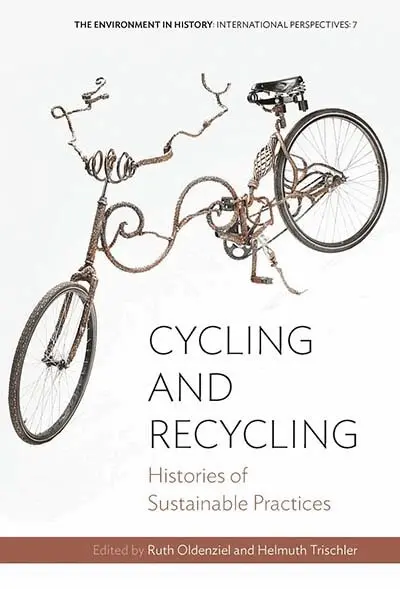
    Cycling and Recycling

    Histories of Sustainable Practices

    AvRuth Oldenziel,Helmuth Trischler

    Inbunden, Engelska, 2015

    Del i serien Environment in History: International Perspectives

    1 861 kr

    Beställningsvara. Skickas inom 5-8 vardagar. Fri frakt över 249 kr.

    Beskrivning

    Technology has long been an essential consideration in public discussions of the environment, with the focus overwhelmingly on creating new tools and techniques. In more recent years, however, activists, researchers, and policymakers have increasingly turned to mobilizing older technologies in their pursuit of sustainability. In fascinating case studies ranging from the Early Modern secondhand trade to utopian visions of human-powered vehicles, the contributions gathered here explore the historical fortunes of two such technologies—bicycling and waste recycling—tracing their development over time and providing valuable context for the policy successes and failures of today.

    Produktinformation

    • Utgivningsdatum:2015-12-01
    • Mått:152 x 229 x 19 mm
    • Vikt:517 g
    • Format:Inbunden
    • Språk:Engelska
    • Serie:Environment in History: International Perspectives
    • Antal sidor:256
    • Förlag:Berghahn Books
    • ISBN:9781782389705

    Utforska kategorier

    • Miljövetenskap och miljöpolitik inom Naturvetenskap och teknik
    • Miljöteknik inom Naturvetenskap och teknik

    Mer om författaren

    Ruth Oldenziel is Professor of American and European History at the Eindhoven University of Technology and visiting scholar at the LMU Rachel Carson Center for Environment and Society. Her books include Consumers, Users, Rebels: The People Who Shaped Europe with Mikael Hård; Cold War Kitchen with Karin Zachmann; Gender and Technology with Nina Lerman and Arwen Mohun; and Making Technology Masculine.

    Recensioner i media

    “…an informative and very readable volume that offers stimulating ideas for further research.” • Technikgeschichte“The reviewer freely admits to have learned many interesting and fascinating facts about ‘Cycling and Recycling’ in very different country contexts. In addition, most of the contributions have been written in such a way as to be so comprehensible and jargon-free as to make them accessible also to readers beyond the narrow circle of specialists, which appears particularly important for an interdisciplinary field such as environmental history. In addition, the collection reveals, beyond the semantic bracket of the title, a thematic stringency that one can only wish for in the cases of many available syntheses bound together.” • H-Soz-Kult“This book’s conceptual framework is truly innovative and makes a much-needed intervention in the vast literature on sustainability. Writing against the ‘techno-fix mentality’ that dominates so many contemporary environmental discourses, the editors persuasively argue for the need to resurrect ‘older technologies for a new purpose.’” • Edward D. Melillo, Amherst College

    Innehållsförteckning

    • PART I: INTRODUCTIONIntroduction: How Old Technologies Became Sustainable: An IntroductionRuth Oldenziel and Helmuth TrischlerPART II: CYCLING HISTORIESChapter 1. Use and Cycling in West AfricaHans Peter HahnChapter 2. The Politics of Bicycle Innovation: Comparing the American and Dutch Human-Powered Vehicle Movements, 1970s—presentManuel StoffersChapter 3. Scarcity, Poverty, Exclusion: Negative Associations of Bicycle’s Uses and Cultural History in FranceCathérine Bertho LavenirChapter 4. Who Pays, Who Benefits? Bicycle Taxes as Policy Tool of the Public Good, 1890–2012Adri de la Bruhèze and Ruth OldenzielChapter 5. Monuments of Unsustainability: Planning, Path Dependence, and Cycling in StockholmMartin EmanuelPART III: INTERSECTIONSChapter 6. Bicycling and Recycling in Japan: Divergent TrajectoriesWilliam Steele PART IV: RECYCLING HISTORIESChapter 7. Premodern Sustainability? The Secondhand and Repair Trade in Urban EuropeGeorg StögerChapter 8. Waste to Assets: How Household Waste Recycling Evolved in West GermanyRoman KösterChapter 9. Ecological Modernization of Waste-Dependent Development? Hungary’s 2010 Red Mud DisasterZsuzsa GilleChapter 10. “Der Kampf um den Abfallstrom.” Conflict and Contestation in Re-Valuing E-Waste in GermanyDjahane SalehabidiPART IV: REFLECTIONSChapter 11. Can History Offer Pathways to Sustainability?Donald WorsterChapter 12. History, Sustainability, ChoiceRobert FriedelContributorsSelect BibliographyIndex