• Fri frakt över 249 kr
  • •
  • Snabba leveranser
  • •
  • Billiga böcker
Kundservice

Du är på sajten för privatpersoner.

Företag, bibliotek eller offentlig verksamhet?

Du handlar på classic.bokus.com, där alla dina funktioner finns intakta.
Till classic.bokus.com
Bokus logotyp. Gå till startsidan.
  • Erbjudanden
  • Nyheter
  • Student
  • Topplistor
  • Barn & ungdom
  • Bokus Play
  • E-böcker
  • Pocketböcker
  • Spel & pussel

10% rabatt på allt med kod: NYSTART10 →

Sidfot

Mina sidor

    Hjälp

    • Kundservice
    • Vanliga frågor och svar
    • Frakt och leverans
    • Retur vid ångerrätt
    • Reklamera vara
    • Betalning
    • Köpvillkor
    • Allmänna villkor
    • Information om webbplatsens tillgänglighet

    Om Bokus

    • Om oss
    • Pressrum
    • För studenter
    • För företag
    • För bibliotek och offentlig verksamhet
    • För leverantörer
    • Hållbarhet

    Populärt

    • Aktuella erbjudanden
    • Presentkort
    • Studentlitteratur
    • Nya böcker
    • Topplistor
    • Signerade böcker
    • Engelska böcker

    Inspiration

    • Boktips
    • BookTok
    • Populära bokserier
    • Barnbokskaraktärer
    • Populära författare
    Logotyp för Bokus
    Följ oss på Facebook (extern länk)Följ oss på Instagram (extern länk)Följ oss på YouTube (extern länk)Följ oss på TikTok (extern länk)
    bokus @ CookiesAnpassa cookiesIntegritetspolicyKöpvillkor
    Till Citymail hemsida (extern länk)Till Budbee hemsida (extern länk)Till Postnord hemsida (extern länk)Till Schenker hemsida (extern länk)Till Early Bird hemsida (extern länk)Till Walleys hemsida (extern länk)
    1. Naturvetenskap och teknik
    2. Teknik och industri
    3. Byggnadsteknik

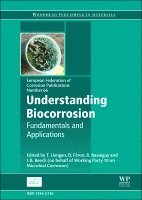
    Understanding Biocorrosion

    Fundamentals and Applications

    AvT Liengen,R Basseguy

    Inbunden, Engelska, 2014

    Del 66 i serien European Federation of Corrosion (EFC) Series

    2 293 kr

    Beställningsvara. Skickas inom 10-15 vardagar. Fri frakt över 249 kr.

    Beskrivning

    Biocorrosion refers to corrosion influenced by bacteria adhering to surfaces in biofilms. Biocorrosion is a major problem in areas such as cooling systems and marine structures where biofilms can develop. This book summarises key recent research in this subject. Part one looks at theories of biocorrosion and measurement techniques. Part two discusses how bacteria and biofilms result in biocorrosion. The final part of the book includes case studies of biocorrosion in areas as diverse as buildings, fuels, marine environments and cooling systems.

    • Provides a detailed overview of biocorrosion and the different scientific and/or industrial problems related to microbially induced corrosion
    • Introduces a variety of investigative techniques and methodologies that are employed in diagnosing and evaluating microbially induced corrosion
    • Includes case studies on: biodeterioration of building materials; biocorrosion issues associated with diesel and biofuels; marine biocorrosion; corrosion of open recirculating cooling water systems and cooling system components; the effect of H2S on steel corrosion

    Produktinformation

    • Utgivningsdatum:2014-11-05
    • Mått:152 x 229 x undefined mm
    • Vikt:1 680 g
    • Format:Inbunden
    • Språk:Engelska
    • Serie:European Federation of Corrosion (EFC) Series
    • Antal sidor:446
    • Förlag:Elsevier Science
    • ISBN:9781782421207

    Utforska kategorier

    • Byggnadsteknik inom Naturvetenskap och teknik
    • Maskinteknik och material inom Naturvetenskap och teknik

    Mer om författaren

    Turid Liengen, Statoil ASA Technology, Norway. Régine Basséguy, CNRS Laboratoire de Génie Chimique, France. Damien Féron, CEA Saclay, France. Iwona Beech, University of Oklahoma, USA

    Innehållsförteckning

    • List of contributorsSeries introductionVolumes in the EFC seriesPrefacePart One: Turbomachinery Development1: Understanding corrosion: basic principles1.1 Introduction1.2 Materials and surfaces1.3 Basic corrosion processes1.4 Main forms of corrosion degradation1.5 Conclusion2: Biofilms and biocorrosion2.1 Introduction2.2 Biofilms2.3 Corrosion and biocorrosion2.4 Molecular techniques for the investigation of biofilm communities2.5 DNA microarrays2.6 Mass spectrometric metabolomics for the study of biofilm-influenced corrosion2.7 ConclusionsAcknowledgements3: Molecular methods for studying biocorrosion3.1 Introduction3.2 Requirements for molecular biological studies3.3 Molecular methods based on the analysis of the 16S- and 18S-rRNA gene sequences3.4 Functional genes as a molecular tool3.5 Other useful methods4: Sulphate-reducing bacteria (SRB) and biocorrosion4.1 Introduction4.2 Microbially induced corrosion (MIC)4.3 Sulphate-reducing bacteria (SRB): bringing together hydrogen, sulphur and nitrogen biocycles4.4 Electron transfer (ET) processes relevant for SRB4.5 Bacteria and metal surfaces: influence of extracellular polymeric substances (EPSs)4.6 Useful methods and tools for MIC assessment4.7 ConclusionsAcknowledgements5: Electroactive biofilms5.1 Introduction5.2 Different types of electron transfer mechanisms5.3 Examples of electroactive biofilms (EABs) from the lab5.4 EABs and technological applications5.5 EABs and biocorrosion5.6 Conclusions6: Immobilization and trapping of living bacteria and applications in corrosion studies6.1 Introduction6.2 Materials and methods6.3 Immunoimmobilization, trapping bacteria and applications6.4 BiyoTrap and applications6.5 ConclusionsAcknowledgementsPart Two: Evaluating and modelling biocorrosion7: Physical and local electrochemical techniques for measuring corrosion rates of metals7.1 Introduction7.2 Global measurement of corrosion rate7.3 Electrochemical techniques for monitoring generalized corrosion7.4 Electrochemical techniques for monitoring localized corrosion7.5 Conclusions8: Surface analysis techniques for investigating biocorrosion8.1 Introduction8.2 X-ray photoelectron spectroscopy (XPS) analysis8.3 Time-of-flight secondary ion mass spectrometry (ToF-SIMS) analysis8.4 Combining different analysis techniques8.5 Conclusions9: Modelling long term corrosion of steel infrastructure in natural marine environments9.1 Introduction9.2 Models and modelling9.3 Models for corrosion9.4 Factors involved in marine corrosion9.5 Microbiologically influenced corrosion (MIC)9.6 Corrosion loss model9.7 Effects of nutrient pollution9.8 Accelerated low water corrosion (ALWC)9.9 Evaluating the effect of nutrient pollution9.10 ConclusionsAcknowledgements10: Modeling mechanisms in biocorrosion10.1 Introduction10.2 Corrosion diagrams10.3 Interfacial changes due to microbially influenced corrosion (MIC)10.4 Localized corrosion10.5 Modeling10.6 Conclusions and recommendationsPart Three: Case studies11: Biodeterioration of concrete, brick and other mineral-based building materials11.1 Introduction11.2 Biodeterioration of natural and man-made building materials11.3 Microorganisms that cause the biodeterioration of mineral-based materials11.4 Factors contributing to the biodeterioration of mineral-based materials11.5 Symptoms of mineral-based material biodeterioration11.6 The case of concrete biodeterioration11.7 The case of bricks and mortar biodeterioration11.8 Conclusions12: Biocorrosion issues associated with the use of ultra-low sulfur diesel and biofuel blends in the energy infrastructure12.1 Introduction12.2 The need for cleaner diesel fuel12.3 The impact of organosulfur compounds on anaerobic metabolism12.4 The impact of desulfurization on diesel fuel stability12.5 Assessment of diesel additives: fatty acid methyl esters (FAME)12.6 Fuel composition and inocula are equally important12.7 Conclusions13: Understanding marine biocorrosion: experiments with artificial and natural seawater13.1 Introduction13.2 Effect of nutrients and oxygen removal on biocorrosion13.3 Comparison of experiments in natural and artificial seawater13.4 Variability in the composition of natural seawater13.5 ConclusionsAcknowledgements14: Managing open recirculating cooling water systems to minimize contamination and corrosion14.1 Introduction14.2 Description of the scope of the work14.3 Conclusions14.4 Sources of further information and adviceAcknowledgementsAppendix 1 Scope of the work document for open recirculating cooling water systems, 1/31/2013, Company X, Plant X, supplier service requirementsAppendix 2 Guidelines for best practices for the control of Legionella, July 200815: Risk assessment of biocorrosion in condensers, pipework and other cooling system components15.1 Introduction15.2 Biofouling/biocorrosion15.3 Biocorrosion risk mitigation15.4 Monitoring systems15.5 Conclusions16: The effect of H2S on the corrosion of steels16.1 Introduction16.2 Carbon steel and low alloy steels in H2S containing solutions16.3 Stainless steels: microstructures and corrosion16.4 ConclusionIndex