• Fri frakt över 249 kr
  • •
  • Snabba leveranser
  • •
  • Billiga böcker
Kundservice

Du är på sajten för privatpersoner.

Företag, bibliotek eller offentlig verksamhet?

Du handlar på classic.bokus.com, där alla dina funktioner finns intakta.
Till classic.bokus.com
Bokus logotyp. Gå till startsidan.
  • Erbjudanden
  • Nyheter
  • Student
  • Topplistor
  • Barn & ungdom
  • Bokus Play
  • E-böcker
  • Pocketböcker
  • Spel & pussel

10% rabatt på allt med kod NYSTART10 →

Sidfot

Mina sidor

    Hjälp

    • Kundservice
    • Vanliga frågor och svar
    • Frakt och leverans
    • Retur vid ångerrätt
    • Reklamera vara
    • Betalning
    • Köpvillkor
    • Allmänna villkor
    • Information om webbplatsens tillgänglighet

    Om Bokus

    • Om oss
    • Pressrum
    • För studenter
    • För företag
    • För bibliotek och offentlig verksamhet
    • För leverantörer
    • Hållbarhet

    Populärt

    • Aktuella erbjudanden
    • Presentkort
    • Studentlitteratur
    • Nya böcker
    • Topplistor
    • Signerade böcker
    • Engelska böcker

    Inspiration

    • Boktips
    • BookTok
    • Populära bokserier
    • Barnbokskaraktärer
    • Populära författare
    Logotyp för Bokus
    Följ oss på Facebook (extern länk)Följ oss på Instagram (extern länk)Följ oss på YouTube (extern länk)Följ oss på TikTok (extern länk)
    bokus @ CookiesAnpassa cookiesIntegritetspolicyKöpvillkor
    Till Citymail hemsida (extern länk)Till Budbee hemsida (extern länk)Till Postnord hemsida (extern länk)Till Schenker hemsida (extern länk)Till Early Bird hemsida (extern länk)Till Walleys hemsida (extern länk)
    1. Kultur
    2. Scenkonst och film
    3. Teater

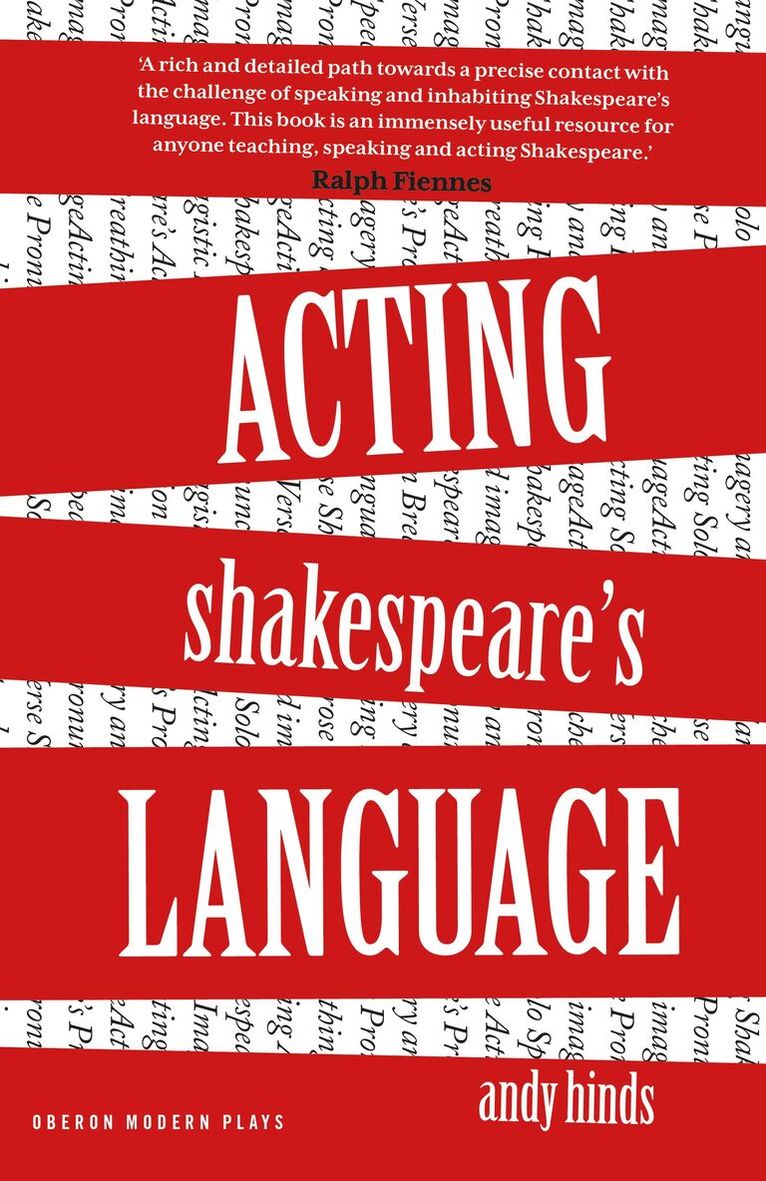
    Acting Shakespeare's Language

    AvAndy Hinds

    Häftad, Engelska, 2015

    Del i serien Actor's Toolkit

    279 kr

    Beställningsvara. Skickas inom 10-15 vardagar. Fri frakt över 249 kr.

    Beskrivning

    In this inspirational new manual, Andy Hinds shares what he has learnt over thirty years of teaching the speaking and acting of Shakespeare’s texts. In simple steps he brings the reader to a full understanding of how Shakespeare’s language ‘works’, lucidly outlines a number of practical guidelines, and provides simple, test-proven exercises to put each guideline into practice. Key points include:Acting Solo Speeches | Pronunciation | Imagery and imagistic language | Acting Shakespeare’s Verse | Acting Shakespeare’s Prose | BreathingThe essential guide for all actors, students, teachers or directors tackling Shakespeare’s plays or speeches and wishing to release the full dramatic power of his words.

    Produktinformation

    • Utgivningsdatum:2015-01-30
    • Mått:138 x 214 x 18 mm
    • Vikt:360 g
    • Format:Häftad
    • Språk:Engelska
    • Serie:Actor's Toolkit
    • Antal sidor:288
    • Förlag:Bloomsbury Publishing PLC
    • ISBN:9781783190089

    Utforska kategorier

    • Teater inom Kultur
    • Litteraturvetenskap inom Skönlitteratur

    Mer om författaren

    Derry born Andy Hinds has, for many years, been a theatre director, playwright and acting teacher. He is currently Artistic Director of Classic Stage Ireland. Andy has an ongoing association with the Royal Academy of Dramatic Art in London where for many years he taught, ‘Acting Shakespeare’ and directed their classic productions. Also for RADA he created and taught their 3-month ‘International Acting Shakespeare Course’ for professional actors, directors and academics. He recently conducted a series of Masterclasses in ‘Acting Shakespeare’ at Shakespeare’s Globe in London.

    Recensioner i media

    It is to this book's enormous credit that it focuses in depth on the nuts and bolts of getting lips and heads around the intricacies of verse-speaking without either shirking the difficulties or becoming stilted and dull... I wish I'd had this book when I was acting - I'm delighted to have encountered it as a teacher.

    Innehållsförteckning

    • Contents: SECTION ONE: THE FOUNDATION - FEEDING OFF THE ENVIRONMENT 1 - Introduction 2 - When you speak - 'ask', 'explain' or 'command'. 3 - Objectives - Understand the objective of speech or utterance - Act with practical purpose. 4 - Addressees - Open fresh line of communication each time the addressee changes. 5 - Outward Visual Connection - Eyes at all times outwardly and actively connected. 6 - Action Not Feeling - 'yin' and' yang' - achieving the balance. 7 - Realize, Discover, See the light. 8 - Being in the moment - Thinking on the line; the thought is the line; the line is the thought. 9 - Standing over one's utterances - 'Containing' the accumulated energy. 10 - Asides - different types of Asides and how to play them. 11 - Transitions - how to make transitions within a speech. SECTION TWO: WHAT THE VERSE, POETRY AND RHETORIC OFFERS YOU AND ASKS OF YOU 1 - The Iambic Pentameter - What is it? 2 - Making it sound 'natural' - How would you instinctively say it?... How honouring and working the verse makes it sound 'natural'. 3 - Finding the beats - 'Skidding over the beats'... 'Missing the beats'... 'Over emphasising the beats'. 4 - 'Reciting' - When 'honouring' the verse takes over from clear communication. 5 - Being in the active, creative present of the line. 6 - Don't 'sign off' - How not to throw away the energy one has built up during a speech or line. 7 - 'No subtext' - Committing to the surface meaning of the line. 8 - Imagery - Making the concrete surface of the image clear. 9 - Personifications - Speak to the 'personification' as if it is alive and human. 10 - Oppositions - Give appropriate pointing to the 'a's' and the 'b's'. 11 - Parentheses - Separating the 'spine of sentence' from the 'parentheses'. 12 - Adjectives and Adverbs - Making them 'necessary'. 13 - Caesurae - What is a 'caesura'? Identifying it, and using it to advantage. 14 - Rhetorical 'lists'. SECTION THREE: SOLILOQUIES AND 'BIG SPEECHES' All that has gone before will apply to soliloquies - usually more so. But there are specific considerations. 1 - 'Objectives' - Feeding off and talking to the imagined environment, the audience, the universe. 2 - 'Who am I talking to?' - Identifying and addressing oneself to the most useful of the possible addresses. 3 - 'Eyes' - Where do I Iook? 4 - 'Signing off' - Containing and not throwing away the energy at the end of the speech. 5 - 'Soliloquy as primarily a process of enlightment' - Identifying the different place the character has arrived at by the end. 6 - 'Transitions' - identifying and playing the transitions within the speech for to achieve clarity and the building of energy. 7 - 'Building' the speech.