• Fri frakt över 249 kr
  • •
  • Snabba leveranser
  • •
  • Billiga böcker
Kundservice

Du är på sajten för privatpersoner.

Företag, bibliotek eller offentlig verksamhet?

Du handlar på classic.bokus.com, där alla dina funktioner finns intakta.
Till classic.bokus.com
Bokus logotyp. Gå till startsidan.
  • Erbjudanden
  • Nyheter
  • Student
  • Topplistor
  • Barn & ungdom
  • Bokus Play
  • E-böcker
  • Pocketböcker
  • Spel & pussel

10% rabatt på allt med kod: NYSTART10 →

Sidfot

Mina sidor

    Hjälp

    • Kundservice
    • Vanliga frågor och svar
    • Frakt och leverans
    • Retur vid ångerrätt
    • Reklamera vara
    • Betalning
    • Köpvillkor
    • Allmänna villkor
    • Information om webbplatsens tillgänglighet

    Om Bokus

    • Om oss
    • Pressrum
    • För studenter
    • För företag
    • För bibliotek och offentlig verksamhet
    • För leverantörer
    • Hållbarhet

    Populärt

    • Aktuella erbjudanden
    • Presentkort
    • Studentlitteratur
    • Nya böcker
    • Topplistor
    • Signerade böcker
    • Engelska böcker

    Inspiration

    • Boktips
    • BookTok
    • Populära bokserier
    • Barnbokskaraktärer
    • Populära författare
    Logotyp för Bokus
    Följ oss på Facebook (extern länk)Följ oss på Instagram (extern länk)Följ oss på YouTube (extern länk)Följ oss på TikTok (extern länk)
    bokus @ CookiesAnpassa cookiesIntegritetspolicyKöpvillkor
    Till Citymail hemsida (extern länk)Till Budbee hemsida (extern länk)Till Postnord hemsida (extern länk)Till Schenker hemsida (extern länk)Till Early Bird hemsida (extern länk)Till Walleys hemsida (extern länk)
    1. Kultur
    2. Musikböcker
    3. Musik: stilar och genrer
    4. Klassisk musik, konstmusik och orkestermusik

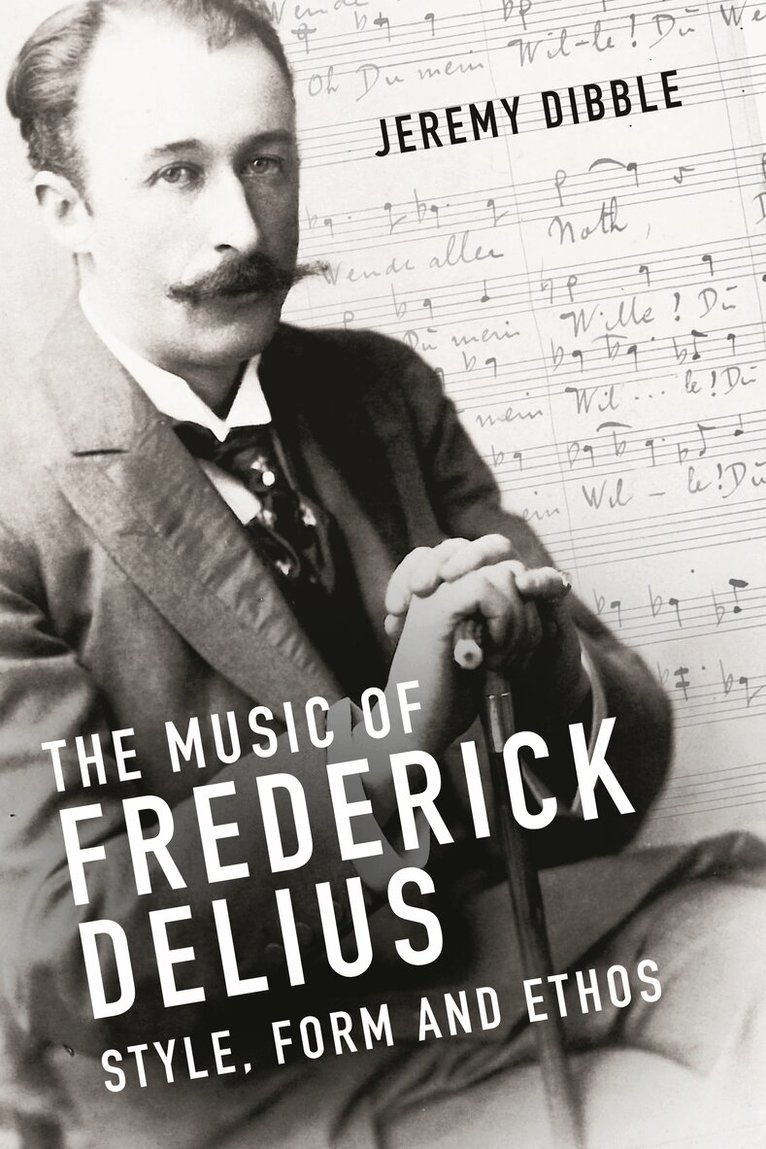
    Music of Frederick Delius

    Style, Form and Ethos

    AvJeremy Dibble

    Inbunden, Engelska, 2021

    592 kr

    Beställningsvara. Skickas inom 5-8 vardagar. Fri frakt över 249 kr.

    Beskrivning

    This book examines Delius's individual approaches to genre, form, harmony, orchestration and literary texts which gave the composer's musical style such a unique voice.Frederick Delius' (1862-1934) music has proved impervious to analytical definition. Delius's approaches to genre, form, harmony, orchestration and literary texts are all highly individual, not to say eccentric in their deliberate aim to avoid conformity. Rarely does Delius follow a conventional line, and though one can readily point to important influences, the larger Gestalt of each work has a syntax and coherence for which conventional analytical methods are mostly inadequate. Delius's musical style has also defied one of the most essential critical tools of his musical epoque - that of national identity. His style bears no relation either to the Victorian or Edwardian aesthetic of British music spearheaded by Parry, Stanford and Elgar before the First World War, nor to the more overtly nationalist, folk-song-orientated pastoralism of post-war Britain in such composers as Vaughan Williams and Holst. In contrast, Delius acknowledged himself a 'stateless' individual and considered that his music refused to belong to any national school or movement. To test these claims, the book explores a number of important factors. Delius's musical education at the Leipzig Conservatorium and the works he produced there. Delius's musical voice, notably his harmonic and melodic style and the close structural relationship between these two factors. The book also explores the question of Delius and 'genre' in which the investigation of form is central, especially in opera, the symphonic poem, the choral work (where words are seminal to the creation of structural design) and the sonata and concerto (to which Delius brought his own individual solution). Other significant factors are Delius's cosmopolitan use of texts, operatic plots and picturesque impressions, his relationship to Nietzsche's writings and the genre of dance, and the role of his 'earlier' works (1888-1896) in which it is possible to plot a course of stylistic change with reference to the influences of Grieg, Sinding, Florent Schmitt, Wagner, Strauss and Debussy.

    Produktinformation

    • Utgivningsdatum:2021-06-24
    • Mått:156 x 234 x 56 mm
    • Vikt:1 062 g
    • Format:Inbunden
    • Språk:Engelska
    • Antal sidor:564
    • Förlag:Boydell & Brewer Ltd
    • ISBN:9781783275779

    Utforska kategorier

    • Klassisk musik, konstmusik och orkestermusik inom Kultur

    Mer om författaren

    JEREMY DIBBLE is an Emeritus Professor of Music at Durham University where he taught for 30 years. With the Boydell Press, Dibble has published John Stainer: A Life in Music (2007), Hamilton Harty: Musical Polymath (2013), British Musical Criticism and Intellectual Thought, 1850-1950 (2018) (with Julian Horton), The Music of Frederick Delius (2021) and Charles Villers Stanford: Man and Musician (revised and expanded edition, 2024).

    Recensioner i media

    Thoughtful, thorough, and based on much reflection and study of the archives and manuscripts, this book may finally settle the issue of form and style as it relates to Delius's work.

    Innehållsförteckning

    • PART 1 THE SEEDS OF COSMOPOLITANISM1 An unconventional apprenticeship: Bradford, Florida and Leipzig (1862-1888)2 Creative self-communion: Paa Vidderne, Lieder aus dem Norwegischen, Légendes, Drei Symphonische Dichtungen, Songs (1888-1891)3 A Wagnerian odyssey: Irmelin and The Magic Fountain (1891-1895)4 A stylistic fulcrum: Koanga, the Danish Songs, the Piano Concerto and Folkeraadet (1895-1897)5 A Nietzschean 'dance' epiphany: Nieztsche Songs, Mitternachtslied Zarathustras, Paris, La Ronde se déroule, Lebenstanz (1898-1901) PART 2 THE VOICE OF INDIVIDUALITY 6 Operatic innovation: Romeo und Juliet auf dem Dorfe and Margot le Rouge (1898-1902)7 American apogee: Appalachia (1902) and Sea Drift (1902-3)8 The Nietzschean obsession: A Mass of Life (1904-6)9 'English' interlude: the partsong as innovative genre: Songs of Sunset, 'On Craig Ddu', 'Wanderer's Song', 'Midsummer Song', 'To be sung of a summer night on the river' (1906-8)10 The symphonic poem (I): Brigg Fair, In a Summer Garden, Dance Rhapsody No. 1 (1907-1912)11 Homage to Jacobsen: Fennimore and Gerda, An Arabesque (1908-1913) PART 3 FAME AND DECLINE12 Symphonic poem (II): Two Pieces for Small Orchestra, Song of the High Hills, North Country Sketches (1911-1914)13 Music of the war years and after (I): Dance Rhapsody No. 2, Requiem, Eventyr, A Song Before Sunrise, Poem of Life and Love, Hassan14 Music of the war years and after (II): Sonatas and Concertos: A Stylistic Paradox: Violin Sonata No. 1, Double Concerto, Cello Sonata, String Quartet, Violin Concerto, Cello Concerto, Violin Sonata No. 2 (1914-1923)15 The last years of creativity: Song of Summer, A Late Lark, Cynara, Violin Sonata No. 3, Songs of Farewell, Irmelin Prelude, Fantastic Dance, Idyll (1923-1934) EpilogueBibliography