• Fri frakt över 249 kr
  • •
  • Snabba leveranser
  • •
  • Billiga böcker
Kundservice

Du är på sajten för privatpersoner.

Företag, bibliotek eller offentlig verksamhet?

Du handlar på classic.bokus.com, där alla dina funktioner finns intakta.
Till classic.bokus.com
Bokus logotyp. Gå till startsidan.
  • Erbjudanden
  • Nyheter
  • Student
  • Topplistor
  • Barn & ungdom
  • Bokus Play
  • E-böcker
  • Pocketböcker
  • Spel & pussel

10% rabatt på allt med kod NYSTART10 →

Sidfot

Mina sidor

    Hjälp

    • Kundservice
    • Vanliga frågor och svar
    • Frakt och leverans
    • Retur vid ångerrätt
    • Reklamera vara
    • Betalning
    • Köpvillkor
    • Allmänna villkor
    • Information om webbplatsens tillgänglighet

    Om Bokus

    • Om oss
    • Pressrum
    • För studenter
    • För företag
    • För bibliotek och offentlig verksamhet
    • För leverantörer
    • Hållbarhet

    Populärt

    • Aktuella erbjudanden
    • Presentkort
    • Studentlitteratur
    • Nya böcker
    • Topplistor
    • Signerade böcker
    • Engelska böcker

    Inspiration

    • Boktips
    • BookTok
    • Populära bokserier
    • Barnbokskaraktärer
    • Populära författare
    Logotyp för Bokus
    Följ oss på Facebook (extern länk)Följ oss på Instagram (extern länk)Följ oss på YouTube (extern länk)Följ oss på TikTok (extern länk)
    bokus @ CookiesAnpassa cookiesIntegritetspolicyKöpvillkor
    Till Citymail hemsida (extern länk)Till Budbee hemsida (extern länk)Till Postnord hemsida (extern länk)Till Schenker hemsida (extern länk)Till Early Bird hemsida (extern länk)Till Walleys hemsida (extern länk)
    1. Samhälle och politik
    2. Sociologi och antropologi
    3. Antropologi

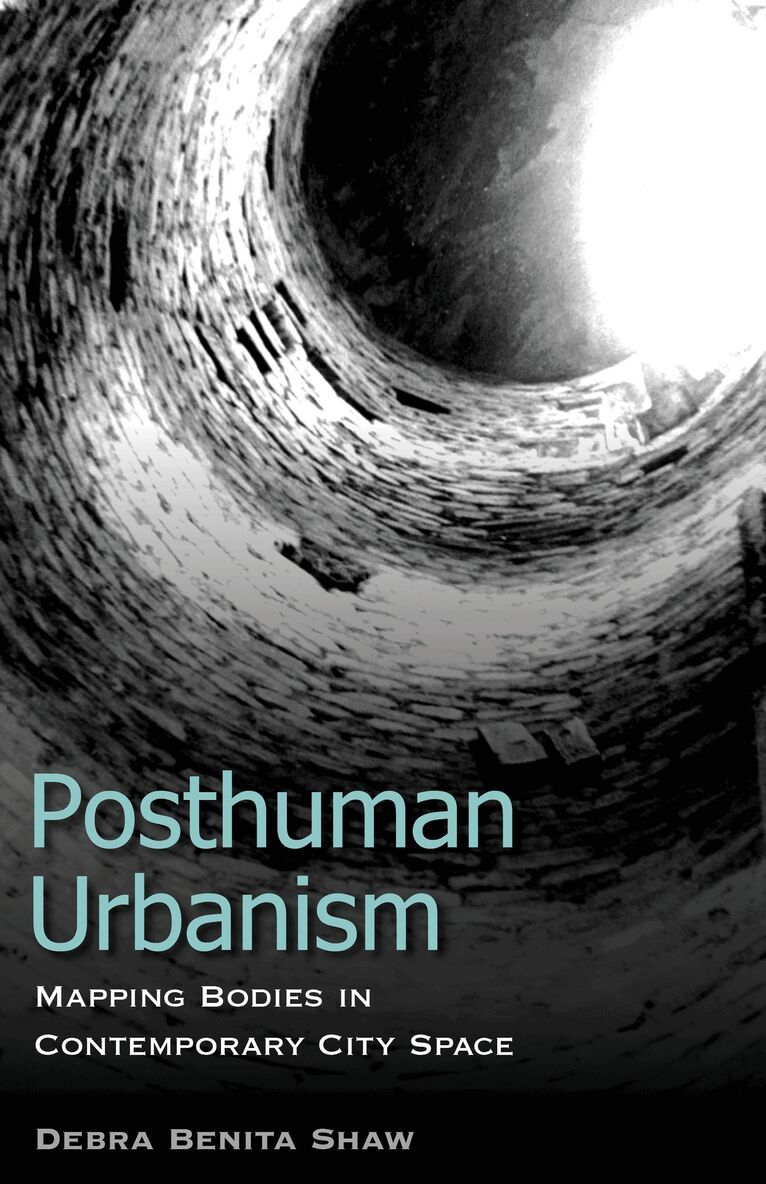
    Posthuman Urbanism

    Mapping Bodies in Contemporary City Space

    AvDebra Benita Shaw

    Häftad, Engelska, 2017

    521 kr

    Beställningsvara. Skickas inom 10-15 vardagar. Fri frakt över 249 kr.

    Fler format och utgåvor

    Inbunden

    1 535 kr

    E-bok

    559 kr

    Beskrivning

    The World Health Organisation estimates that, by 2030, six out of every ten people in the world will live in a city. But what does it mean to inhabit the city in the twenty-first century? Posthuman Urbanism evaluates the relevance and usefulness of posthuman theory to understanding the urban subject and its conditions of possibility. It argues that contemporary science and technology is radically changing the way that we understand our bodies and that understanding ourselves as 'posthuman' offers new insights into urban inequalities. By analysing the relationship between the biological sciences and cities from the nineteenth-century onward as it is expressed in architecture, popular culture and case studies of contemporary insurgent practices, a case is made for posthuman urbanism as a significant concept for changing the meaning of urban space. It answers the question of how we can change ourselves to change the way we live with others, both human and non-human, in a rapidly urbanising world.

    Produktinformation

    • Utgivningsdatum:2017-10-24
    • Mått:151 x 231 x 15 mm
    • Vikt:331 g
    • Format:Häftad
    • Språk:Engelska
    • Antal sidor:234
    • Förlag:Bloomsbury Publishing PLC
    • ISBN:9781783480807

    Utforska kategorier

    • Antropologi inom Samhälle och politik
    • Sociala grupper och identitet inom Samhälle och politik

    Mer om författaren

    Debra Benita Shaw is a Reader in Cultural Theory at the University of East London. She is the author of Women Science & Fiction (2000), Technoculture: The Key Concepts (2008) and co-editor (with Maggie Humm) of Radical Space: Exploring Politics and Practice (2016).

    Recensioner i media

    If cartography creates representations of space that map bodies into power, this vivid, original and utterly compelling book hacks mapping to evoke alternative ontologies of existence within hyper-surveilled prosumer cities crisscrossed by endless commuter corridors and shopping junk. Posthuman Urbanism is in fact a treasure map, one that engages acting rather than seeing. Explore the many complex and inspiring paths that it contains to find invaluable treasures: stories, imaginings and concepts hidden in dark spaces that evade normalising twenty-four-hour high security control; ways of doing and being that queer urban planning and its belief that it can fix all social problems; ways of becoming and escaping that draw energies from unexpected animal, human, technoscientific, material mixtures. By analysing how humanism and urbanism reinforce each other only to assert control over our movements in city space, this provocative and bracing read invites us to embrace posturban city spaces and, indeed, to make them. Beneath the paving stones, the posthuman urban commons.

    Innehållsförteckning

    • Preface/ Part 1: Political Anatomies Of Bodies And Cities/ Introduction/ 1 Darwin's Monsters/ 2 Metropolitan Others/ 3 Science & The Architectural Imaginary/ 4 Posthuman Urbanism/ Part 2: Monsters In The Metropolis/ 5 Parasites & Scavengers/ 6 Pirates and Vagabonds/ 7 Posturban Psychogeographies/ Conclusion: Towards a Posthuman Cartography of Urban Space