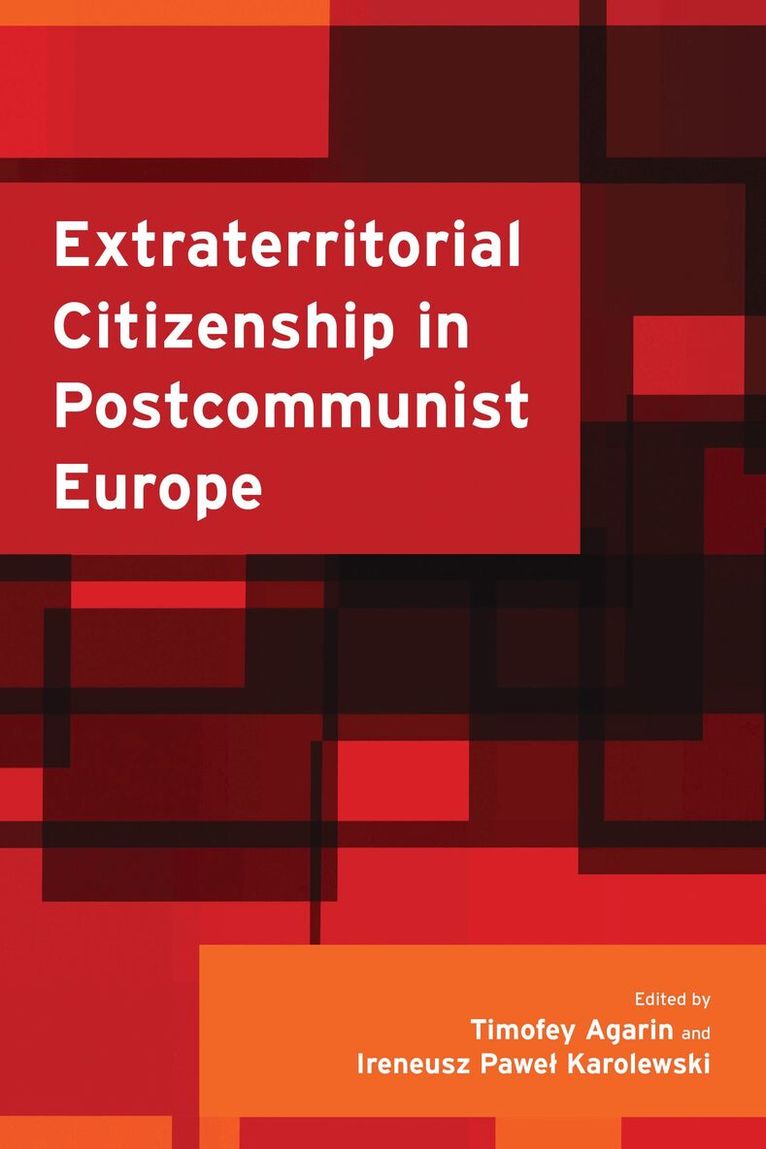
Häftad, Engelska, 2015
Extraterritorial Citizenship in Postcommunist Europe
Av Timofey Agarin, Ireneusz Pawel Karolewski
711 kr
Beställningsvara. Skickas inom 10-15 vardagar. Fri frakt över 249 kr.
Beskrivning
Produktinformation
- Utgivningsdatum: 2015-09-29
- Mått: 154 x 229 x 18 mm
- Vikt: 354 g
- Format: Häftad
- Språk: Engelska
- Antal sidor: 230
- Förlag: Bloomsbury Publishing PLC
- ISBN: 9781783483631
Utforska kategorier
Mer om författaren
Timofey Agarin is a Lecturer in Comparative Politics and Ethnic Conflict at Queen’s University Belfast, where he is also the director of the Centre for the Study of Ethnic Conflict. Ireneusz Pawel Karolewski is Professor of Political Science and Chair of Politics at the Willy Brandt Centre for German and European Studies, University of Wroclaw. He is also an Adjunct Professor of Politics at the University of Potsdam.
Recensioner i media
This volume examines the relationship between states and the citizens they govern, particularly non-resident citizens and resident non-citizens. Using a sample of states in post-communist Europe, this book seeks to illustrate how extraterritorial citizenship has been used as a tool for nation building, securitisation and foreign policy.
Betyg & recensioner
0 recensioner
Inga recensioner tillgängliga.