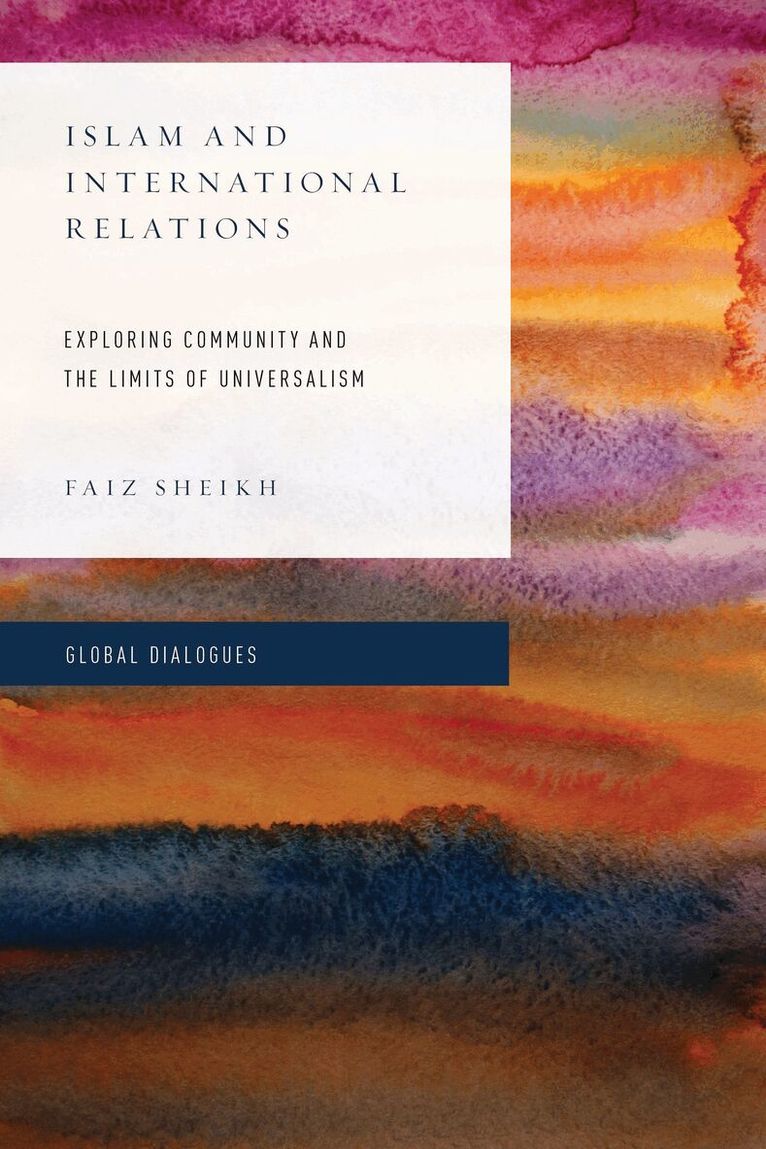
Häftad, Engelska, 2016
Islam and International Relations
Exploring Community and the Limits of Universalism
Av Faiz Sheikh
Del i serien Global Dialogues: Non Eurocentric Visions of the Global
626 kr
Beställningsvara. Skickas inom 10-15 vardagar. Fri frakt över 249 kr.
Beskrivning
Produktinformation
- Utgivningsdatum: 2016-07-11
- Mått: 150 x 230 x 16 mm
- Vikt: 331 g
- Format: Häftad
- Språk: Engelska
- Serie: Global Dialogues: Non Eurocentric Visions of the Global
- Antal sidor: 220
- Förlag: Bloomsbury Publishing PLC
- ISBN: 9781783484584
Utforska kategorier
Mer om författaren
Faiz Sheikh is a Marie Curie Postdoctoral Fellow at the University of Hamburg, Germany. He is involved in the European Commission funded Initial Training Network, Power and Region in a Multipolar World, a collaborative project involving 11 institutions across 9 countries. He has published articles in Politics, Religion & Ideology.
Recensioner i media
Faiz Sheikh judiciously examines the widely held assumption that a system of states and Islam rub uncomfortably against each other. In so doing, he rescues political Islam from radicalised interpretations and international relations from preconceived secularism. Avoiding a facile reconciliation of value pluralism and religious certainty, moreover, he sensibly holds out hope of counter-balancing restraint. Therein lies wisdom, and a path forward from supposed civilisational antipathy.
Betyg & recensioner
0 recensioner
Inga recensioner tillgängliga.