• Fri frakt över 249 kr
  • •
  • Snabba leveranser
  • •
  • Billiga böcker
Kundservice

Du är på sajten för privatpersoner.

Företag, bibliotek eller offentlig verksamhet?

Du handlar på classic.bokus.com, där alla dina funktioner finns intakta.
Till classic.bokus.com
Bokus logotyp. Gå till startsidan.
  • Erbjudanden
  • Student
  • Topplistor
  • Barn & ungdom
  • Bokus Play
  • E-böcker
  • Ljudböcker
  • Pocketböcker
  • Spel och pussel

Pocketfynda! Hundratals böcker för 49 kr/st →

Sidfot

Mina sidor

    Hjälp

    • Kundservice
    • Vanliga frågor och svar
    • Frakt och leverans
    • Retur vid ångerrätt
    • Reklamera vara
    • Betalning
    • Köpvillkor
    • Allmänna villkor
    • Information om webbplatsens tillgänglighet

    Om Bokus

    • Om oss
    • Pressrum
    • För studenter
    • För företag
    • För bibliotek och offentlig verksamhet
    • För leverantörer
    • Hållbarhet

    Populärt

    • Aktuella erbjudanden
    • Presentkort
    • Studentlitteratur
    • Nya böcker
    • Topplistor
    • Signerade böcker
    • Engelska böcker

    Inspiration

    • Boktips
    • BookTok
    • Barnbokskaraktärer
    • Populära författare
    Logotyp för Bokus
    Följ oss på Facebook (extern länk)Följ oss på Instagram (extern länk)Följ oss på YouTube (extern länk)Följ oss på TikTok (extern länk)
    bokus @ CookiesAnpassa cookiesIntegritetspolicyKöpvillkor
    Till Citymail hemsida (extern länk)Till Budbee hemsida (extern länk)Till Postnord hemsida (extern länk)Till Schenker hemsida (extern länk)Till Early Bird hemsida (extern länk)Till Walleys hemsida (extern länk)
    1. Naturvetenskap och teknik
    2. Teknik och industri
    3. Energiteknik

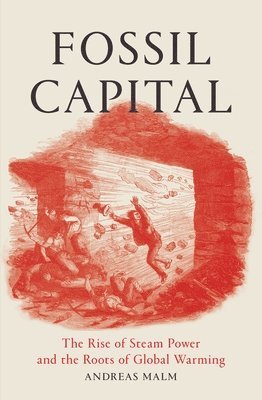
    Fossil Capital

    The Rise of Steam Power and the Roots of Global Warming

    AvAndreas Malm

    Häftad, Engelska, 2016

    245 kr

    Beställningsvara. Skickas inom 7-10 vardagar. Fri frakt över 249 kr.

    Fler format och utgåvor

    E-bok

    174 kr

    Beskrivning

    The more we know about the catastrophic implications of climate change, the more fossil fuels we burn. How did we end up in this mess?In this masterful new history, Andreas Malm claims it all began in Britain with the rise of steam power. But why did manufacturers turn from traditional sources of power, notably water mills, to an engine fired by coal? Contrary to established views, steam offered neither cheaper nor more abundant energy-but rather superior control of subordinate labour. Animated by fossil fuels, capital could concentrate production at the most profitable sites and during the most convenient hours, as it continues to do today. Sweeping from nineteenth-century Manchester to the emissions explosion in China, from the original triumph of coal to the stalled shift to renewables, this study hones in on the burning heart of capital and demonstrates, in unprecedented depth, that turning down the heat will mean a radical overthrow of the current economic order.

    Produktinformation

    • Utgivningsdatum:2016-01-12
    • Mått:156 x 235 x 28 mm
    • Vikt:747 g
    • Format:Häftad
    • Språk:Engelska
    • Antal sidor:496
    • Förlag:Verso Books
    • ISBN:9781784781293

    Utforska kategorier

    • Energiteknik inom Naturvetenskap och teknik
    • Miljövetenskap och miljöpolitik inom Naturvetenskap och teknik
    • Industrialismen och industrihistoria inom Historia och arkeologi

    Mer om författaren

    Andreas Malm teaches human ecology at Lund University, Sweden. His work has appeared in journals such as Environmental History, Historical Materialism, Antipode and Organization & Environment. He is the author, with Shora Esmailian, of Iran on the Brink: Rising Workers and Threats of War, and of half a dozen books in Swedish on political economy, the Middle East and climate change.

    Recensioner i media

    Malm forcefully unmasks the assumption that economic growth has inevitably brought us to the brink of a hothouse Earth. Rather, as he shows in a subtle and surprising reinterpretation of the Industrial Revolution, it has been the logic of capital (especially the need to valorize immense sunk investments in fossil fuels), not technology or even industrialism per se, that has driven global warming.

    Betyg & recensioner

    3.8/5