• Fri frakt över 249 kr
  • •
  • Snabba leveranser
  • •
  • Billiga böcker
Kundservice

Du är på sajten för privatpersoner.

Företag, bibliotek eller offentlig verksamhet?

Du handlar på classic.bokus.com, där alla dina funktioner finns intakta.
Till classic.bokus.com
Bokus logotyp. Gå till startsidan.
  • Erbjudanden
  • Nyheter
  • Student
  • Topplistor
  • Barn & ungdom
  • Bokus Play
  • E-böcker
  • Pocketböcker
  • Spel & pussel

Må bättre, för mindre! Upp till 50% rabatt på hälsoböcker

Sidfot

Mina sidor

    Hjälp

    • Kundservice
    • Vanliga frågor och svar
    • Frakt och leverans
    • Retur vid ångerrätt
    • Reklamera vara
    • Betalning
    • Köpvillkor
    • Allmänna villkor
    • Information om webbplatsens tillgänglighet

    Om Bokus

    • Om oss
    • Pressrum
    • För studenter
    • För företag
    • För bibliotek och offentlig verksamhet
    • För leverantörer
    • Hållbarhet

    Populärt

    • Aktuella erbjudanden
    • Presentkort
    • Studentlitteratur
    • Nya böcker
    • Topplistor
    • Signerade böcker
    • Engelska böcker

    Inspiration

    • Boktips
    • BookTok
    • Populära bokserier
    • Barnbokskaraktärer
    • Populära författare
    Logotyp för Bokus
    Följ oss på Facebook (extern länk)Följ oss på Instagram (extern länk)Följ oss på YouTube (extern länk)Följ oss på TikTok (extern länk)
    bokus @ CookiesAnpassa cookiesIntegritetspolicyKöpvillkor
    Till Citymail hemsida (extern länk)Till Budbee hemsida (extern länk)Till Postnord hemsida (extern länk)Till Schenker hemsida (extern länk)Till Early Bird hemsida (extern länk)Till Walleys hemsida (extern länk)
    1. Samhälle och politik
    2. Samhälle och kultur

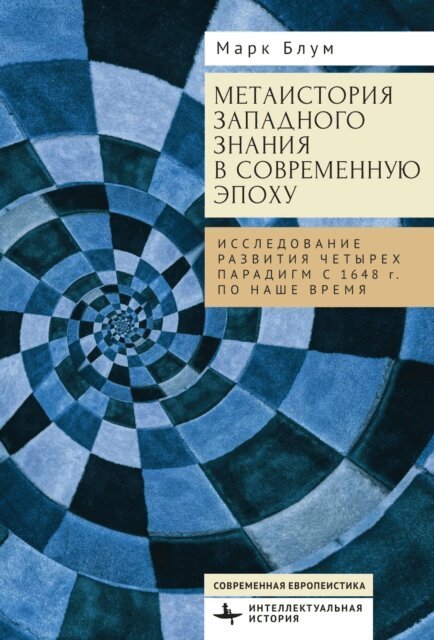
    Metahistory of Western Knowledge in the Modern Era

    Four Evolving Metaparadigms, 1648 to Present

    AvMark E. Blum

    Inbunden, Engelska, 2021

    Del 1 i serien Anthem Series on Thresholds and Transformations

    1 277 kr

    Beställningsvara. Skickas inom 5-8 vardagar. Fri frakt över 249 kr.

    Fler format och utgåvor

    Häftad

    410 kr

    Beskrivning

    The book is a study of the evolving history of knowledge in the arts and sciences in the modern era – from 1648 through the present. Modernism is treated as an epoch with evolving disciplines whose articulated problems of a time and the inquiry methods to address them, develop in a coordinated manner, given a mutual awareness. When one organizes the development of knowledge over periods of years, and gives it an appellation such as “Modernism,” the organization of facts is guided by concepts and values discerned throughout these periods. These facts of knowledge development share sufficient understandings to be called an “era,” or an “epoch,” or other terms that insist on the shared aspects of those years. One can call such an effort a “metahistory,” in that what is tracked is not merely a knowledge that is political, economic, ideological, sociological, or scientific, but an overview that tracks the respective conceptual developments of the fields in how they have changed and augmented their problem formulations, inquiry methods, and explanatory conceptions over time.

    Produktinformation

    • Utgivningsdatum:2021-02-04
    • Mått:153 x 229 x 26 mm
    • Vikt:454 g
    • Format:Inbunden
    • Språk:Engelska
    • Serie:Anthem Series on Thresholds and Transformations
    • Antal sidor:270
    • Förlag:Anthem Press
    • ISBN:9781785276989

    Utforska kategorier

    • Samhälle och kultur inom Samhälle och politik
    • Naturvetenskap:allmänt inom Naturvetenskap och teknik

    Mer om författaren

    Mark E. Blum is a professor of European history at the University of Louisville. He has a master’s degree in English history from the University of Pennsylvania, and a PhD in Austrian-German history from the University of Pennsylvania. He has published over nine books, several focusing upon the epistemology of human consciousness – in its verbal as well as figural foundations.

    Recensioner i media

    “Blum’s vision is as panoramic as the title suggests, moving freely among fields usually kept separate from Pufendorff to Elfriede Jelinek. The work will stimulate discussion and controversy, as ambitious projects always do. It will interest anyone who values the European tradition of grand meta-historical thinking. Whatever one’s verdict on Blum's “metaparadigms,” it is heartening to see the revival of a genre that had once seemed defunct.” — Hans Kellner, Professor of English, Chair of the NCSU Faculty, North Carolina State University, USA

    Innehållsförteckning

    • Introduction; Part I The First Modern Metaparadigm, c.1648–c.1750; Chapter One The First Phase: Seminal Ideation, c.1648–c.1670: The Focus upon Definition and Hypothesis; Chapter Two The Second Phase: Developing a Systematic Theory for Future Inquiry and Problem-Solving c.1670–c.1690; Chapter Three The Third Phase: Material Inquiry into the Verifiability of Specific Concepts, and Conflict over the Implications of the Findings c.1690–c.1720; Chapter Four The Fourth Phase: Integrating the New Four Causal Understandings with the Traditional c.1720–c.1750; Part II The Second Modern Metaparadigm, c.1750–c.1865; Chapter Five The First Phase: Seminal Ideation, c.1750–c.1770: The Focus upon Definition and Hypothesis; Chapter Six The Second Phase: Developing a Systematic Structure for Guiding New Inquiry and Explanation c.1770–c.1790; Chapter Seven The Third Phase: Material Inquiry into the Verifiability of Specific Concepts, and Conflict over the Implications of the Findings c.1790–c.1820; Chapter Eight The Fourth Phase: Integrating the New Four Causal Understandings with the Traditional c.1820–c.1860; Part III The Third Modern Metaparadigm c.1860–c.1960; Chapter Nine The First Phase: Seminal Ideation, c.1860–1870: The Focus upon Definition and Hypothesis; Chapter Ten The Second Phase: Developing a Systematic Structure for Guiding New Inquiry and Explanation c.1870–c.1895; Chapter Eleven The Third Phase: Material Inquiry into the Verifiability of Specific Concepts, and Conflict over the Implications of the Findings c.1890–c.1920; Chapter Twelve The Fourth Phase: Integrating the New Four Causal Understandings with the Traditional c.1920–c.1960; Part IV The Fourth Modern Metaparadigm, c.1970–c.2060; Chapter Thirteen The First Phase: Seminal Ideation, c.1960–1980: The Focus upon Definition and Hypothesis; Chapter Fourteen The Second Phase: Developing a Systematic Structure for Guiding New Inquiry and Explanation c.1970–1990; Chapter Fifteen The Third Phase: Material Inquiry into the Verifiability of Specific Concepts, and Conflict over the Implications of the Findings c.1990–c. 2020; Bibliography; Index.