• Fri frakt över 249 kr
  • •
  • Snabba leveranser
  • •
  • Billiga böcker
Kundservice

Du är på sajten för privatpersoner.

Företag, bibliotek eller offentlig verksamhet?

Du handlar på classic.bokus.com, där alla dina funktioner finns intakta.
Till classic.bokus.com
Bokus logotyp. Gå till startsidan.
  • Erbjudanden
  • Nyheter
  • Student
  • Topplistor
  • Barn & ungdom
  • Bokus Play
  • E-böcker
  • Pocketböcker
  • Spel & pussel

10% rabatt på allt med kod NYSTART10 →

Sidfot

Mina sidor

    Hjälp

    • Kundservice
    • Vanliga frågor och svar
    • Frakt och leverans
    • Retur vid ångerrätt
    • Reklamera vara
    • Betalning
    • Köpvillkor
    • Allmänna villkor
    • Information om webbplatsens tillgänglighet

    Om Bokus

    • Om oss
    • Pressrum
    • För studenter
    • För företag
    • För bibliotek och offentlig verksamhet
    • För leverantörer
    • Hållbarhet

    Populärt

    • Aktuella erbjudanden
    • Presentkort
    • Studentlitteratur
    • Nya böcker
    • Topplistor
    • Signerade böcker
    • Engelska böcker

    Inspiration

    • Boktips
    • BookTok
    • Populära bokserier
    • Barnbokskaraktärer
    • Populära författare
    Logotyp för Bokus
    Följ oss på Facebook (extern länk)Följ oss på Instagram (extern länk)Följ oss på YouTube (extern länk)Följ oss på TikTok (extern länk)
    bokus @ CookiesAnpassa cookiesIntegritetspolicyKöpvillkor
    Till Citymail hemsida (extern länk)Till Budbee hemsida (extern länk)Till Postnord hemsida (extern länk)Till Schenker hemsida (extern länk)Till Early Bird hemsida (extern länk)Till Walleys hemsida (extern länk)
    1. Kultur
    2. Scenkonst och film
    3. Dansböcker

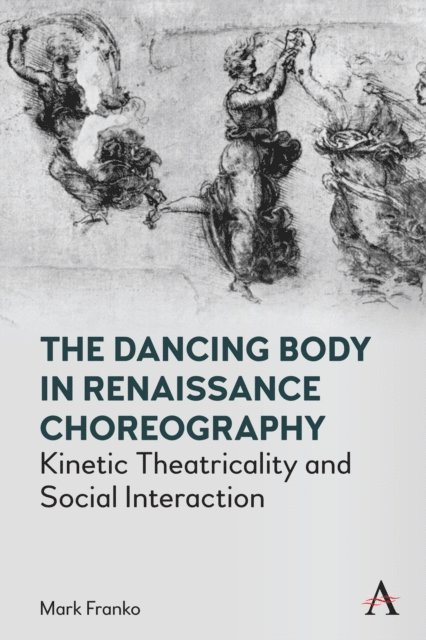
    Dancing Body in Renaissance Choreography

    Kinetic Theatricality and Social Interaction

    AvMark Franko

    E-bok
    PDF, Engelska, 2022

    484 kr

    Läs direkt i Bokus Reader – eller ladda ned till din enhet (PDF kräver ofta zoom och scroll på små skärmar).

    Fler format och utgåvor

    Inbunden

    1 469 kr

    E-bok

    482 kr

    Beskrivning

    The Dancing Body in Renaissance Choreography problematizes the absence of the dancing body in treatises in order to reconstruct it through a series of intertextual readings triggered by Thoinot Arbeau’s definition of dance in his 1589 dance treatise, Orchesographie. The notion of the intertext as elaborated by Michael Riffaterre is used to understand a series of relationships between dance and other activities within which the historical dancing body emerges to the light of day. Arbeau’s discussion of dance as a mute rhetoric in the demonstrative genre points to the intertext of Quintilian’s The Oratorical Institution where the genus demonstrativum is explained as epideixis, the goal of which is to inspire confidence and charm the audience. The second intertext explored is that of civility as found in courtesy books where the posture of the body and the parameters of movement are outlined, converging in the gesture of the révérence. The categories of pose and movement are then read into the structure of the basse danse, the quintessential courtly social dance of the period. The relation of pose to movement or of stillness to mobility is further theorized through the terms of earlier Italian treatises, specifically in terms of fantasmata as used by Domenico da Piacenza.
    Produktinformation

    • Utgivningsdatum:2022-03-01
    • Språk:Engelska
    • Filformat:PDF
    • Kopieringsskydd:LCP
    • ISBN:9781785278020
    • Förlag:Anthem Press

    Utforska kategorier

    • Dansböcker inom Kultur
    • Balett inom Kultur
    • Litteraturteori inom Skönlitteratur