• Fri frakt över 249 kr
  • •
  • Snabba leveranser
  • •
  • Billiga böcker
Kundservice

Du är på sajten för privatpersoner.

Företag, bibliotek eller offentlig verksamhet?

Du handlar på classic.bokus.com, där alla dina funktioner finns intakta.
Till classic.bokus.com
Bokus logotyp. Gå till startsidan.
  • Erbjudanden
  • Nyheter
  • Student
  • Topplistor
  • Barn & ungdom
  • Bokus Play
  • E-böcker
  • Pocketböcker
  • Spel & pussel

10% studentrabatt med kod TERM26

Sidfot

Mina sidor

    Hjälp

    • Kundservice
    • Vanliga frågor och svar
    • Frakt och leverans
    • Retur vid ångerrätt
    • Reklamera vara
    • Betalning
    • Köpvillkor
    • Allmänna villkor
    • Information om webbplatsens tillgänglighet

    Om Bokus

    • Om oss
    • Pressrum
    • För studenter
    • För företag
    • För bibliotek och offentlig verksamhet
    • För leverantörer
    • Hållbarhet

    Populärt

    • Aktuella erbjudanden
    • Presentkort
    • Studentlitteratur
    • Nya böcker
    • Topplistor
    • Signerade böcker
    • Engelska böcker

    Inspiration

    • Boktips
    • BookTok
    • Populära bokserier
    • Barnbokskaraktärer
    • Populära författare
    Logotyp för Bokus
    Följ oss på Facebook (extern länk)Följ oss på Instagram (extern länk)Följ oss på YouTube (extern länk)Följ oss på TikTok (extern länk)
    bokus @ CookiesAnpassa cookiesIntegritetspolicyKöpvillkor
    Till Citymail hemsida (extern länk)Till Budbee hemsida (extern länk)Till Postnord hemsida (extern länk)Till Schenker hemsida (extern länk)Till Early Bird hemsida (extern länk)Till Walleys hemsida (extern länk)
    1. Samhälle och politik
    2. Sociologi och antropologi
    3. Antropologi

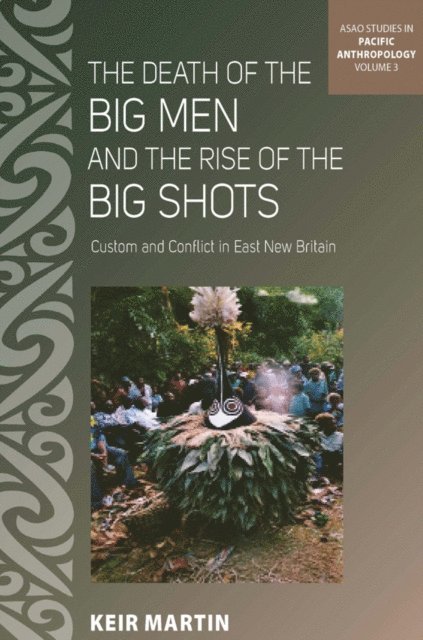
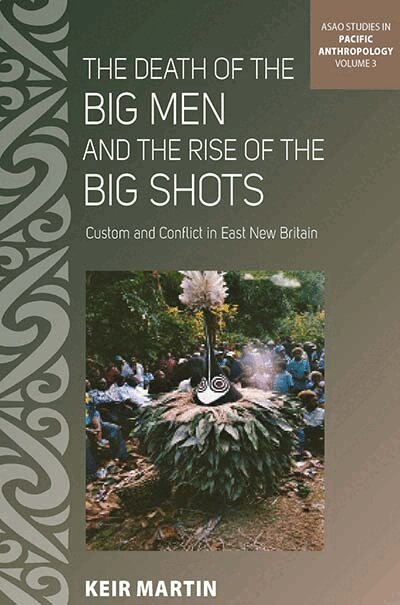
    Death of the Big Men and the Rise of the Big Shots

    Custom and Conflict in East New Britain

    AvKeir Martin

    Häftad, Engelska, 2015

    Del i serien ASAO Studies in Pacific Anthropology

    511 kr

    Beställningsvara. Skickas inom 5-8 vardagar. Fri frakt över 249 kr.

    Fler format och utgåvor

    Inbunden

    1 861 kr

    E-bok

    315 kr

    Beskrivning

    In 1994, the Pacific island village of Matupit was partially destroyed by a volcanic eruption. This study focuses on the subsequent reconstruction and contests over the morality of exchanges that are generative of new forms of social stratification. Such new dynamics of stratification are central to contemporary processes of globalization in the Pacific, and more widely. Through detailed ethnography of the transactions that a displaced people entered into in seeking to rebuild their lives, this book analyses how people re-make sociality in an era of post-colonial neoliberalism without taking either the transformative power of globalization or the resilience of indigenous culture as its starting point. It also contributes to the understanding of the problems of post-disaster reconstruction and development projects.


    Produktinformation

    • Utgivningsdatum:2015-10-01
    • Mått:152 x 229 x 15 mm
    • Vikt:372 g
    • Format:Häftad
    • Språk:Engelska
    • Serie:ASAO Studies in Pacific Anthropology
    • Antal sidor:272
    • Förlag:Berghahn Books
    • ISBN:9781785330322

    Utforska kategorier

    • Antropologi inom Samhälle och politik
    • Referensverk och tvärvetenskap inom Samhälle och politik

    Mer om författaren

    Keir Martin is Associate Professor in Social Anthropology at the University of Oslo and is the author of a number of academic and media publications on Papua New Guinea and the global economy. He was formerly a Lecturer in Social Anthropology at the University of Manchester and is a recipient of the Royal Anthropological Institute's Sutasoma Award for work likely to make an outstanding contribution to social anthropology.

    Recensioner i media

    “Keir Martin’s book is written in an extremely clear and unpretentious language and the reader is never left to wonder what the author is arguing. This does not mean that the arguments or ethnographic cases of the book are simple. On the contrary, Martin’s nuanced study of language and exchanges grounded in the solid ethnographic study of the social reality of the inhabitants of Matupit and Sikut shed light on very complex issues… Martin’s work is an exemplary case of how to study complex and long term political-economic trends as they unfold in concrete social settings often in less than obvious ways. It should be a model to anyone doing research on similar issues.” · Suomen Antropologi: Journal of the Finnish Anthropological Society“The author provides much food for thought on the long-term engagement of some Melanesians' such as the Tolai, with global processes which began with the nineteenth-century arrival of missionaries and colonial agents - long before the jargon of 'globalisation', 'development’ and modernity'. Eschewing dichotomies of continuity and rupture, Martin has effectively demonstrated the nuanced moral evaluations Toiai make of the competing value systems whose social consequences they continue to navigate.” · Paideuma“This is a fascinating anthropological study of a relatively small society in East New Britain, a province of Papua New Guinea. While the study is very focused, I would argue that Keir Martin's book is an important work that should be read by anyone interested in how societies transform themselves.” · Resolute Reader“…there is no doubt that Martin has produced an important ethnography that deserves to be read. His account of changing forms of tradition in Tolai makes original contributions to the literatures on kastom, kinship, land tenure, and the localisation of global forces in Melanesia. It deserves a wide audience.” · Anthropological Forum“Keir Martin has written a fascinating, plainspoken, new ethnography. The Death of the Big Men and the Rise of the Big Shots focuses on contradictions arising from emerging stratification in Papua New Guinea. Specifically, it concerns tensions between urban, middle-class elites and subsistence based villagers among the Tolai people living in and around Matupit Island in East New Britain… Of the overall significance of this compelling ethnography, one might recall that once there was talk of a new Melanesian ethnography (Josephides 1991) and then of a new Melanesian history (Foster 1995). Perhaps, Martin’s book might suggest the start of a new Melanesian sociology.” · American Anthropologist“This is a groundbreaking ethnography: brilliantly conceived, clearly written and utterly convincing.” · Pacific Affairs“…one of its great strengths is Martin’s skill in bringing different voices to life on the page as people (mainly men) stake or rebuff claims for respect or support.” · Oceania“Readers of this anthropological study will most likely be familiar with discussions in the anthropology of Melanesia around individualism and other effects of the encroachment of global capitalism on rural communities. They will be pleasantly surprised by how elegantly and unpretentiously Martin tackles some of these issues, through an investigation of land and custom during the aftermath of an environmental disaster in East New Britain, Papua New Guinea…a wonderful study.” · Asia Pacific Journal of Anthropology“A brilliant book…one of the best ethnographies to come out of PNG for decades, a classic exemplar of how a modern ethnography should be researched and written up. It breaks new ground.” · Chris Gregory, Australian National University“[This book] is well written and readable [and] provides both a dense and nuanced ethnography that reveals important insights into… the radical cultural changes that follow from demographic change, land-conflicts and economic scarcity. The book manages to explore that development by continually engaging the writings of earlier anthropologists in the area, supported by rich empirical detail.” · Knut Rio, University of Bergen

    Innehållsförteckning

    • List of illustrationsList of tablesAcknowledgementsNote on LanguageGeneral maps (Maps 1 and 2)Introduction: Land Politics and Postcolonial Sociality in the Wake of Environmental DisasterChapter 1. An Orientation to the Shifting Patterns of Tolai Land TenureChapter 2. Land at Sikut: Freedom from Kastomand Economic DevelopmentChapter 3. Kulia: an Ambiguous TransactionChapter 4. What Makes a Landholder: a Case Study of a Matupit Land DisputeChapter 5. Kastom, Family and Clan: Extending and Limiting ObligationsChapter 6. Kastom and Contested ReciprocityChapter 7. Big Shots, Corned Beef and Big HeadsChapter 8. A Fish Trap for KastomChapter 9. Big Men, Big Shots and Bourgeois Individuals: conflicts over moral obligation and the limits of reciprocityChapter 10. Your Own Buai You Must Buy: the Big Shot as Contemporary Melanesian Possessive IndividualChapter 11. ConclusionsGlossaryReferencesIndex