• Fri frakt över 249 kr
  • •
  • Snabba leveranser
  • •
  • Billiga böcker
Kundservice

Du är på sajten för privatpersoner.

Företag, bibliotek eller offentlig verksamhet?

Du handlar på classic.bokus.com, där alla dina funktioner finns intakta.
Till classic.bokus.com
Bokus logotyp. Gå till startsidan.
  • Erbjudanden
  • Nyheter
  • Student
  • Topplistor
  • Barn & ungdom
  • Bokus Play
  • E-böcker
  • Pocketböcker
  • Spel & pussel

10% rabatt på allt med kod NYSTART10 →

Sidfot

Mina sidor

    Hjälp

    • Kundservice
    • Vanliga frågor och svar
    • Frakt och leverans
    • Retur vid ångerrätt
    • Reklamera vara
    • Betalning
    • Köpvillkor
    • Allmänna villkor
    • Information om webbplatsens tillgänglighet

    Om Bokus

    • Om oss
    • Pressrum
    • För studenter
    • För företag
    • För bibliotek och offentlig verksamhet
    • För leverantörer
    • Hållbarhet

    Populärt

    • Aktuella erbjudanden
    • Presentkort
    • Studentlitteratur
    • Nya böcker
    • Topplistor
    • Signerade böcker
    • Engelska böcker

    Inspiration

    • Boktips
    • BookTok
    • Populära bokserier
    • Barnbokskaraktärer
    • Populära författare
    Logotyp för Bokus
    Följ oss på Facebook (extern länk)Följ oss på Instagram (extern länk)Följ oss på YouTube (extern länk)Följ oss på TikTok (extern länk)
    bokus @ CookiesAnpassa cookiesIntegritetspolicyKöpvillkor
    Till Citymail hemsida (extern länk)Till Budbee hemsida (extern länk)Till Postnord hemsida (extern länk)Till Schenker hemsida (extern länk)Till Early Bird hemsida (extern länk)Till Walleys hemsida (extern länk)
    1. Samhälle och politik
    2. Social välfärd och brottslighet
    3. Brottslighet och kriminologi
    4. Kriminalvård och straff

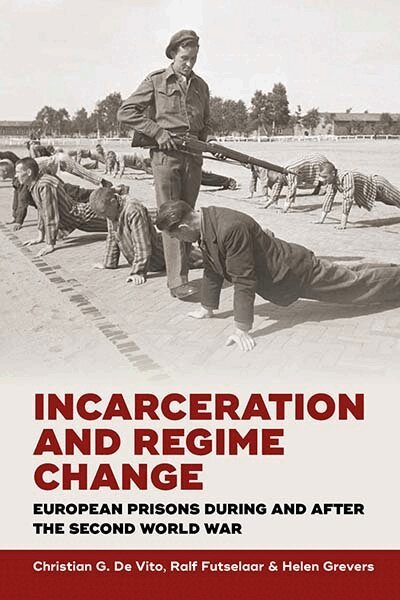
    Incarceration and Regime Change

    European Prisons during and after the Second World War

    AvChristian G. De Vito,Ralf Futselaar

    Inbunden, Engelska, 2016

    1 916 kr

    Beställningsvara. Skickas inom 5-8 vardagar. Fri frakt över 249 kr.

    Beskrivning

    Political instability is nearly always accompanied by fuller prisons, and this was particularly true during the "long" Second World War, when military mobilization, social disorder, wrenching political changes, and shifting national boundaries swelled the ranks of the imprisoned and broadened the carceral reach of the state. This volume brings together theoretically sophisticated, empirically rich studies of key transitional moments that transformed the scope and nature of European prisons during and after the war. It depicts the complex interactions of both penal and administrative institutions with the men and women who experienced internment, imprisonment, and detention at a time when these categories were in perpetual flux.

    Produktinformation

    • Utgivningsdatum:2016-10-21
    • Mått:152 x 229 x 14 mm
    • Vikt:373 g
    • Format:Inbunden
    • Språk:Engelska
    • Antal sidor:184
    • Förlag:Berghahn Books
    • ISBN:9781785332654

    Utforska kategorier

    • Kriminalvård och straff inom Samhälle och politik
    • Andra världskriget inom Historia och arkeologi

    Mer om författaren

    Christian G. De Vito is Research Associate at the University of Leicester. He has published extensively on the social history of prisons, convict labour, and prisoners' movements.Ralf Futselaar is a social historian of violence. He has published on the history of malnutrition, war-related mortality, war traumas, black markets, colonial soldiers, violent women, forced labor and imprisonment. He is currently a researcher at the NIOD Institute for War, Holocaust and Genocide Studies and a lecturer at Erasmus University, Rotterdam.Helen Grevers is a postdoctoral researcher in the Department of History at Ghent University. She has published on collaborators in the Netherlands and Belgium and now works on the research project "Collaborators, Justice and Society: A Social History of the Punishment of Collaboration in Belgium after WWII."

    Recensioner i media

    "This volume brings together pioneering work that provides a welcome perspective not only on the treatment of prisoners, but also on how they were understood during the Second World War--a crucial issue in light of the fact that these were people interned not so much for what they did, but who they were." Raffael Scheck, Colby College

    Innehållsförteckning

    • AcknowledgmentsIntroductionChristian G. De Vito, Ralf Futselaar, Helen GreversChapter 1. "Gloomy Dungeons": Provisional prisons in Madrid in the aftermath of the Spanish Civil War (1939-1945)Alicia Quintero MaquaChapter 2. Paradoxical outcomes?: Incarceration, war and regime changes in Italy, 1943-1954Christian G. De VitoChapter 3. Life in the Frontstalags: Colonial Prisoners of War in Occupied France, 1940-1942Sarah FrankChapter 4. Containing "potentially subversive" subjects: The internment of members of the National Socialist Movement in the Netherlands Indies, 1940-1946Esther ZwinkelsChapter 5. The detention of social outsiders between social reform, annihilation and custody: The municipal workhouse and prison of Berlin-Rummelsburg from Weimar Republic to GDRThomas IrmerChapter 6. A triumph for the protectional model? How Belgian institutions for delinquent children dealt with young collaborators (1944-1950)Aurore FrancoisChapter 7. The ambiguities of Gendarmeries' relationship to internment around World War II (Belgium, France, The Netherlands)Jonas CampionAfterword: An essay on space and timeJane CaplanBibliographyIndex