• Fri frakt över 249 kr
  • •
  • Snabba leveranser
  • •
  • Billiga böcker
Kundservice

Du är på sajten för privatpersoner.

Företag, bibliotek eller offentlig verksamhet?

Du handlar på classic.bokus.com, där alla dina funktioner finns intakta.
Till classic.bokus.com
Bokus logotyp. Gå till startsidan.
  • Erbjudanden
  • Nyheter
  • Student
  • Topplistor
  • Barn & ungdom
  • Bokus Play
  • E-böcker
  • Pocketböcker
  • Spel & pussel

10% rabatt på allt med kod: NYSTART10 →

Sidfot

Mina sidor

    Hjälp

    • Kundservice
    • Vanliga frågor och svar
    • Frakt och leverans
    • Retur vid ångerrätt
    • Reklamera vara
    • Betalning
    • Köpvillkor
    • Allmänna villkor
    • Information om webbplatsens tillgänglighet

    Om Bokus

    • Om oss
    • Pressrum
    • För studenter
    • För företag
    • För bibliotek och offentlig verksamhet
    • För leverantörer
    • Hållbarhet

    Populärt

    • Aktuella erbjudanden
    • Presentkort
    • Studentlitteratur
    • Nya böcker
    • Topplistor
    • Signerade böcker
    • Engelska böcker

    Inspiration

    • Boktips
    • BookTok
    • Populära bokserier
    • Barnbokskaraktärer
    • Populära författare
    Logotyp för Bokus
    Följ oss på Facebook (extern länk)Följ oss på Instagram (extern länk)Följ oss på YouTube (extern länk)Följ oss på TikTok (extern länk)
    bokus @ CookiesAnpassa cookiesIntegritetspolicyKöpvillkor
    Till Citymail hemsida (extern länk)Till Budbee hemsida (extern länk)Till Postnord hemsida (extern länk)Till Schenker hemsida (extern länk)Till Early Bird hemsida (extern länk)Till Walleys hemsida (extern länk)
    1. Samhälle och politik
    2. Sociologi och antropologi
    3. Antropologi

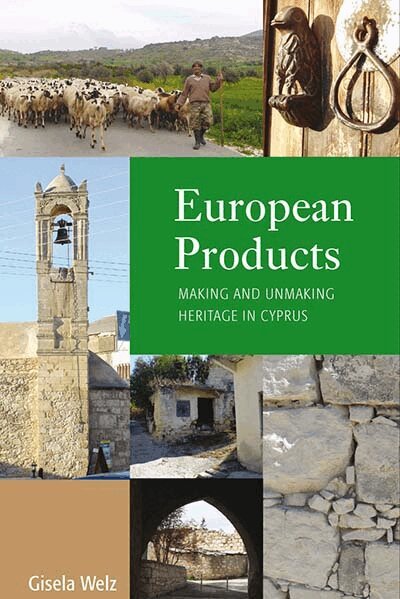
    European Products

    Making and Unmaking Heritage in Cyprus

    AvGisela Welz

    Häftad, Engelska, 2017

    511 kr

    Beställningsvara. Skickas inom 5-8 vardagar. Fri frakt över 249 kr.

    Fler format och utgåvor

    Inbunden

    1 861 kr

    E-bok

    315 kr

    Beskrivning

    On the Mediterranean island of Cyprus, rural villages, traditional artefacts, even atmospheres and experiences are considered heritage. Heritage making not only protects, but also produces, things, people, and places. Since the Republic of Cyprus joined the European Union in 2004, heritage making and Europeanization are increasingly intertwined in Greek-Cypriot society. Against the backdrop of a long-term ethnographic engagement, the author argues that heritage emerges as an increasingly standardized economic resource, a “European product.” Implemented in historic preservation, rural tourism, culinary traditions, nature protection, and urban restoration projects, heritage policy has become infused with transnational market regulations and neoliberal property regimes.

    Produktinformation

    • Utgivningsdatum:2017-06-01
    • Mått:152 x 229 x 11 mm
    • Vikt:307 g
    • Format:Häftad
    • Språk:Engelska
    • Antal sidor:204
    • Förlag:Berghahn Books
    • ISBN:9781785335174
    • Utmärkelser:Winner of PROSE Awards: Archeology & Anthropology 2016

    Utforska kategorier

    • Antropologi inom Samhälle och politik
    • Referensverk och tvärvetenskap inom Samhälle och politik

    Mer om författaren

    Gisela Welz is Professor and Chair of Cultural Anthropology and European Ethnology at Goethe University Frankfurt. She co-edited Divided Cyprus. Modernity, History and an Island in Conflict (with Yiannis Papadakis and Nicos Peristianis, Indiana University Press 2006).

    Recensioner i media

    “Despite modernization and growing tourism, regardless of class, [Cypriot society has retained social practices]; people are helpful and inviting. Visitors can enjoy much in this very good, well-written book, not the least being a very impressive culinary selection. For readers at all levels, and probably a number of individuals who are not academics or social scientists. Highly recommended.” · Choice“…an illuminating study of heritage practices in Cyprus through an ethnography that is attentive to the complexities of cultural objectification. It has much to offer to the anthropology of Cyprus, heritage practices, and the EU.” · Olga Demetriou, PRIO Cyprus Centre“The book is very well written, the ethnography superb, the topic of great contemporary relevance… It makes a substantial contribution to our understanding of Cypriot society as well as to the creation of heritage.” · Vassos Argyrou, University of Hull

    Innehållsförteckning

    • AcknowledgementsAbbreviationsIntroduction‘Past Presencing’ on the European PeripheryEuropean ProductsCyprus: Postcoloniality, Division, and EU AccessionFieldwork in Cyprus: Ethnographic ModalitiesAbout this bookPART I: HERITAGE REGIMESChapter 1. Preserving Vernacular ArchitectureHeritage and Nationalism in CyprusVillages Frozen in Time Preservation Standards and Aesthetic ControlConclusion: ‘Streamlined Along the European Prototype’Chapter 2. Packaging HospitalityA Sustainable Alternative to Mass TourismThe Philoxenia Standard‘Branding the Culture of the Villages’Conclusion: The Creation of Tourist SpacesDigression: Difficult HeritageChapter 3. Inventing the RuralA Lesson in DevelopmentEuropean Union PoliciesUpgrading the Rural HeritageConclusion: The Rural as a European ProductPART II: FOOD, CULTURE AND HERITAGISATIONChapter 4. ‘Full Meze’: Tourism, Modernity, CrisisThe Cultural Logic of Mass TourismWhat Makes Meze Cypriot?Performing AsymmetryModernity and the Mutations of Cypriot MezeConclusion: Wasting or Sharing?Chapter 5. ‘Origin Food’: The Struggle over Halloumi/HellimContested ClaimsPure Products, Messy HistoriesThe Europeanization of Cheese MakingManaged DiversityThe Ingredients of TraditionConclusion: Heritage Effects and Property RegimesPART III: AMBIENT HERITAGEChapter 6. The Nature of Heritage Making: Environmental GovernanceForces: Land Ownership, the Postcolonial State and the Privatization of the CoastConnections: Contested Natures and the Transnational ArenaImaginations: Local Communities and Moral EconomiesConclusion: The Making of BiodiversityChapter 7. The Divided City: Europe and the Politics of CultureDissected Urban SpaceThe Nicosia Master Plan: Regeneration and ReconciliationCrossing the Divide: Transnational Cultural Diplomacy and the Old TownRemaking Lefkosia: Artists, Immigrants, and World-Class Architecture‘Get In the Zone’:  Competing for the European TitleConclusion: Ambience for sale. Nature and Culture as Economic AssetsConclusionHeritagisation as a Vector of EuropeanizationStandardization: Sameness or Difference?Unmaking HeritageNeoliberal EuropeanizationOne year later: What comes after ‘the crusade of greed’?A Postcolonial Reading of the CrisisBibliographyIndex