• Fri frakt över 249 kr
  • •
  • Snabba leveranser
  • •
  • Billiga böcker
Kundservice

Du är på sajten för privatpersoner.

Företag, bibliotek eller offentlig verksamhet?

Du handlar på classic.bokus.com, där alla dina funktioner finns intakta.
Till classic.bokus.com
Bokus logotyp. Gå till startsidan.
  • Erbjudanden
  • Nyheter
  • Student
  • Topplistor
  • Barn & ungdom
  • Bokus Play
  • E-böcker
  • Pocketböcker
  • Spel & pussel

10% rabatt på allt med kod: NYSTART10 →

Sidfot

Mina sidor

    Hjälp

    • Kundservice
    • Vanliga frågor och svar
    • Frakt och leverans
    • Retur vid ångerrätt
    • Reklamera vara
    • Betalning
    • Köpvillkor
    • Allmänna villkor
    • Information om webbplatsens tillgänglighet

    Om Bokus

    • Om oss
    • Pressrum
    • För studenter
    • För företag
    • För bibliotek och offentlig verksamhet
    • För leverantörer
    • Hållbarhet

    Populärt

    • Aktuella erbjudanden
    • Presentkort
    • Studentlitteratur
    • Nya böcker
    • Topplistor
    • Signerade böcker
    • Engelska böcker

    Inspiration

    • Boktips
    • BookTok
    • Populära bokserier
    • Barnbokskaraktärer
    • Populära författare
    Logotyp för Bokus
    Följ oss på Facebook (extern länk)Följ oss på Instagram (extern länk)Följ oss på YouTube (extern länk)Följ oss på TikTok (extern länk)
    bokus @ CookiesAnpassa cookiesIntegritetspolicyKöpvillkor
    Till Citymail hemsida (extern länk)Till Budbee hemsida (extern länk)Till Postnord hemsida (extern länk)Till Schenker hemsida (extern länk)Till Early Bird hemsida (extern länk)Till Walleys hemsida (extern länk)
    1. Juridik
    2. Särskilda rättsområden
    3. Arbetsrätt

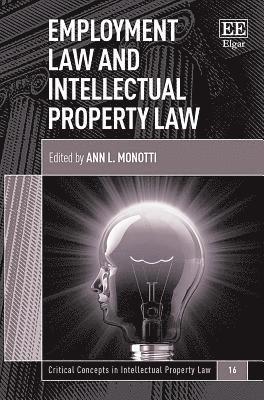
    Employment Law and Intellectual Property Law

    AvAnn L. Monotti

    Inbunden, Engelska, 2018

    Del 16 i serien Critical Concepts in Intellectual Property Law series

    5 769 kr

    Beställningsvara. Skickas inom 5-8 vardagar. Fri frakt över 249 kr.

    Beskrivning

    This research review discusses themes that arise at the points at which employment and intellectual property laws converge. Topics include historical perspectives on employee inventions; rationales for default rules; allocation of ownership of employee creation; restraints and employee mobility and discusses university approaches and issues.

    Produktinformation

    • Utgivningsdatum:2018-02-23
    • Mått:169 x 244 x undefined mm
    • Format:Inbunden
    • Språk:Engelska
    • Serie:Critical Concepts in Intellectual Property Law series
    • Förlag:Edward Elgar Publishing Ltd
    • ISBN:9781785366413

    Utforska kategorier

    • Arbetsrätt inom Juridik
    • Immaterialrätt inom Juridik

    Mer om författaren

    Edited by the late Ann L. Monotti, formerly Professor of Law, Monash University, Australia

    Innehållsförteckning

    • Contents:AcknowledgementsIntroductionAnn L. MonottiPART IHISTORICAL PERSPECTIVES 1. D.H.N Johnson (1950), ‘Encouraging Inventions by Government Employees’, Modern Law Review, 13 (4), October, 428-442. Catherine L. Fisk (1998), ‘Removing the ‘Fuel of Interest’ from the ‘Fire of Genius’: Law and the Employee-Inventor, 1830-1930’, University of Chicago Law Review, 65 (4), 1127–983. C. Robert Morris Jr. (1959), ‘Patent Rights in an Employee’s Invention: The American Shop Right Rule and the English View’, Law Quarterly Review, 75, 483–502 4. John Stedman (1970), ‘The Employed Inventor, the Public Interest, and Horse and Buggy Law in the Space Age’, New York University Law Review, 45 (1), 1–32 5. Justine Pila (2012), ‘Sewing the Fly Buttons on the Statute’: Employee Inventions and the Employment Context’, Oxford Journal of Legal Studies, 32 (2), 265–95 PART II RATIONALES FOR DEFAULT RULES6. Dan L. Burk (2004), ‘Intellectual Property and the Firm’, University of Chicago Law Review, 71 (1), 3–20 7. R.P. Merges (1999), ‘The Law and Economics of Employee Inventions’, Harvard Journal of Law and Technology, 13 (1), Fall, 1–54PART III ALLOCATION OF OWNERSHIP OF EMPLOYEE CREATION8. Rochelle Cooper Dreyfuss (1987), ‘The Creative Employee and the Copyright Act of 1976’, University of Chicago Law Review, 54 (2), 590–647 9. Joellen Riley (2005), ‘Who Owns Human Capital? A Critical Appraisal of Legal Techniques for Capturing the Value of Work’, Australian Journal of Labour Law, 18, 1–25 10. Toshiko Takenaka (2012), ‘Serious Flaw of Employee Inventions Ownership Under the Bayh-Dole Act in Stanford v. Roche: Finding the Missing Piece of the Puzzle in the German Employee Invention Act’, Texas Intellectual Property Law Journal, 20, Spring, 281-32611. Mark Freedland and Jeremias Prassl (2013), ‘Resolving Invention Ownership Disputes: Limitations of the Contract of Employment’, in Marilyn Pittard, Ann L Monotti and John Duns (eds), Business Innovation and the Law: Perspectives from Intellectual Property, Labour Competition and Corporate Law, Cheltenham, UK and Northampton, MA, USA: Edward Elgar Publishing, 144–63 12. Marie-Christine Janssens (2013), ‘EU Perspectives on Employees’ Inventions’ in Marilyn Pittard, Ann L Monotti and John Duns (eds), Business Innovation and the Law: Perspectives from Intellectual Property, Labour, Competition and Corporate Law, Cheltenham, UK and Northampton, MA, USA: Edward Elgar Publishing, 111–3013. John Howe and Andrew Newman (2013), ‘Collective Bargaining and the Ownership of Employee Creation’, Australian Journal of Labour Law, 26 (3), 273-99 PART IV RESTRAINTS AND EMPLOYEE MOBILITY14. Harlan M. Blake (1960), ‘Employee Agreements Not to Compete’, Harvard Law Review, 73 (4), February, 628–9115. Andrew Stewart (1988), ‘Confidentiality and the New Employment Relationship’, Australian Journal of Labour Law, 1, 1–2216. Ronald J. Gilson (1999), ‘The Legal Infrastructure of High Technology Industrial Districts: Silicon Valley, Route 128, Covenants not to Compete’, New York University Law Review, 74 (3), June, 575–62917. William van Caenegem (2005), ‘Inter-firm Migration of Tacit Knowledge: Law and Policy’, Prometheus, 23 (3), September, 285–306 18. Alan Hyde (2012), ‘Intellectual Property Justifications for Restricting Employee Mobility: A Critical Appraisal in Light of the Economic Evidence’, in Cynthia L. Estlund and Michael L. Wachter, Research Handbook on the Economics of Labor and Employment Law, Cheltenham, UK and Northampton, MA, USA: Edward Elgar Publishing, 357–84 19. Christopher Arup (2012), ‘What/Whose Knowledge? Restraints of Trade and Concepts of Knowledge’, Melbourne University Law Review, 36, 661–94 20. Norman D. Bishara and Evan Starr (2016), ‘The Incomplete Noncompete Picture’, Lewis and Clark Law Review, 20, 497–547 PART VUNIVERSITIES – APPROACHES AND ISSUES 21. W.R. Cornish (1992), ‘Rights in University Innovations: The Herchel Smith Lecture for 1991’, European Intellectual Property Review, 14, 13–19 22. Pat K. Chew (1992), ‘Faculty-Generated Inventions: Who Owns the Golden Egg?’, Wisconsin Law Review, 259–314 23. Ann Monotti (1997), ‘Who Owns my Research and Teaching Materials: My University or Me?’, 19 (4), Sydney Law Review, 425–71 24. Sean M. O’Connor (2013), ‘The Real Issue Behind Stanford v. Roche: Faulty Conceptions of University Assignment Policies Stemming from the 1947 Biddle Report’, Michigan Telecommunications and Technology Law Review, 19, 379–422 Index