• Fri frakt över 249 kr
  • •
  • Snabba leveranser
  • •
  • Billiga böcker
Kundservice

Du är på sajten för privatpersoner.

Företag, bibliotek eller offentlig verksamhet?

Du handlar på classic.bokus.com, där alla dina funktioner finns intakta.
Till classic.bokus.com
Bokus logotyp. Gå till startsidan.
  • Erbjudanden
  • Nyheter
  • Student
  • Topplistor
  • Barn & ungdom
  • Bokus Play
  • E-böcker
  • Pocketböcker
  • Spel & pussel

10% rabatt på allt med kod NYSTART10 →

Sidfot

Mina sidor

    Hjälp

    • Kundservice
    • Vanliga frågor och svar
    • Frakt och leverans
    • Retur vid ångerrätt
    • Reklamera vara
    • Betalning
    • Köpvillkor
    • Allmänna villkor
    • Information om webbplatsens tillgänglighet

    Om Bokus

    • Om oss
    • Pressrum
    • För studenter
    • För företag
    • För bibliotek och offentlig verksamhet
    • För leverantörer
    • Hållbarhet

    Populärt

    • Aktuella erbjudanden
    • Presentkort
    • Studentlitteratur
    • Nya böcker
    • Topplistor
    • Signerade böcker
    • Engelska böcker

    Inspiration

    • Boktips
    • BookTok
    • Populära bokserier
    • Barnbokskaraktärer
    • Populära författare
    Logotyp för Bokus
    Följ oss på Facebook (extern länk)Följ oss på Instagram (extern länk)Följ oss på YouTube (extern länk)Följ oss på TikTok (extern länk)
    bokus @ CookiesAnpassa cookiesIntegritetspolicyKöpvillkor
    Till Citymail hemsida (extern länk)Till Budbee hemsida (extern länk)Till Postnord hemsida (extern länk)Till Schenker hemsida (extern länk)Till Early Bird hemsida (extern länk)Till Walleys hemsida (extern länk)
    1. Naturvetenskap och teknik
    2. Matematik och naturvetenskap
    3. Matematik
    4. Matematisk statistik

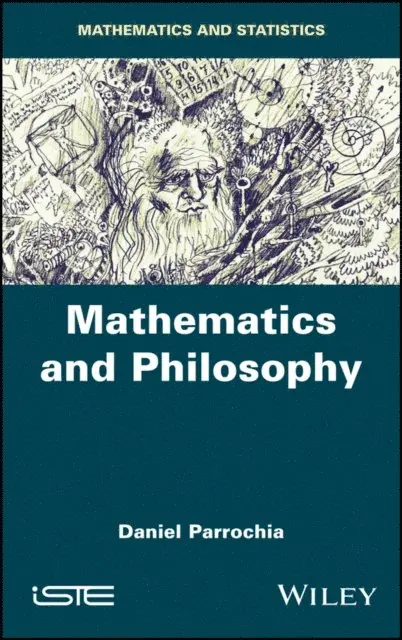
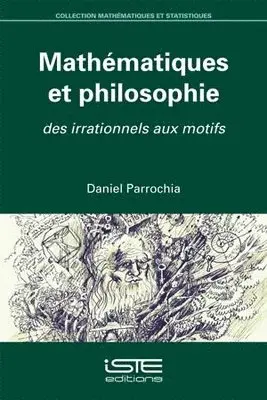
    Mathematics and Philosophy 2

    Graphs, Orders, Infinites and Philosophy

    AvDaniel Parrochia

    Inbunden, Engelska, 2023

    1 720 kr

    Beställningsvara. Skickas inom 5-8 vardagar. Fri frakt över 249 kr.

    Fler format och utgåvor

    E-bok

    1 932 kr

    E-bok

    1 932 kr

    Beskrivning

    From Pythagoreans to Hegel, and beyond, this book gives a brief overview of the history of the notion of graphs and introduces the main concepts of graph theory in order to apply them to philosophy. In addition, this book presents how philosophers can use various mathematical notions of order. Throughout the book, philosophical operations and concepts are defined through examining questions relating the two kinds of known infinities – discrete and continuous – and how Woodin's approach can influence elements of philosophy.We also examine how mathematics can help a philosopher to discover the elements of stability which will help to build an image of the world, even if various approaches (for example, negative theology) generally cannot be valid. Finally, we briefly consider the possibilities of weakening formal thought represented by fuzziness and neutrosophic graphs. In a nutshell, this book expresses the importance of graphs when representing ideas and communicating them clearly with others.

    Produktinformation

    • Utgivningsdatum:2023-04-19
    • Mått:161 x 240 x 19 mm
    • Vikt:966 g
    • Format:Inbunden
    • Språk:Engelska
    • Antal sidor:272
    • Förlag:ISTE Ltd and John Wiley & Sons Inc
    • ISBN:9781786308979

    Utforska kategorier

    • Matematisk statistik inom Naturvetenskap och teknik
    • Matematikens filosofi inom Naturvetenskap och teknik
    • Matematikens historia inom Naturvetenskap och teknik

    Mer om författaren

    Daniel Parrochia was a research fellow at the French CNRS (National Center for Scientific Research), then a professor at the Universities of Toulouse, Montpellier and Lyon, France. He is the author of thirty books and numerous articles in the field of the philosophy of science.

    Innehållsförteckning

    • Introduction ixChapter 1. Graphs 11.1. Graph theory: a brief history 11.2. Basic definitions 61.3. Different types of graphs 61.4. More on the list of graphs 91.5. Graphs and vertices 111.6. Some operations on graphs 131.7. Graph isomorphisms 151.7.1. Self-complementary graphs 151.7.2. Properties of self-complementary graphs 161.8. Symmetric and asymmetric graphs 171.9. Extremal graphs 201.10. Independence, non-separability, reconstruction conjecture 23Chapter 2. Philosophical Graphs 292.1. Ancient mappings 292.2. Chinese tetragrams 332.3. Pythagorism and pentagram 332.4. n-grams and some figures of the world 352.5. Graphs and classical systematicity 412.6. Towards a new kind of systematicity 522.6.1. Non-Hamiltonian and non-Eulerian philosophies 522.6.2. Pancyclic graphs and Metahegelianism 572.7. Non-pythagorism and arrangement of lines 582.7.1. Levi graphs of line arrangements 622.7.2. Line arrangements of curve lines 652.7.3. Hyperbolic graphs 67Chapter 3. Order and Its Philosophical Use 733.1. The mathematical notion of order: a brief history 743.2. The idea of “well-ordering” 763.3. Quasiorders (or preorders) 793.4. Partial orders 813.4.1. The notion of well partial order 843.4.2. Linear extension of a poset 843.4.3. Well partially orderings 853.5. Trees 853.5.1. A zoo of infinite trees 863.5.2. Ordinal infinite classifications 873.6. Moral problems in a finite world 873.7. Order versus circularity 923.8. Conclusion 96Chapter 4. Towards a Formal Philosophy 994.1. Asenjo’s systems and Dubarle’s formalization of Hegelianism 994.1.1. Asenjo’s systems and Dubarle’s case 1004.1.2. Dubarle, Parmenides’ thought and Hegel 1024.1.3. Projective algebras 1034.2. Some criticisms 1064.3. Porphyry and the neoplatonist mode of thought 1074.4. A variant of Dubarle’s formalism 1094.5. Quasi-Hegelian systems 1124.6. Philosophical thinking and finite projective geometry 1144.7. Other algebras for philosophical thinking 1164.8. Models derived from geometry and algebraic geometry 1174.9. Conclusion 120Chapter 5. Philosophical Transformations 1215.1. The paradox of a metasystem 1215.2. In search of an algebra 137Chapter 6. Concepts and Topology 1416.1. Formal concepts 1416.2. Fuzzy concepts 1436.3. The case of philosophical concepts 144Chapter 7. The Problem of the Infinite 1557.1. The arithmetic of infinite cardinals 1567.2. The question of large cardinals 1587.3. Woodin’s program 1637.3.1. Woodin I: CH would be false 1637.3.2. Woodin II: CH may be true 1657.3.3. Ultimate L and CH 1677.4. Infinite and philosophy 167Chapter 8. In Search for a New Philosophy 1718.1. The finite case 1718.2. The infinite case 176Chapter 9. Extension of Structuralism and Negative Theology 1819.1. Complementarity graphs 1829.2. Order relation, ordered set 1849.3. Graphs associated with a partially ordered set 1859.4. Complementarity and incomparability graphs of a poset 1879.5. Boolean representation of a poset 1879.6. Case of lattices 1899.6.1. Case of Boolean lattices 1919.6.2. Generalization: Boolean lattices as n-cubes 1939.7. Consequences for negative theology 196Chapter 10. From Fuzzy Graphs to Neutrosophic Graphs 20110.1. Fuzzy sets 20110.2. Fuzzy graphs 20410.3. Intuitionistic fuzzy set theory 20610.4. Neutrosophy 20810.5. Single-valued neutrosophic sets and graphs 211Conclusion 215References 221Index 235