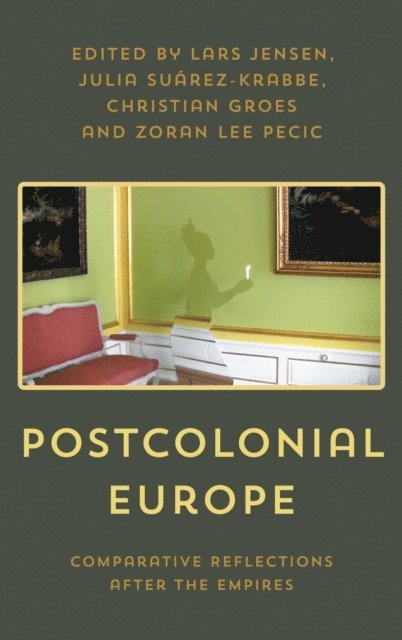
E-bok, Engelska, 2017
Postcolonial Europe
Comparative Reflections After the Empires
Av Lars Jensen, Julia Suárez-Krabbe, Christian Groes, Zoran Lee Pecic
706 kr
Läs direkt i Bokus Reader – eller ladda ned till din enhet
Beskrivning
Postcolonial Europe: Comparative Reflections after the Empires brings together scholars from across disciplines to rethink European colonialism in the light of its vanishing empires and the rise of new global power structures. Taking an interdisciplinary approach to the postcolonial European legacy, the book argues that the commonly used nation-centric approach does not effectively capture the overlap between different colonial and postcolonial experiences across Europe.
Produktinformation
- Utgivningsdatum: 2017-11-30
- Språk: Engelska
- Antal sidor: 268
- Filformat: EPUB
- Kopieringsskydd: LCP
- ISBN: 9781786603067
- Förlag: Bloomsbury Publishing Plc
- Mått: 152 x 229 x undefined mm
Utforska kategorier
Mer om författaren
Lars Jensen is Associate Professor of Cultural Encounters in the Department of Communication and Arts at Roskilde University, Denmark. Julia Suárez-Krabbe is Associate Professor of Cultural Encounters in the Department of Communication and Arts at Roskilde University, Denmark. Christian Groes is Associate Professor of Cultural Encounters in the Department of Communication and Arts at Roskilde University, Denmark.Zoran Lee Pecic is a Part-Time Lecturer in the Department of Cross-Cultural and Regional Studies, University of Copehagen.
Recensioner i media
This compelling volume demonstrates that decolonization is an ongoing process affecting all Europeans now. Its authors invite us to reassess the intellectual and cultural geography of European colonialism and reflect on its racial and dehumanizing legacies. At the crossroads between postcolonial and decolonial studies, this book argues that colonial tropes and rhetoric still underpin contemporary narratives of nationhood and otherhood.
Betyg & recensioner
0 recensioner
Inga recensioner tillgängliga.