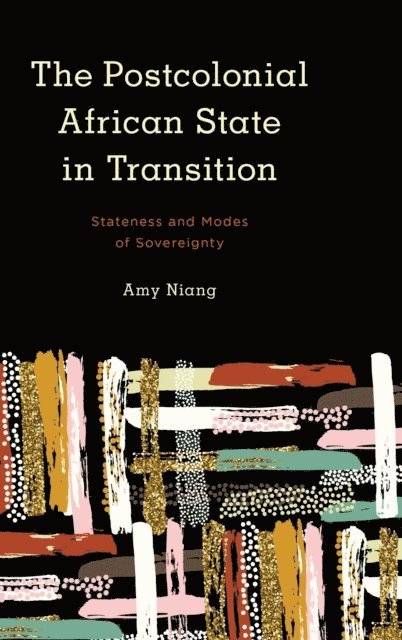
E-bok, Engelska, 2018
Postcolonial African State in Transition
Stateness and Modes of Sovereignty
Av Amy Niang
Del i serien Kilombo: International Relations and Colonial Questions
650 kr
Läs direkt i Bokus Reader – eller ladda ned till din enhet
Beskrivning
This book argues that there is nothing natural, linear, conventional or intrinsically consensual about the centralized state form. In fact, the African state emerged, and was erected against, and at the expense of a variety of authority structures and forms of self-governance. The state has sustained itself through destructive practices, internal colonization, and in fact the production and alienation of a range of internal others.
Produktinformation
- Utgivningsdatum: 2018-11-02
- Språk: Engelska
- Antal sidor: 256
- Filformat: EPUB
- Kopieringsskydd: LCP
- ISBN: 9781786606549
- Förlag: Bloomsbury Publishing Plc
- Serie: Kilombo: International Relations and Colonial Questions
- Mått: 152 x 229 x undefined mm
Utforska kategorier
Mer om författaren
Amy Niang teaches International Relations at the University of the Witwatersrand and is currently a Visiting Professor at the University of Sao Paulo.
Recensioner i media
Amy Niang has written a book on the African state unlike any before it. It effectively argues that scholarship on the African state has thus far been predicated on two misconceptions: one regarding what historically makes a state a state; and, two, what gives political organizations their legitimacy, or stateness. This is the result of a general confusion of political power (or ascendency and control by historical entities or organizations) with political rationality: the purpose of public life, particularly with the validity of their aesthetic: form, rituals, and the like. This confusion not only privileges one historical trajectory toward stateness, Europe’s; it also obscures the diversity of the human trajectory with regard to the conceptions of ethics and public morality – and therefore ethical relations, moral ends, and teleology of political instruments and institutions. This point was worth-making and it is made brilliantly with good historical references.
Betyg & recensioner
0 recensioner
Inga recensioner tillgängliga.