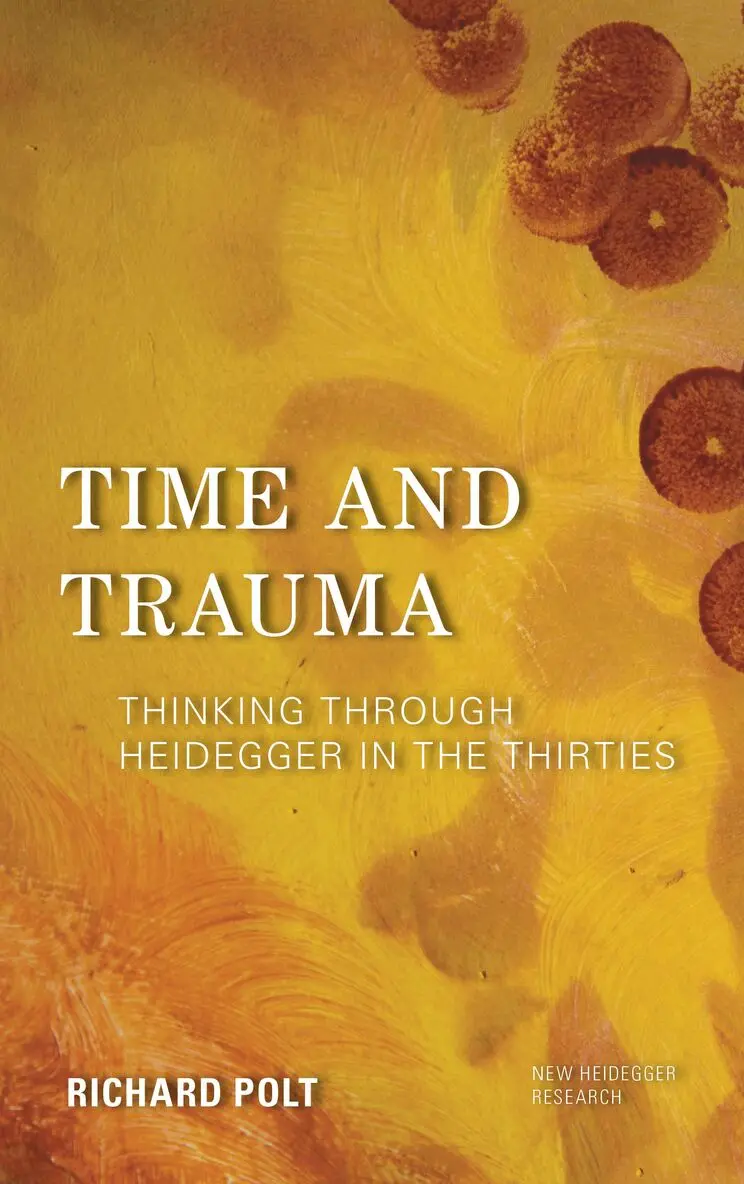
Inbunden, Engelska, 2019
Time and Trauma
Thinking Through Heidegger in the Thirties
Del i serien New Heidegger Research
1837 kr
Beställningsvara. Skickas inom 10-15 vardagar. Fri frakt över 249 kr.
Fler format och utgåvor
Beskrivning
Produktinformation
- Utgivningsdatum: 2019-02-05
- Mått: 161 x 229 x 27 mm
- Vikt: 585 g
- Format: Inbunden
- Språk: Engelska
- Serie: New Heidegger Research
- Antal sidor: 302
- Förlag: Bloomsbury Publishing PLC
- ISBN: 9781786610492
Utforska kategorier
Mer om författaren
Richard Polt is Professor of Philosophy at Xavier University. With Gregory Fried he has translated Heidegger’s Introduction to Metaphysics and Being and Truth, and edited A Companion to Heidegger’s “Introduction to Metaphysics” and Nature, History, State: 1933-1934.
Recensioner i media
Polt’s threefold interpretation of “thinking through” proves to be a useful catalyst not just for understanding Heidegger, but for understanding our roles as philosophers who exist in a world after Heidegger. His approach is deeply Heideggerian, in that it echoes the way early Heidegger thought through the problemspresent in the history of philosophy, but it is also something new, in that it takes a daring step beyond Heidegger, into what Polt calls “traumatic ontology”.
Betyg & recensioner
0 recensioner
Inga recensioner tillgängliga.