• Fri frakt över 249 kr
  • •
  • Snabba leveranser
  • •
  • Billiga böcker
Kundservice

Du är på sajten för privatpersoner.

Företag, bibliotek eller offentlig verksamhet?

Du handlar på classic.bokus.com, där alla dina funktioner finns intakta.
Till classic.bokus.com
Bokus logotyp. Gå till startsidan.
  • Erbjudanden
  • Nyheter
  • Student
  • Topplistor
  • Barn & ungdom
  • Bokus Play
  • E-böcker
  • Pocketböcker
  • Spel & pussel

10% rabatt på allt med kod: NYSTART10 →

Sidfot

Mina sidor

    Hjälp

    • Kundservice
    • Vanliga frågor och svar
    • Frakt och leverans
    • Retur vid ångerrätt
    • Reklamera vara
    • Betalning
    • Köpvillkor
    • Allmänna villkor
    • Information om webbplatsens tillgänglighet

    Om Bokus

    • Om oss
    • Pressrum
    • För studenter
    • För företag
    • För bibliotek och offentlig verksamhet
    • För leverantörer
    • Hållbarhet

    Populärt

    • Aktuella erbjudanden
    • Presentkort
    • Studentlitteratur
    • Nya böcker
    • Topplistor
    • Signerade böcker
    • Engelska böcker

    Inspiration

    • Boktips
    • BookTok
    • Populära bokserier
    • Barnbokskaraktärer
    • Populära författare
    Logotyp för Bokus
    Följ oss på Facebook (extern länk)Följ oss på Instagram (extern länk)Följ oss på YouTube (extern länk)Följ oss på TikTok (extern länk)
    bokus @ CookiesAnpassa cookiesIntegritetspolicyKöpvillkor
    Till Citymail hemsida (extern länk)Till Budbee hemsida (extern länk)Till Postnord hemsida (extern länk)Till Schenker hemsida (extern länk)Till Early Bird hemsida (extern länk)Till Walleys hemsida (extern länk)
    1. Ekonomi och Ledarskap
    2. Nationalekonomi
    3. Ekonomisk politik

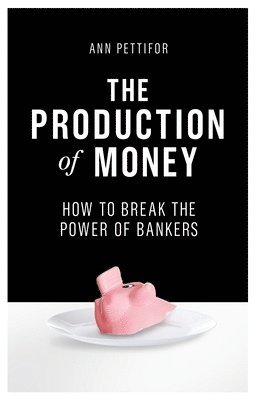
    Production of Money

    How to Break the Power of Bankers

    AvAnn Pettifor

    Inbunden, Engelska, 2017

    258 kr

    Tillfälligt slut

    Fler format och utgåvor

    Häftad

    Tillf. slut

    E-bok

    130 kr

    Beskrivning

    Money makes the world go round: but what is it really? And how is it produced? Above all, who controls its production, and in whose interests? Money is never a neutral medium of exchange. Nor are bankers simply go-betweens for savers and borrowers.In this accessible, brilliantly argued book, leading political economist Ann Pettifor explains in straightforward terms history's most misunderstood invention: the money system. Pettifor argues that democracies can reclaim control over money production and subordinate the out-of-control finance sector to the interests of society, and also the ecosystem. She also examines and assesses popular alternative debates on, and innovations in, money: positive money, helicopter money and the rise of goldbugs. She sets out the possibility of linking the money in our pockets (or on our smartphones) to the change we want to see in the world around us.

    Produktinformation

    • Utgivningsdatum:2017-02-21
    • Mått:130 x 201 x 23 mm
    • Vikt:318 g
    • Format:Inbunden
    • Språk:Engelska
    • Antal sidor:192
    • Förlag:Verso Books
    • ISBN:9781786631343

    Utforska kategorier

    • Ekonomisk politik inom Ekonomi och Ledarskap
    • Makroekonomi inom Ekonomi och Ledarskap

    Mer om författaren

    Ann Pettifor is a political economist with a focus on finance and sovereign debt. She is director of Prime: Policy Research in Macroeconomics, an Honorary Research Fellow at City University, a fellow of the New Economics Foundation, and has an honorary doctorate from Newcastle University. She is known for her leadership of a campaign that resulted in massive debt cancellation for more than 30 countries - Jubilee 2000. She has served on the board of the UN Development Report and in 2015 was invited onto the economic advisory board by the British Labour Party leader, Jeremy Corbyn. She is the author of 'The Real World Economic Outlook', and 'The Coming First World Debt Crisis', and co-authored The Green New Deal and The Economic Consequences of Mr. Osborne.

    Recensioner i media

    Ann Pettifor was always the ideal author of a book that shatters the fantasy of apolitical money and the toxic myth that monetary policy must remain a democracy-free zone. This book is now a reality.