• Fri frakt över 249 kr
  • •
  • Snabba leveranser
  • •
  • Billiga böcker
Kundservice

Du är på sajten för privatpersoner.

Företag, bibliotek eller offentlig verksamhet?

Du handlar på classic.bokus.com, där alla dina funktioner finns intakta.
Till classic.bokus.com
Bokus logotyp. Gå till startsidan.
  • Erbjudanden
  • Nyheter
  • Student
  • Topplistor
  • Barn & ungdom
  • Bokus Play
  • E-böcker
  • Pocketböcker
  • Spel & pussel

10% rabatt på allt med kod NYSTART10 →

Sidfot

Mina sidor

    Hjälp

    • Kundservice
    • Vanliga frågor och svar
    • Frakt och leverans
    • Retur vid ångerrätt
    • Reklamera vara
    • Betalning
    • Köpvillkor
    • Allmänna villkor
    • Information om webbplatsens tillgänglighet

    Om Bokus

    • Om oss
    • Pressrum
    • För studenter
    • För företag
    • För bibliotek och offentlig verksamhet
    • För leverantörer
    • Hållbarhet

    Populärt

    • Aktuella erbjudanden
    • Presentkort
    • Studentlitteratur
    • Nya böcker
    • Topplistor
    • Signerade böcker
    • Engelska böcker

    Inspiration

    • Boktips
    • BookTok
    • Populära bokserier
    • Barnbokskaraktärer
    • Populära författare
    Logotyp för Bokus
    Följ oss på Facebook (extern länk)Följ oss på Instagram (extern länk)Följ oss på YouTube (extern länk)Följ oss på TikTok (extern länk)
    bokus @ CookiesAnpassa cookiesIntegritetspolicyKöpvillkor
    Till Citymail hemsida (extern länk)Till Budbee hemsida (extern länk)Till Postnord hemsida (extern länk)Till Schenker hemsida (extern länk)Till Early Bird hemsida (extern länk)Till Walleys hemsida (extern länk)
    1. Kultur
    2. Scenkonst och film
    3. Film

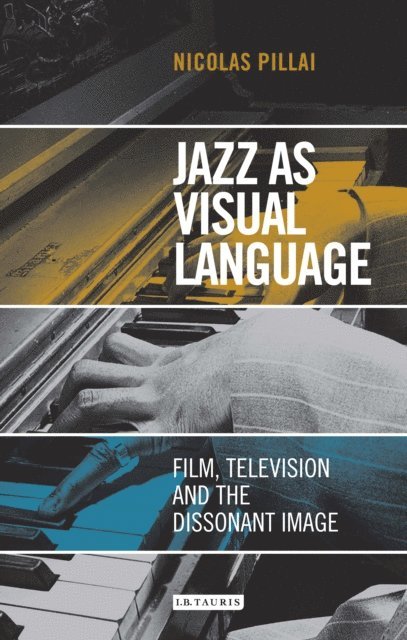
    Jazz as Visual Language

    Film, Television and the Dissonant Image

    AvNicolas Pillai

    E-bok
    PDF, Engelska, 2016

    2 020 kr

    Läs direkt i Bokus Reader – eller ladda ned till din enhet (PDF kräver ofta zoom och scroll på små skärmar).

    Fler format och utgåvor

    Inbunden

    1 866 kr

    E-bok

    1 967 kr

    Beskrivning

    This book provides a timely analysis of the relationship between jazz and recording and broadcast technologies in the early twentieth century. Jazz histories have traditionally privileged qualities such as authenticity, naturalness and spontaneity, but to do so overlooks jazz's status as a modernist, mechanised art form that evolved alongside the moving image and visual cultures. Jazz as Visual Language shows that the moving image is crucial to our understanding of what the materiality of jazz really is. Focusing on Len Lye's direct animation, Gjon Mili's experimental footage of musicians performing and the BBC's Jazz 625 series, this book places emphasis on film and television that conveys the 'sound of surprise' through formal innovation, rather than narrative structure. Nicolas Pillai seeks to refine a critical vocabulary of jazz and visual culture whilst arguing that jazz was never just a new sound; it was also a new way of seeing the world.

    Produktinformation

    • Utgivningsdatum:2016-11-30
    • Språk:Engelska
    • Antal sidor:192
    • Filformat:PDF
    • Kopieringsskydd:LCP
    • ISBN:9781786731005
    • Förlag:Bloomsbury Publishing PLC

    Utforska kategorier

    • Film inom Kultur
    • Filmmusik, musikaler och teatermusik inom Kultur
    • Populärmusik inom Kultur

    Mer om författaren

    Nicolas Pillai is a research fellow in the School of Media at Birmingham City University, UK. He is the co-editor of Brilliant Corners: Approaches to Jazz & Comics (2016) and New Jazz Conceptions: History, Theory, Practice (2017). He has contributed chapters to Gender and Identity in Jazz (2016) and The Routledge Companion to Jazz Studies (2017), as well as articles in journals such as The Soundtrack and Movie: A Journal of Film Criticism. He has also written an essay for the booklet included in the BFI dual format Blu-ray/DVD release of Paris Blues (1961).

    Recensioner i media

    This is a thought-provoking book that addresses a fascinating and still under-researched topic, and will be of great value to scholars working interested in film, television or jazz studies. More widely, though, it will be an engaging read for anybody with an interest in how jazz is represented in the broadcast media, and how this representation can influence our own definitions of jazz.

    Innehållsförteckning

    • 1. Introduction 2. Len Lye 3. Gjon Mili4. Jazz 625 Coda: Jazz in motion