• Fri frakt över 249 kr
  • •
  • Snabba leveranser
  • •
  • Billiga böcker
Kundservice

Du är på sajten för privatpersoner.

Företag, bibliotek eller offentlig verksamhet?

Du handlar på classic.bokus.com, där alla dina funktioner finns intakta.
Till classic.bokus.com
Bokus logotyp. Gå till startsidan.
  • Erbjudanden
  • Nyheter
  • Student
  • Topplistor
  • Barn & ungdom
  • Bokus Play
  • E-böcker
  • Pocketböcker
  • Spel & pussel

10% rabatt på allt med kod: NYSTART10 →

Sidfot

Mina sidor

    Hjälp

    • Kundservice
    • Vanliga frågor och svar
    • Frakt och leverans
    • Retur vid ångerrätt
    • Reklamera vara
    • Betalning
    • Köpvillkor
    • Allmänna villkor
    • Information om webbplatsens tillgänglighet

    Om Bokus

    • Om oss
    • Pressrum
    • För studenter
    • För företag
    • För bibliotek och offentlig verksamhet
    • För leverantörer
    • Hållbarhet

    Populärt

    • Aktuella erbjudanden
    • Presentkort
    • Studentlitteratur
    • Nya böcker
    • Topplistor
    • Signerade böcker
    • Engelska böcker

    Inspiration

    • Boktips
    • BookTok
    • Populära bokserier
    • Barnbokskaraktärer
    • Populära författare
    Logotyp för Bokus
    Följ oss på Facebook (extern länk)Följ oss på Instagram (extern länk)Följ oss på YouTube (extern länk)Följ oss på TikTok (extern länk)
    bokus @ CookiesAnpassa cookiesIntegritetspolicyKöpvillkor
    Till Citymail hemsida (extern länk)Till Budbee hemsida (extern länk)Till Postnord hemsida (extern länk)Till Schenker hemsida (extern länk)Till Early Bird hemsida (extern länk)Till Walleys hemsida (extern länk)
    1. Kultur
    2. Scenkonst och film
    3. Film

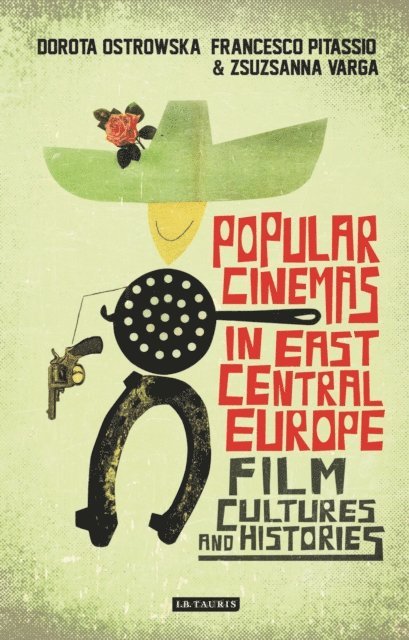
    Popular Cinemas in East Central Europe

    Film Cultures and Histories

    AvDorota Ostrowska,Francesco Pitassio

    E-bok
    PDF, Engelska, 2017

    513 kr

    Läs direkt i Bokus Reader – eller ladda ned till din enhet (PDF kräver ofta zoom och scroll på små skärmar).

    Beskrivning

    The continued interest in the social and cultural life of the former Warsaw pact countries - looking at but also beyond their socialist pasts - encompasses a desire to know more about their national cinemas. Yet, despite the increasing consumption of films from these countries - via DVD, VOD platforms and other alternative channels - there is a lack of comprehensive information on this key aspect of visual culture. This important book rectifies the glaring gap and provides both a history and a contemporary account of East Central European cinema in the pre-WW2, socialist, and post-socialist periods. Demonstrating how at different historical moments popular cinema fulfilled various roles, for example in the capacity of nation-building, and adapted to the changing markets of a morphing political landscape, chapters bring together experts in the field for the definitive analysis of mainstream cinema in the region.Celebrating the unique contribution of films from Hungary, the Czech Republic/Czechoslovakia and Poland, from the award-winning Cosy Dens to cult favourite Lemonade Joe, and from 1960s Polish Westerns to Hollywood-influenced Hungarian movies, the book addresses the major themes of popular cinema.By looking closely at genre, stardom, cinema exhibition, production strategies and the relationship between the popular and the national, it charts the remarkable evolution and transformation of popular cinema over time.

    Produktinformation

    • Utgivningsdatum:2017-06-30
    • Språk:Engelska
    • Antal sidor:384
    • Filformat:PDF
    • Kopieringsskydd:LCP
    • ISBN:9781786732392
    • Förlag:Bloomsbury Publishing PLC

    Utforska kategorier

    • Film inom Kultur

    Mer om författaren

    Zsuzsanna Varga teaches Hungarian studies at the University of Glasgow. Her research interests include comparative literature and film studies. She has written numerous articles and book chapters on Central European TV, and Hungarian, Portuguese, and Scottish literature. Francesco Pitassio is the associate professor of film studies at the University of Udine in Italy. His main research interests are Italian cinema, Czech cinema, film performance and stardom, and film theory. His publications include Il cinema neorealista (with Paolo Noto) (2010) and Attore/Divo (2003). Dorota Ostrowska is a senior lecturer in film and modern media at Birkbeck College, University of London. She publishes in the areas of European film and television studies, film festival studies, and the history of film and media production. Her publications include Reading the French New Wave: Critics, Writers and Art Cinema in France (2008) and European Cinemas in the TV Age (with Graham Roberts) (2007).

    Recensioner i media

    The collection matches its attractive, playfully pleasing cover design with a selection of carefully written and well-argued chapters on a timely topic ... The significance of this volume cannot be overstated. It represents a very successful attempt at offering a nuanced view on the popular cinemas of the region across several significant historical periods.

    Innehållsförteckning

    • 1.INTRODUCTION2.Producing the Popular Chapter 1: How to be loved? Three takes on 'the popular' in socialist and nonsocialist cinema (Paul Coates) Chapter 2: Postwar Czechoslovak Comedy, the Autonomization of Parody, and Lemonade Joe (1964) (Petr Szczepanik)Chapter 3: The Czechoslovak-East German Co-Production Three Nuts for Cinderella – A Transnational Tale (Pavel Skopal)Chapter 4: Hollywood's factor in the most popular Hungarian films of the 1996-2014 period: when a small postcommunist cinema meets a mainstream one (Andrea Virginás)Chapter 5: Serial Nostagia: On Alternative Modes of Popular Cinema in Post-89 Czech Production (Francesco Pitassio)3.Genre: Chapter 6: Czech Historical Film and Historical Traditions: The Merry Wives (1938) (Ivan Klimeš)Chapter 7: Transformations: Hungarian Popular Cinema in the 1950s (Balázs Varga)Chapter 8: Poland's Wild West and East: Polish Westerns of the 1960s (Miko?aj Kunicki)Chapter 9: The Paradox of Popularity: The Case of Crime Movie with Socialism in Hungary (Gábor Gelencsér)Chapter 10: Film in Full Gallop: Aesthetics and the Equine in Poland's Epic Cinema (Matilda Mroz)Chapter 11: The Power of Love: Polish Postcommunist Popular Cinema (El?bieta Ostrowska)Chapter 12: When Walls Fall: Families in Hungarian Films of the New Europe (Clara Orban)4.Stardom, Exhibition, and Reception:Chapter 13: Starlets and heartthrobs: the Hungarian cinema of the interwar period (Zsuzanna Varga) Chapter 14: Stripping of his charms: The stability and transformation of Old?ich Nový's star image 1936–1955 (Šárka Gmiterková)Chapter 15: “Humanist Screens”: Foreign Cinema in Socialist Poland (1945-1956) (Dorota Ostrowska)Chapter 16: The Exhibition of Popular Cinema in the Czech Republic and Slovakia After 1989 within the Context of the European Union (Jan Hanzlík)