• Fri frakt över 249 kr
  • •
  • Snabba leveranser
  • •
  • Billiga böcker
Kundservice

Du är på sajten för privatpersoner.

Företag, bibliotek eller offentlig verksamhet?

Du handlar på classic.bokus.com, där alla dina funktioner finns intakta.
Till classic.bokus.com
Bokus logotyp. Gå till startsidan.
  • Erbjudanden
  • Nyheter
  • Student
  • Topplistor
  • Barn & ungdom
  • Bokus Play
  • E-böcker
  • Pocketböcker
  • Spel & pussel

10% rabatt på allt med kod: NYSTART10 →

Sidfot

Mina sidor

    Hjälp

    • Kundservice
    • Vanliga frågor och svar
    • Frakt och leverans
    • Retur vid ångerrätt
    • Reklamera vara
    • Betalning
    • Köpvillkor
    • Allmänna villkor
    • Information om webbplatsens tillgänglighet

    Om Bokus

    • Om oss
    • Pressrum
    • För studenter
    • För företag
    • För bibliotek och offentlig verksamhet
    • För leverantörer
    • Hållbarhet

    Populärt

    • Aktuella erbjudanden
    • Presentkort
    • Studentlitteratur
    • Nya böcker
    • Topplistor
    • Signerade böcker
    • Engelska böcker

    Inspiration

    • Boktips
    • BookTok
    • Populära bokserier
    • Barnbokskaraktärer
    • Populära författare
    Logotyp för Bokus
    Följ oss på Facebook (extern länk)Följ oss på Instagram (extern länk)Följ oss på YouTube (extern länk)Följ oss på TikTok (extern länk)
    bokus @ CookiesAnpassa cookiesIntegritetspolicyKöpvillkor
    Till Citymail hemsida (extern länk)Till Budbee hemsida (extern länk)Till Postnord hemsida (extern länk)Till Schenker hemsida (extern länk)Till Early Bird hemsida (extern länk)Till Walleys hemsida (extern länk)
    1. Juridik
    2. Internationell rätt
    3. Folkrätt

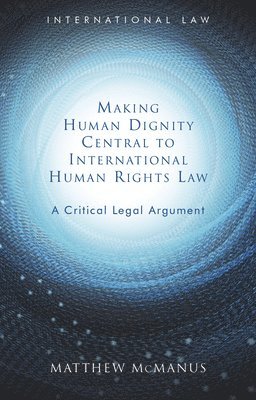
    Making Human Dignity Central to International Human Rights Law

    A Critical Legal Argument

    AvMatthew McManus

    Inbunden, Engelska, 2019

    Del 1 i serien International Law

    1 078 kr

    Tillfälligt slut

    Fler format och utgåvor

    E-bok

    1 157 kr

    E-bok

    1 157 kr

    Beskrivning

    In recent years, there has been an explosion of writing on the topic of human dignity across a plethora of different academic disciplines. Despite this explosion of interest, there is one group - critical legal scholars - that has devoted little if any attention to human dignity. This book argues that these scholars should attend to human dignity, a concept rich enough to support a whole range of progressive ambitions, particularly in the field of international law. This book synthesizes certain liberal arguments about the good of self-authorship with the critical legal philosophy of Roberto Unger and the capabilities approach to agency of Amartya Sen, to formulate a unique conception of human dignity. The author argues how human dignity flows from an individual's capacity for self-authorship as defined by the set of expressive capabilities s/he possesses, and the book demonstrates how this conception can enrich our understanding of international human rights law by making the amplification of human dignity its fundamental orientation.

    Produktinformation

    • Utgivningsdatum:2019-10-15
    • Mått:138 x 216 x 23 mm
    • Vikt:456 g
    • Format:Inbunden
    • Språk:Engelska
    • Serie:International Law
    • Antal sidor:272
    • Förlag:University of Wales Press
    • ISBN:9781786834645

    Utforska kategorier

    • Folkrätt inom Juridik
    • Juridik: metod och teori inom Juridik
    • Politiskt förtryck inom Samhälle och politik

    Mer om författaren

    Matt McManus is Professor of Politics and International Relations at the University of Tec de Monterrey.

    Innehållsförteckning

    • Acknowledgements 1. Overview of the Project PART I: Theorizing the relationship between human dignity and international human rights law2. Dignity's Contentious History 3. A Critical Legal Conception of Human Dignity4. The State, International Human Rights Law and the Amplification of Human Dignity in PracticePART II: Realizing human dignity in the practice of international human rights law5. Realizing Human Dignity Through Amplifying6. Realizing Human Dignity Through Establishing Rights to an Equality of Expressive Capabilities7. Concluding Remarks on What it Means to Overcome False NecessityNotes Bibliography Index