• Fri frakt över 249 kr
  • •
  • Snabba leveranser
  • •
  • Billiga böcker
Kundservice

Du är på sajten för privatpersoner.

Företag, bibliotek eller offentlig verksamhet?

Du handlar på classic.bokus.com, där alla dina funktioner finns intakta.
Till classic.bokus.com
Bokus logotyp. Gå till startsidan.
  • Erbjudanden
  • Nyheter
  • Student
  • Topplistor
  • Barn & ungdom
  • Bokus Play
  • E-böcker
  • Pocketböcker
  • Spel & pussel

10% rabatt på allt med kod: NYSTART10 →

Sidfot

Mina sidor

    Hjälp

    • Kundservice
    • Vanliga frågor och svar
    • Frakt och leverans
    • Retur vid ångerrätt
    • Reklamera vara
    • Betalning
    • Köpvillkor
    • Allmänna villkor
    • Information om webbplatsens tillgänglighet

    Om Bokus

    • Om oss
    • Pressrum
    • För studenter
    • För företag
    • För bibliotek och offentlig verksamhet
    • För leverantörer
    • Hållbarhet

    Populärt

    • Aktuella erbjudanden
    • Presentkort
    • Studentlitteratur
    • Nya böcker
    • Topplistor
    • Signerade böcker
    • Engelska böcker

    Inspiration

    • Boktips
    • BookTok
    • Populära bokserier
    • Barnbokskaraktärer
    • Populära författare
    Logotyp för Bokus
    Följ oss på Facebook (extern länk)Följ oss på Instagram (extern länk)Följ oss på YouTube (extern länk)Följ oss på TikTok (extern länk)
    bokus @ CookiesAnpassa cookiesIntegritetspolicyKöpvillkor
    Till Citymail hemsida (extern länk)Till Budbee hemsida (extern länk)Till Postnord hemsida (extern länk)Till Schenker hemsida (extern länk)Till Early Bird hemsida (extern länk)Till Walleys hemsida (extern länk)
    1. Samhälle och politik
    2. Samhälle och kultur
    3. Kultur och medier
    4. Referensverk och tvärvetenskap

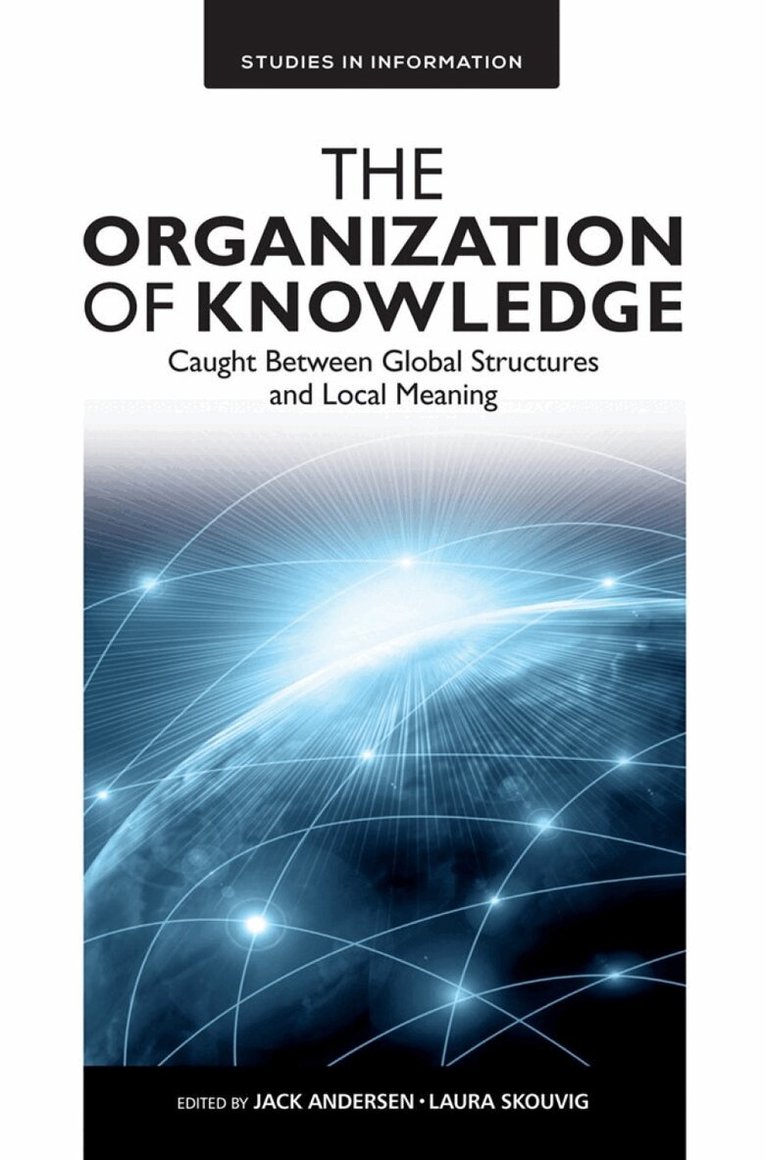
    Organization of Knowledge

    Caught Between Global Structures and Local Meaning

    AvJack Andersen,Laura Skouvig

    Inbunden, Engelska, 2017

    Del 12 i serien Studies in Information

    1 126 kr

    Beställningsvara. Skickas inom 5-8 vardagar. Fri frakt över 249 kr.

    Beskrivning

    This book critically examines the organization of knowledge as it is involved in matters of digital communication, the social, cultural and political consequences of classifying, and how particular historical contexts shape ideas of information and what information to classify and record. Due to permeation of digital infrastructures, software, and digital media in everyday life, many aspects of contemporary culture and society are infused with the activity and practice of classification. That means that old questions about classification have their potency in modern discourses about surveillance, identify formation, big data and so on. At the same time, this situation also implies a need to reconsider these old questions and how to frame them in digital culture. This book contains contributions that consider classic library classification practices and how their choices have social, cultural and political effect, how the organization of knowledge is not only a professional practice but is also a way of communicating and understanding digital culture, and how what a particular historical context perceives as information has implications for the recording of that information.

    Produktinformation

    • Utgivningsdatum:2017-08-01
    • Mått:152 x 229 x 10 mm
    • Vikt:266 g
    • Format:Inbunden
    • Språk:Engelska
    • Serie:Studies in Information
    • Antal sidor:128
    • Förlag:Emerald Publishing Limited
    • ISBN:9781787145320

    Utforska kategorier

    • Referensverk och tvärvetenskap inom Samhälle och politik

    Mer om författaren

    Jack Andersen is an associate professor, PhD, at the Royal School of Library and Information Science, University Copenhagen. Andersen’s research interests are centred on digital media, classification, and genre theory. Andersen has published several articles dealing with how to understand knowledge organization, scholarly literature, and information literacy from social theoretical, epistemological, and genre theoretical approaches. His recent edited volume, Genre Theory in Information Studies, explores different dimensions of genre in analyses of information. He is on the advisory board for the international research network, Genre Across Borders. In 2009-2013 Andersen served as vice-director and chair of department at the Royal School of Library and Information Science. He teaches courses on the theory of science, academic writing, media theory, and digital culture. Laura Skouvig is associate professor in Information Studies at the University of Copenhagen. Her primary research interest is the field of information history focusing on the history of the information age and information society. She has published articles on information networks, surveillance and communication of information primarily in the period of late 18th and early 19th century. Theoretically she works with inspiration from Michel Foucault and rhetorical genre theory. She’s on the editorial boards of two international journals: library and information history and information and culture. She teaches courses on the theory of science and knowledge culture.

    Recensioner i media

    American, Danish, and Brazilian contributors in library and information science are represented in these papers from an August 2015 conference held in Copenhagen. They chart the growth of the field of knowledge organization (KO) and highlight the tension between global information structures and meanings and ethics in localized contexts. The first two chapters offer a history of information cultures and a discussion of connections between genre, organized knowledge, and digital culture. Later subjects examined include reader-interest classifications, knowledge representation of photographic documents, and inscribing Maori history in the Library of Congress classification.

    Innehållsförteckning

    • The organization of knowledge: caught between global structures andlocal meaningGenre, Organized Knowledge, and Communicative Action in Digital CultureInformation cultures: shapes and shapings of informationThe (De-)Universalization of the United States: Inscribing Māori Historyin the Library of Congress ClassificationReader-interest classifications: local classifications or globalindustry interest?Knowledge representation of photographic documents: a case study at theFederal University of Pernambuco (Brazil)Slanted knowledge organization as a new ethical perspective