Inbunden, Engelska, 2021
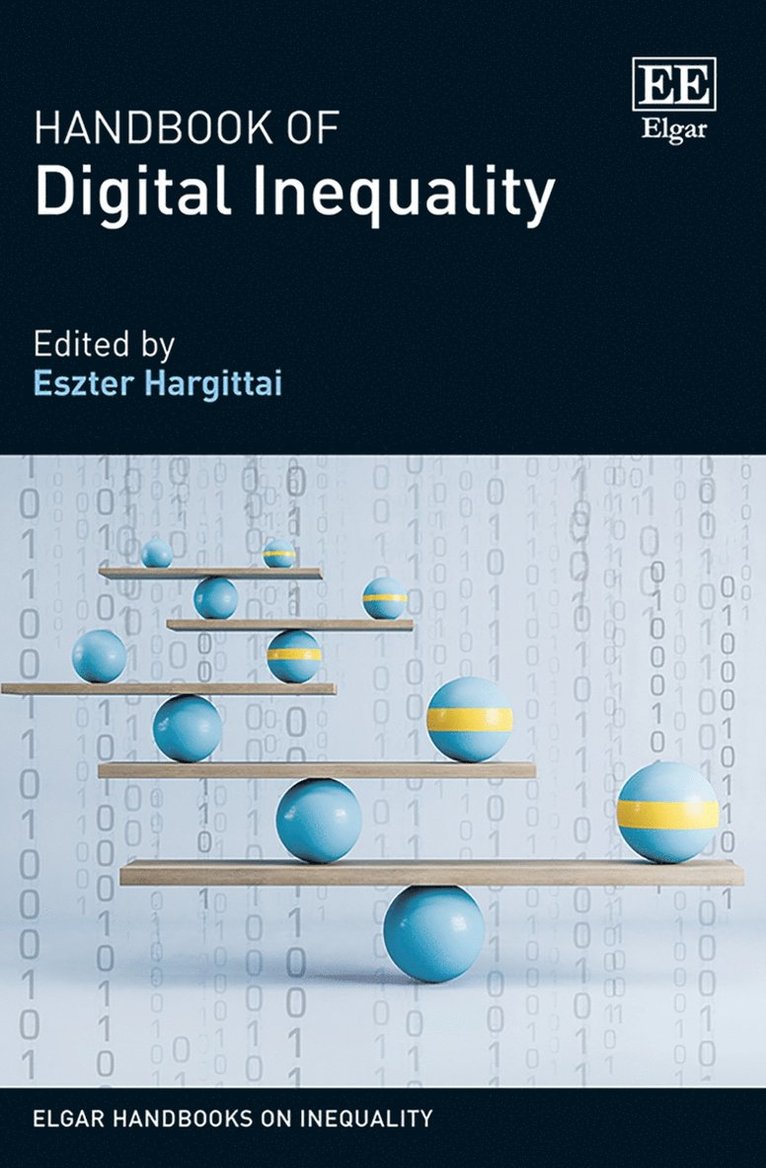
Handbook of Digital Inequality
Del i serien Elgar Handbooks on Inequality
3609 kr
Beställningsvara. Skickas inom 7-10 vardagar. Fri frakt över 249 kr.
Beskrivning
Produktinformation
- Utgivningsdatum: 2021-11-19
- Mått: 169 x 244 x undefined mm
- Format: Inbunden
- Språk: Engelska
- Serie: Elgar Handbooks on Inequality
- Förlag: Edward Elgar Publishing Ltd
- ISBN: 9781788116565
Utforska kategorier
Mer om författaren
Edited by Eszter Hargittai, Professor and Chair of Internet Use and Society, Department of Communication and Media Research, University of Zurich, Switzerland
Recensioner i media
‘This collection is deeply needed amid the hype of digital equity and inclusion. Not only does it focus attention on areas, topics, and communities that demand greater understanding (the elderly, hardware access, disability, and privacy) but it adds crucial nuance and context to the present public and political conversation on digital equity and inclusion, especially given the IIJA’s digital equity programs. It reminds us that money will not solve these issues without deeper understanding and community-driven approaches. In addition to being a must-read for policy makers, this collection would be welcome in senior undergraduate or graduate courses on digital policy, broadband policy, the digital divide, digital media, health communication, media and disability, and research methods, among many others.’
Betyg & recensioner
0 recensioner
Inga recensioner tillgängliga.