• Fri frakt över 249 kr
  • •
  • Snabba leveranser
  • •
  • Billiga böcker
Kundservice

Du är på sajten för privatpersoner.

Företag, bibliotek eller offentlig verksamhet?

Du handlar på classic.bokus.com, där alla dina funktioner finns intakta.
Till classic.bokus.com
Bokus logotyp. Gå till startsidan.
  • Erbjudanden
  • Nyheter
  • Student
  • Topplistor
  • Barn & ungdom
  • Bokus Play
  • E-böcker
  • Pocketböcker
  • Spel & pussel

10% rabatt på allt med kod NYSTART10 →

Sidfot

Mina sidor

    Hjälp

    • Kundservice
    • Vanliga frågor och svar
    • Frakt och leverans
    • Retur vid ångerrätt
    • Reklamera vara
    • Betalning
    • Köpvillkor
    • Allmänna villkor
    • Information om webbplatsens tillgänglighet

    Om Bokus

    • Om oss
    • Pressrum
    • För studenter
    • För företag
    • För bibliotek och offentlig verksamhet
    • För leverantörer
    • Hållbarhet

    Populärt

    • Aktuella erbjudanden
    • Presentkort
    • Studentlitteratur
    • Nya böcker
    • Topplistor
    • Signerade böcker
    • Engelska böcker

    Inspiration

    • Boktips
    • BookTok
    • Populära bokserier
    • Barnbokskaraktärer
    • Populära författare
    Logotyp för Bokus
    Följ oss på Facebook (extern länk)Följ oss på Instagram (extern länk)Följ oss på YouTube (extern länk)Följ oss på TikTok (extern länk)
    bokus @ CookiesAnpassa cookiesIntegritetspolicyKöpvillkor
    Till Citymail hemsida (extern länk)Till Budbee hemsida (extern länk)Till Postnord hemsida (extern länk)Till Schenker hemsida (extern länk)Till Early Bird hemsida (extern länk)Till Walleys hemsida (extern länk)
    1. Samhälle och politik
    2. Samhälle och kultur
    3. Kultur och medier
    4. Referensverk och tvärvetenskap

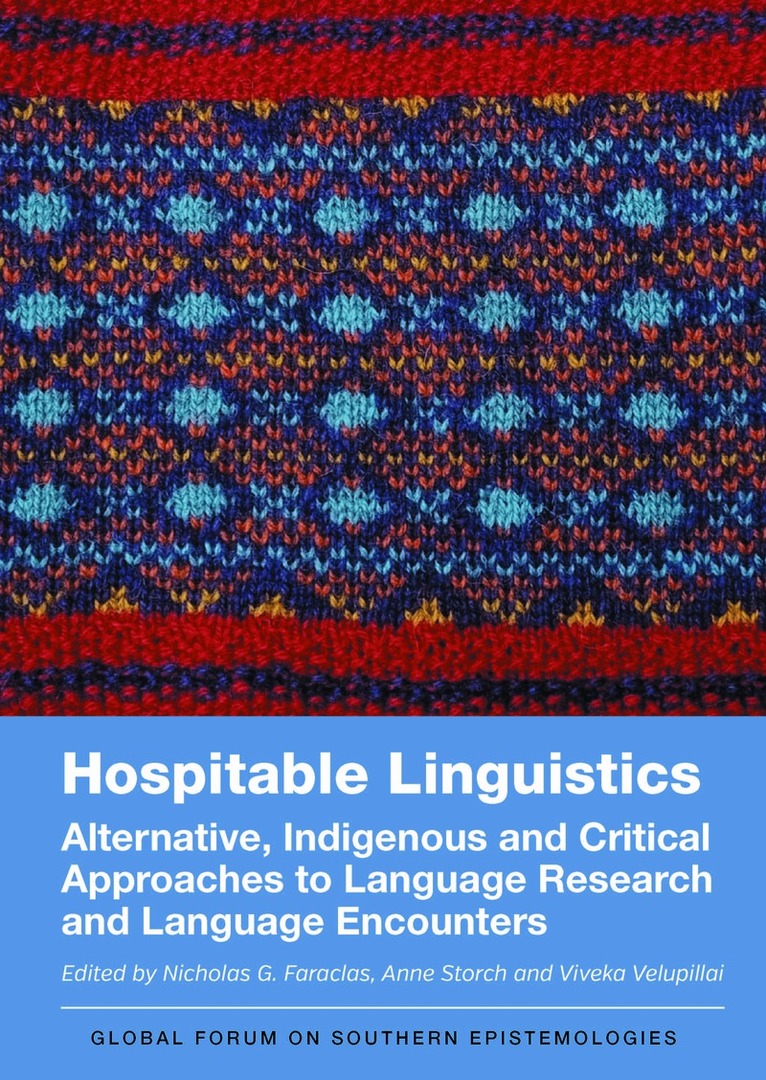
    Hospitable Linguistics

    Alternative, Indigenous and Critical Approaches to Language Research and Language Encounters

    AvNicholas G. Faraclas,Anne Storch

    Inbunden, Engelska, 2025

    Del 4 i serien Global Forum on Southern Epistemologies

    2 005 kr

    Beställningsvara. Skickas inom 5-8 vardagar. Fri frakt över 249 kr.

    Beskrivning

    Challenging the boundaries of linguistics as a field, and transgressing the limitations of genre in writing about language, this book explores the possibilities of what the authors call a ‘hospitable linguistics’. It offers a critical discussion of how linguistics endeavors to domesticate, subdue and integrate both people and languages into existing academic structures and theories, and how as a discipline academic linguistics has barely begun to move beyond its colonial, patriarchal and conservative foundations. In this book, leading figures in their fields reflect on their own and others’ practices and experiences in three key areas: the agency and power of refugees and migrants; Indigenous people’s (in)hospitable responses to strangers; and hospitable language as expressed through art, music and artefacts. As a whole, the book represents a crucial intervention in attempts to fashion a new, more integrative, responsible and respectful linguistics that makes way for the ideas of people who are often the object of study.

    Produktinformation

    • Utgivningsdatum:2025-03-19
    • Mått:174 x 245 x 21 mm
    • Vikt:810 g
    • Format:Inbunden
    • Språk:Engelska
    • Serie:Global Forum on Southern Epistemologies
    • Antal sidor:344
    • Förlag:Multilingual Matters
    • ISBN:9781788929875

    Utforska kategorier

    • Referensverk och tvärvetenskap inom Samhälle och politik
    • Språkvetenskap och lingvistik inom Språk och ordböcker
    • Nationell befrielse och självständighet inom Historia och arkeologi

    Mer om författaren

    Nicholas G. Faraclas is Full Professor in Linguistics at the University of Puerto Rico. His research focuses on language and power, language and the colonial construction of race, gender and class, linguistic contact and hybridity, indigeneity and linguistic sovereignty, critical literacy and popular education, and the linguistic and cultural repertoires of the Afro-Atlantic and Melanesia.Anne Storch is Full Professor in Afrikanistik / African Linguistics at the University of Cologne, Germany. Her research focuses on linguistic manipulation and marginalized languages, linguistic typology, colonial linguistics and anthropological linguistics.Viveka Velupillai is an Honorary Professor in the Department of English at the University of Giessen, Germany and Visiting Professor at the Language Sciences Institute, University of the Highlands and Islands, Scotland. Her research focuses on linguistic typology, language contact and historical linguistics, Creoles and marginalized languages.

    Recensioner i media

    This is a wonderful volume that examines how mother tongues can articulate resistance to colonial sovereignty. This book contributes significantly to research around indigenous languages – keeping stories alive, telling the untold tales and highlighting the wrongs of colonialism.

    Innehållsförteckning

    • Tables and FiguresContributorsAcknowledgementsSinfree Makoni: ForewordChapter 1. Anne Storch and Nicholas Faraclas: Introduction           Part 1: Language As a GiftChapter 2. Anne Storch: Sunset at a Place Visited for No Ordinary ReasonChapter 3. Arpad Szakolczai: The Decline of Hospitality and the Rise of Linguistic ImperialismChapter 4. Judith A. Mgbemena: Linguistics and Nigerian Language Studies in Nigeria: Building Bridges for a More Viable and Hospitable LinguisticsChapter 5. Ian Hancock: The Trans-Atlantic Shipment of Romanies ('Gypsies') to the Americas: Discursive Silencing, Erasure and InhospitablenessChapter 6. Renathe Meroro-Tjikundi and Anette Hoffmann: (Not) Speaking to a German Africanist in Namibia in 1954: On Refusal and Hospitality as Responses to Linguistic ResearchChapter 7. Fiona Mc Laughlin: The Pew Inscriptions at First African Baptist Church in Savannah, GeorgiaPart 2: Language and SharingChapter 8. Charleston Thomas: The Art and Role of Listening and Verbal Gestures in Tobagonian: Returning to the Oral/AuralChapter 9. Dannabang Kuwabong: Dagaaba Travel Experience NamesChapter 10. Federico Olivieri: La carta que te escribo sobre festivales de cine y hospitalidadChapter 11. Priya Parrotta: 'Paradise', 'Hospitality', and the Transformative Power of Environmental Music: When the Island SingsChapter 12. Melinda Maxwell-Gibb: Pluri-living in the 'In' Hospitable Deep South of the USPart 3: Language, Resisting and Undoing EnclosuresChapter 13. Alison Rendall: Shetland Stories in KnittingChapter 14. Andrea Hollington: The Fieldworker as a Human BeingChapter 15. Fatou Cissé Kane: Resistance et Hospitalité Chapter 16. Ellen Hurst-Harosh and Fridah Kanana Erastus: Pastiche: A Conversation Between Kenyan Sheng and South African Tsotsitaal Youth Language SpeakersChapter 17. Nalini Natarajan: Women: The Hospitable 'Race' who were 'Already There'Chapter 18. Alison Phipps: On Strike on Mother Language Day: Critical Reflections, Toilet Signs and Language GeneaologiesPart 4: Language and Reassuming SovereigntyChapter 19. Angelika Mietzner: Narratives of Reciprocity and Envy in a Digo Community in Tiwi, KenyaChapter 20. Meg Rodger: Auծur the Deep MindedChapter 21. Penelope Allsobrook: Childhood Memories and the Call to Being Hospitable in the Bar’chu, the Bell and the BilalChapter 22. Ragnhild Ljosland: Giving Voice to the Witches of the Orkney Witchcraft Trials: ‘Answered, She Spoke it for Weakness of Her Owne Flesh, and for Feare of Her Lyfe’Chapter 23. Alison Phipps: A World Glasgow Minding on the International Day of PeaceJan Knipping and Nico Nassenstein: Afterword: Hospitable Linguistics – Thoughts on Current DirectionsIndex