• Fri frakt över 249 kr
  • •
  • Snabba leveranser
  • •
  • Billiga böcker
Kundservice

Du är på sajten för privatpersoner.

Företag, bibliotek eller offentlig verksamhet?

Du handlar på classic.bokus.com, där alla dina funktioner finns intakta.
Till classic.bokus.com
Bokus logotyp. Gå till startsidan.
  • Erbjudanden
  • Nyheter
  • Student
  • Topplistor
  • Barn & ungdom
  • Bokus Play
  • E-böcker
  • Pocketböcker
  • Spel & pussel

Må bättre, för mindre! Upp till 50% rabatt på hälsoböcker

Sidfot

Mina sidor

    Hjälp

    • Kundservice
    • Vanliga frågor och svar
    • Frakt och leverans
    • Retur vid ångerrätt
    • Reklamera vara
    • Betalning
    • Köpvillkor
    • Allmänna villkor
    • Information om webbplatsens tillgänglighet

    Om Bokus

    • Om oss
    • Pressrum
    • För studenter
    • För företag
    • För bibliotek och offentlig verksamhet
    • För leverantörer
    • Hållbarhet

    Populärt

    • Aktuella erbjudanden
    • Presentkort
    • Studentlitteratur
    • Nya böcker
    • Topplistor
    • Signerade böcker
    • Engelska böcker

    Inspiration

    • Boktips
    • BookTok
    • Populära bokserier
    • Barnbokskaraktärer
    • Populära författare
    Logotyp för Bokus
    Följ oss på Facebook (extern länk)Följ oss på Instagram (extern länk)Följ oss på YouTube (extern länk)Följ oss på TikTok (extern länk)
    bokus @ CookiesAnpassa cookiesIntegritetspolicyKöpvillkor
    Till Citymail hemsida (extern länk)Till Budbee hemsida (extern länk)Till Postnord hemsida (extern länk)Till Schenker hemsida (extern länk)Till Early Bird hemsida (extern länk)Till Walleys hemsida (extern länk)
    1. Kultur
    2. Konstböcker
    3. Konsthistoria

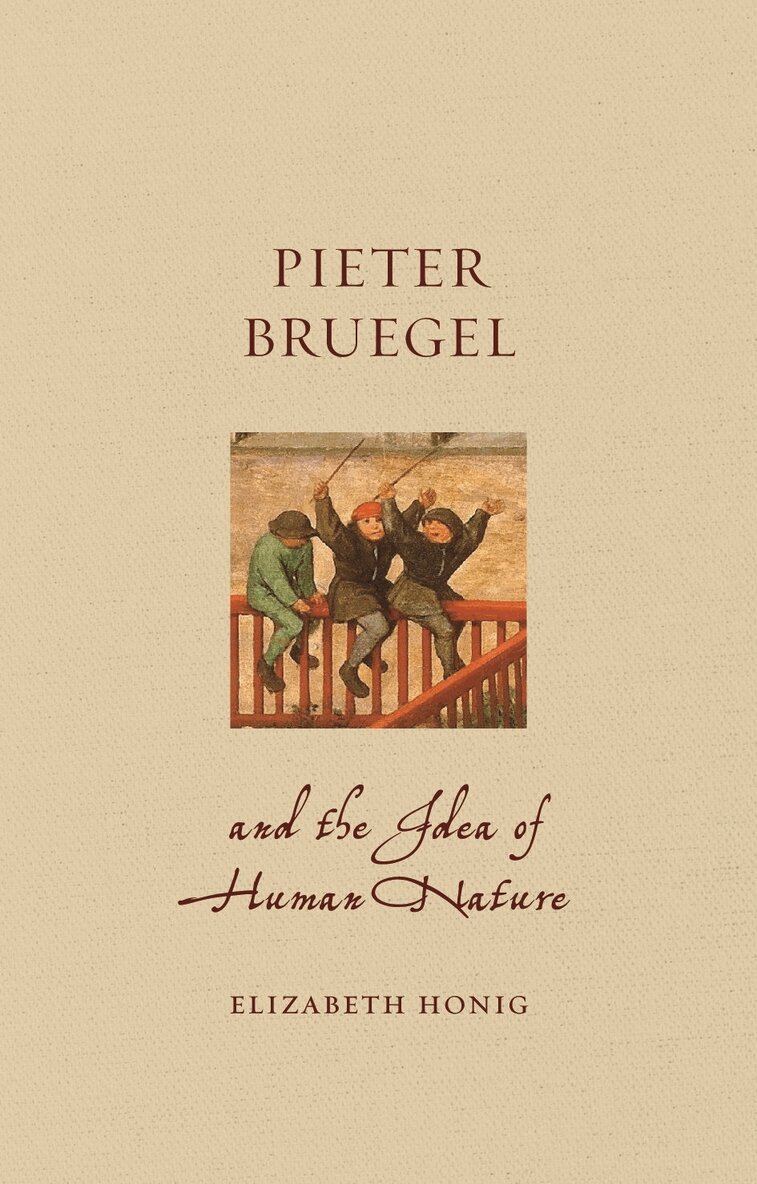
    Pieter Bruegel and the Idea of Human Nature

    AvElizabeth Alice Honig

    Häftad, Engelska, 2022

    Del 9 i serien Renaissance Lives

    186 kr

    Skickas . Fri frakt över 249 kr.

    Beskrivning

    16th-century Flemish painter Pieter Bruegel the Elder redefined how people perceived human nature. Bruegel turned his critical eye to mankind’s labours and pleasures, its foibles and rituals of daily life. Portraying landscapes, peasant life and biblical scenes in startling detail, Bruegel questioned how well we really know ourselves and also how we know, or visually read, others.This superbly illustrated volume, now in paperback, examines how Bruegel’s art and ideas enabled people to ponder what it meant to be human. It will appeal to all those interested in art and philosophy, the Renaissance and the painting of the Dutch Golden Age.

    Produktinformation

    • Utgivningsdatum:2022-10-17
    • Mått:138 x 216 x 17 mm
    • Vikt:540 g
    • Format:Häftad
    • Språk:Engelska
    • Serie:Renaissance Lives
    • Antal sidor:272
    • Förlag:Reaktion Books
    • ISBN:9781789146752

    Utforska kategorier

    • Konsthistoria inom Kultur

    Mer om författaren

    Elizabeth Alice Honig is Professor of Northern European Art at the University of Maryland. She is the author of Jan Brueghel and the Senses of Scale (2016).

    Recensioner i media

    In this elegantly written and illustrated book, Elizabeth Alice Honig explores the discursive nature of Pieter Bruegel’s art . . . the book offers an encyclopaedic investigation of the myriad human conditions Bruegel masterfully captured in his oeuvre and the cultural and social concerns to which they spoke . . . a thorough work of scholarship that argues that Bruegel conceived of his works as pieces to provoke and promote contemplation and discussion – whether that be with oneself or between others – about the idea of human nature . . . An enjoyable read, Honig’s book encourages us not only to reflect on the many conversations that Bruegel’s art could have engendered, but also to use his work to explore our own ways of understanding human nature. - Renaissance and ReformationIn this detailed and very readable book, Elizabeth Honig explores how people perceived human nature. Bruegel’s success is to show us how insignificant we are throughout a life that throws everything at us; a great artist’s work is able to speak for every generation and in Bruegel we learn how to fully understand our own fragile humanity. Full of beautiful illustrations, this is a book that will surprise and entertain you. - Yorkshire Gazette and HeraldBruegel’s paintings are conversation pieces depicting ordinary people rather than heroic figures, and they reveal human nature through proverbs and morals. Influenced by humanist scholars, Bruegel visualized philosophical ideas for people outside the academic world, and his prints and paintings depict folk tales and historical adages, sometimes in humorous form, that were important to civic education. He showed physical features that reveal inner character, utilizing a repertoire of human personality traits found in physiognomy books. Books such as Juan Luis Vives’s On Assistance to the Poor, published in Bruges in 1526, confirmed people’s distrust of the disabled and poor as lazy, dishonest, and punished by God, yet in The Fight Between Carnival and Lent (1559) Bruegel shows the beginnings of a desire to keep social order through charity by bringing the marginalized to the center of his works. In Utopia (1516) Thomas More first suggested that those who mock are the disfigured. Honig’s thorough readings of Bruegel’s paintings give fresh interpretation of this idea. Recommended. - ChoiceIn his landscapes, views of peasant life, and biblical scenes, sixteenth-century Flemish painter Pieter Bruegel the Elder focused on daily rituals of labor and pleasure. His wry works, often portraying workers in the fields or citizens going about their business in Antwerp or Brussels, emphasize the futility of ambition and the absurdity of pride. - Art in AmericaIn his own time, Pieter Bruegel’s art has been praised as the ultimate achievement in the representation of nature . . . Elizabeth Honig’s book is the first to make us realize that this appraisal pertains to the representation of human nature of the people surrounding him – workers in the field, citizens of Antwerp and Brussels, noblemen, children, mercenaries, lepers, religious dignitaries, art lovers, humanists and the like – and of humanity in general, inward and outward woman and man included. Bruegel’s own personality and convictions, she writes, largely remain opaque, but it is thanks to Honig’s marvellous descriptions of some of Bruegel’s most renowned pictures that our eyes are opened to both the ‘idea of nature’ as people conceived of it in his time, but also to Bruegel’s personal, deeply perceptive ideas about human nature. - Reindert Falkenburg, Professor of Early Modern Art and Culture, NYU Abu DhabiEloquently and effectively, Elizabeth Honig fulfills the promise of her title with a fresh, close look at Bruegel, amongst contemporaries, within his tumultuous era. She clearly articulates how the artist examined themes concerning basic human nature across his career. But in the process, she reminds us that while this thoughtful, engaged man laughed at the vices and follies of all humankind, like Democritus, he also, self-consciously, ultimately left us mute images to interpret alone. - Larry Silver, Professor Emeritus of History of Art at the University of Pennsylvania, USA, and author of Rembrandt's Holland